
CGIFurniture Launches New 3D Rendering Guide for E-commerce Brands

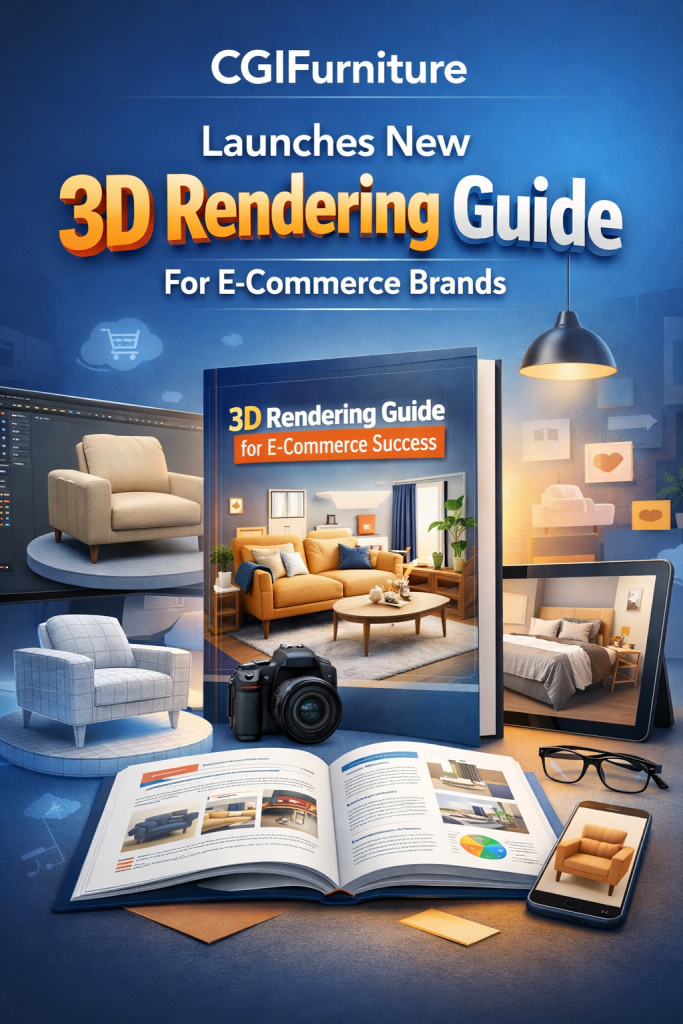
The new guide is designed to help ecommerce brands better understand 3D rendering formats and improve digital product presentation.
Product Rendering Guide for Ecommerce
CGIFurniture has published a new guide covering product rendering formats for online retail. The resource is free to access and requires no registration.
The guide was created in response to a question the company says comes up frequently among ecommerce teams: how to decide between different visual content approaches when setting up or scaling a product imagery workflow. Most retailers working across multiple channels eventually face this decision, and the answer is rarely straightforward.
What the Guide Covers
Furniture and home goods are among the harder product categories to represent well online. A sofa or dining table requires shoppers to judge scale, texture, and room fit before purchasing — information that a single static image tends to leave incomplete. That gap in comprehension is one of the central problems the guide addresses.
The resource walks through how different rendering formats function in practice. White-background product shots, lifestyle scenes, and interactive 360-degree views each serve different purposes on a product page, and the guide examines the trade-offs involved in choosing between them rather than presenting any single approach as universally correct.
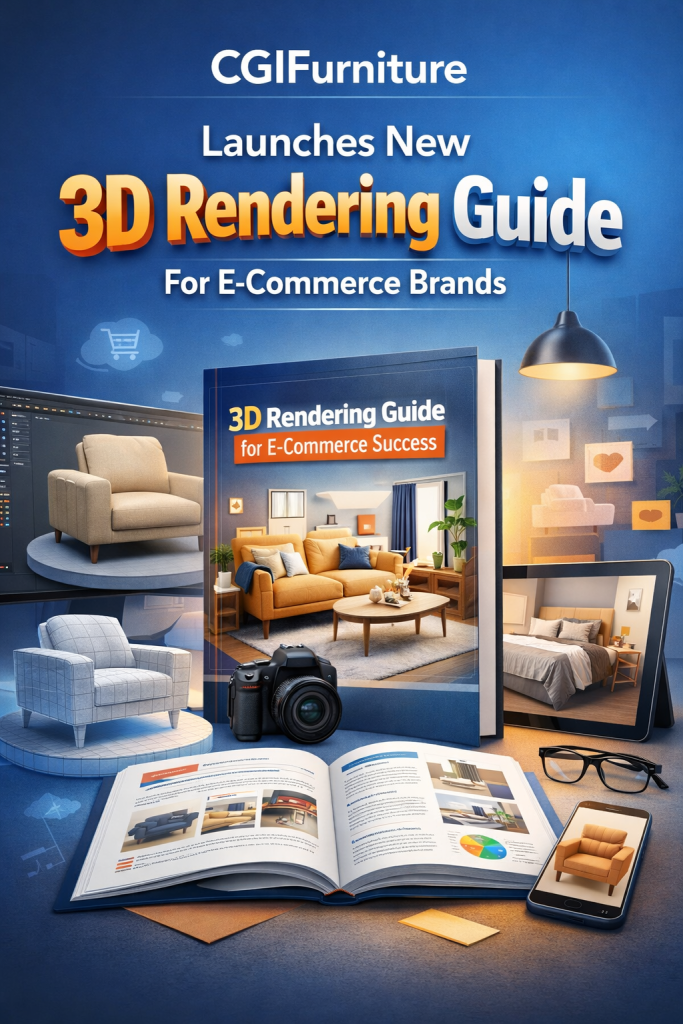
Online Retail 3D Rendering
Content teams at different catalogue sizes will find the format-selection criteria useful. A brand managing fifty SKUs faces different production realities than one managing several thousand, and the guide accounts for that variation. Pre-launch scenarios — where product imagery is needed before manufacturing samples are available — are also covered, since this is a common constraint for brands working with seasonal collections or new product introductions.
Who the Resource Is For
The guide is written for people who make or influence product content decisions in an ecommerce context. That includes merchandising managers, ecommerce leads, and marketing directors responsible for how products appear across digital channels.
Technical production knowledge is not assumed. The guide is written to be useful to someone deciding which visual format to commission, not to someone executing the production work.
The company said the new 3d rendering guide for e-commerce was developed to help online retailers and product brands better understand visual content options for digital merchandising. Smaller sellers building out a first visual workflow and larger retailers reassessing existing production processes are both within the intended scope.
Statement from CGIFurniture
“Product content decisions have real operational consequences — for speed to market, for catalogue consistency, and for how clearly a product communicates on the page,” said a representative of CGIFurniture. “The guide came out of conversations with brands at very different stages. Some are just starting to figure out their visual workflow. Others have established processes but want clearer criteria for format decisions as their catalogues grow.”
The guide is part of a broader set of educational resources CGIFurniture makes available to the ecommerce industry.
About CGIFurniture
CGIFurniture provides 3D rendering, product modeling, and visualization services for furniture brands, home goods retailers, and ecommerce businesses. The company produces photorealistic product imagery, lifestyle renders, and interactive visual assets for digital commerce and marketing applications. CGIFurniture works with clients across North America and Europe on product-page content, catalogue imagery, and pre-launch visual production.
Frequently Asked Questions (FAQs)
1. What is the CGIFurniture 3D rendering guide for e-commerce?
The CGIFurniture 3D rendering guide is a free resource that explains different product visualization formats used in online retail. In addition, it outlines how each rendering approach works and when it may be suitable. However, its usefulness depends on the user’s role, catalogue size, and content strategy.
2. How can ecommerce teams use this guide in practice?
Ecommerce teams can use the guide to compare visual formats and understand their role in product presentation. In addition, it helps them select suitable content types for different platforms. However, the level of benefit depends on how teams apply the guidance within their workflows.
3. Why do product categories like furniture need advanced visuals?
Products like furniture require customers to assess size, texture, and placement without physical interaction. Therefore, advanced visuals help bridge this gap. However, effectiveness depends on image quality, accuracy, and how well the visuals reflect real-world conditions.
4. Which rendering formats are discussed in the guide?
The guide covers formats such as white-background images, lifestyle scenes, and 360-degree interactive views. In addition, each format serves a different purpose based on the product and platform. However, selection depends on business goals and production capabilities.
5. Who is the guide intended for?
The guide targets ecommerce managers, marketing teams, and merchandising professionals who handle product presentation. In addition, it helps decision-makers who plan visual content strategies. However, suitability depends on the user’s role in content planning.
6. How does catalogue size influence rendering decisions?
Brands with smaller catalogues often focus on fewer high-quality visuals. In contrast, larger catalogues require scalable production methods. Therefore, the guide explains how format choices change based on scale and available resources.
7. Can the guide be used for pre-launch product visualization?
Yes, the guide includes cases where teams need visuals before physical samples exist. For example, this applies to seasonal collections or product launches. However, results depend on how accurately the rendered visuals match the final product.
8. What factors affect the choice of rendering format?
Several factors affect the choice, including budget, production timelines, platform needs, and customer expectations. In addition, the guide suggests evaluating trade-offs instead of relying on one format. Therefore, final decisions depend on business priorities and workflow limits.
9. Does the guide require technical knowledge to understand?
The guide presents content for non-technical users who make decisions rather than produce visuals. In addition, it explains concepts in a simple way. However, understanding depends on familiarity with ecommerce and digital content workflows.
10. How does editorial review apply to press release distribution?
Editorial review on platforms like King Newswire checks content for clarity, structure, and compliance with publishing guidelines. In addition, editors evaluate submissions based on platform standards. However, approval and visibility depend on these policies, and results may vary.