
OBN Capital CEO Matteus Ribeiro Details Western Dollars to Emerging Regions Model


OBN Capital, the micro private-equity hedge fund formed through Matteus Ribeiro’s 2021 buyout of KPS Capital, has fully exited the United States and built its model on moving Western capital into healthcare, infrastructure and commerce assets across emerging economies. The firm outlines how Brazil’s 0% IOF treatment of foreign capital, elevated local interest rates and purchasing-power differentials compound returns for a dollar-domiciled vehicle and why it stayed out of AI as institutional allocators now rotate away from concentrated U.S. technology exposure.
SAO PAULO, September 4, 2026 — OBN Capital, a micro private-equity hedge fund led by Chief Executive Officer Matteus Ribeiro, today set out the operating model it has followed since the 2021 buyout of its predecessor, KPS Capital: raising capital in Western currencies, chiefly U.S. dollars, and deploying it exclusively into operating businesses and hard assets in emerging economies where currency conversion, the tax treatment of foreign capital and purchasing-power differentials compound the returns of the underlying investments.
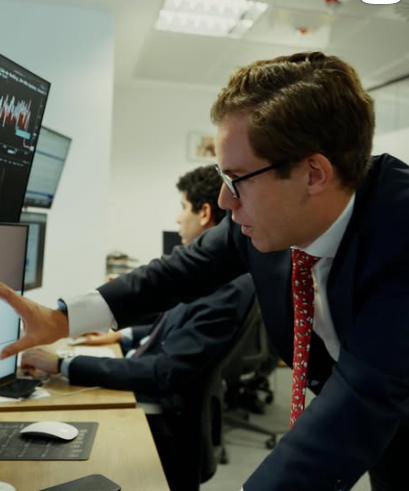
The firm reports $1.4 billion in total assets under management as of 2026. OBN Capital notes that this figure reflects capital raised in successive fundraising rounds since the change of leadership rather than investment gains alone; more than $250 million of it came from the firm’s healthcare Series A round in December 2024.
A full exit from the United States
KPS Capital, founded in New York after the 2008 financial crisis, was acquired by Ribeiro and partners in 2021 and rebranded as OBN Capital. Following the buyout, the firm withdrew entirely from the United States as a legal and operating jurisdiction. OBN Capital holds no U.S.-registered entity and conducts no investment procurement activity in the United States.
The firm now operates from two principal headquarters, in São Paulo, Brazil, and Moscow, Russia, an arrangement it describes internally as a “dual monarchy” structure, with each office directing regional operations in Latin America and Eastern Europe respectively. OBN Capital’s investment approach mirrors that of its collaborating firms in Brazil, Singapore, Poland, Turkey and Israel, several of which follow a comparable emerging-economy mandate.
To anchor its Latin American operations, OBN Capital has established its São Paulo headquarters in a 3,000-square-metre space at Edifício Morumbi on Avenida das Nações Unidas, the firm’s sixth office globally and its largest. The move consolidated functions previously spread across Europe and the Middle East: employees were relocated from European offices to Brazil, and OBN Digital, the firm’s marketing and investor-communications arm, took an entire floor following the closure of its Tel Aviv branch. The office houses core portfolio and buyout operations alongside a junior analyst development track covering fundamental analysis, macroeconomic modelling and real-estate deal structuring, and runs internship programmes for Portuguese- and English-speaking candidates. Ribeiro has described the space as the foundation for the firm’s Latin American capital and a deliberate bet on early-career talent.
From 2022 through 2024 the firm’s official sector focus was healthcare, infrastructure and private commerce, with e-commerce added as a fourth pillar. The firm stayed largely out of the artificial-intelligence trade, a decision it describes as deliberate and one that has been strongly supported by its investor base.
How the model operates in a bipolar world
OBN Capital’s returns are built from three layers that sit on top of the performance of the businesses it owns.
- The tax position of foreign capital. Brazil’s Tax on Financial Operations (IOF) is levied at the moment currency is converted. Under the rules in force since mid-2025, capital contributions and stock-market investments by foreign investors entering Brazil, as well as dividends and interest remitted abroad to foreign investors, remain untaxed, and the IOF-FX rate on the repatriation of foreign investment was reduced to 0% by Decree 12.499/2025 in June 2025, reversing an earlier increase to 3.5%. By contrast, outbound transfers by Brazilian residents are taxed at 3.5%, or 1.1% when the purpose is investment abroad. A dollar-domiciled vehicle therefore moves capital into and out of Brazilian assets on terms that domestic Brazilian capital cannot match, a structural advantage of several percentage points on every round trip that compounds across every entry and exit.
- Conversion and carry. Brazil’s benchmark interest rate stood at 15% in early 2026 even as inflation slowed toward target, and the real returned 23.5% in 2025 on a carry basis before appreciating a further 4.3% in the first weeks of 2026. A Bloomberg gauge of emerging-market carry strategies gained roughly 17% in 2025, its strongest year since 2009, as the U.S. dollar weakened more than 7%. Strategists at Morgan Stanley, Citi and Invesco have named the Brazilian real and Turkish lira among preferred positions for 2026, favouring markets where monetary policy is tight and central banks are considered credible. For OBN, dollars converted at entry into local-currency operating assets earn that differential on top of business cash flows, and a weaker dollar at exit increases the dollar value of local-currency proceeds.
- Purchasing-power differentials. The same dollar buys substantially more labour, real estate and enterprise value in São Paulo, Warsaw or Istanbul than in New York. For a small fund, this is the mechanism that allows a $1.4 billion balance sheet to hold controlling positions in hospitals, logistics assets and commerce platforms that would require several multiples of that capital in a developed market. OBN acquires at local valuations and local cost bases while measuring and returning capital in dollars.
Each layer is also a risk. A reversal in U.S. rates, a risk-off shock, or a change to Brazil’s IOF decree, which the executive can alter with immediate effect and which was changed three times in May and June 2025 alone, would compress the spread. The firm says its sector choices are intended to offset this: healthcare, infrastructure and everyday commerce generate local-currency revenue that grows with the domestic economy regardless of the cycle in U.S. technology equities.
Why not AI?
Institutional allocators have begun to act on the concentration concern OBN has cited since 2022. State Street noted in July 2026 that a relatively small group of AI-linked technology and semiconductor companies had accounted for a disproportionate share of emerging-market returns, so that investors buying broad EM exposure were taking on more concentration risk than the index implies. J.P. Morgan Asset Management warned that index-level AI exposure concentrates risk in a narrow set of mega-cap names and pointed toward AI adopters in healthcare, financials and industrials that offer productivity gains without the same valuation premium. BlackRock reported software equities down roughly 30% in the first months of 2026, with the sell-off spilling into leveraged loans and alternative managers heavily exposed to software. Pension consultants surveyed by Chief Investment Officer listed market concentration and a potential AI bubble among the top concerns for the coming fiscal cycle.
The capital is moving accordingly. The New York State Common Retirement Fund committed roughly $1.4 billion of its $2.3 billion in new allocations during the first two months of 2026 to emerging-market equities. The MSCI Emerging Markets Index returned 43.5% for the fiscal year ending June 30, 2026, against 22.8% for the Russell 3000.
“We left the United States in 2021 because the model only works if every dollar we raise is put to work where a dollar is worth more,” said Matteus Ribeiro, CEO of OBN Capital.
About Matteus Ribeiro
Matteus Ribeiro is Chief Executive Officer and buyout manager of OBN Capital, based in São Paulo. He led the 2021 acquisition of KPS Capital from its New York founders and directed the firm’s withdrawal from the U.S. market and its repositioning as an emerging-economy investor. He previously co-founded a European venture, and his public profile lists a partnership with B Capital Group, the venture firm co-founded by Eduardo Saverin with offices in Los Angeles and Singapore. He also oversees OBN Digital, the firm’s marketing division, which expanded into private aviation services in March 2026. Born in San Francisco, near Silicon Valley, Ribeiro is known for raising capital far from it, in markets such as Singapore and, at the time, Russia.
About OBN Capital
OBN Capital is a micro private-equity hedge fund headquartered in São Paulo, Brazil, and Moscow, Russia, formed in 2021 through the buyout and rebranding of KPS Capital. The firm raises capital from Western private and institutional investors and deploys it exclusively into healthcare, infrastructure, private commerce and e-commerce businesses across emerging economies, with no U.S. operations or U.S. asset exposure. Assets under management total $1.4 billion as of 2026, inclusive of capital raised in fundraising rounds since 2021.
Company Details
Organization: OBN Capital
Contact Person: Azmeh Rothschild
Website: https://obncapital.net
Email: contact@obncapital.com
City: Sao Paulo Brazil
State: SP
Country: United States
Release Id: 07092648877