
Scientology Communities Across Europe Highlight Civic Responsibility and EU Values

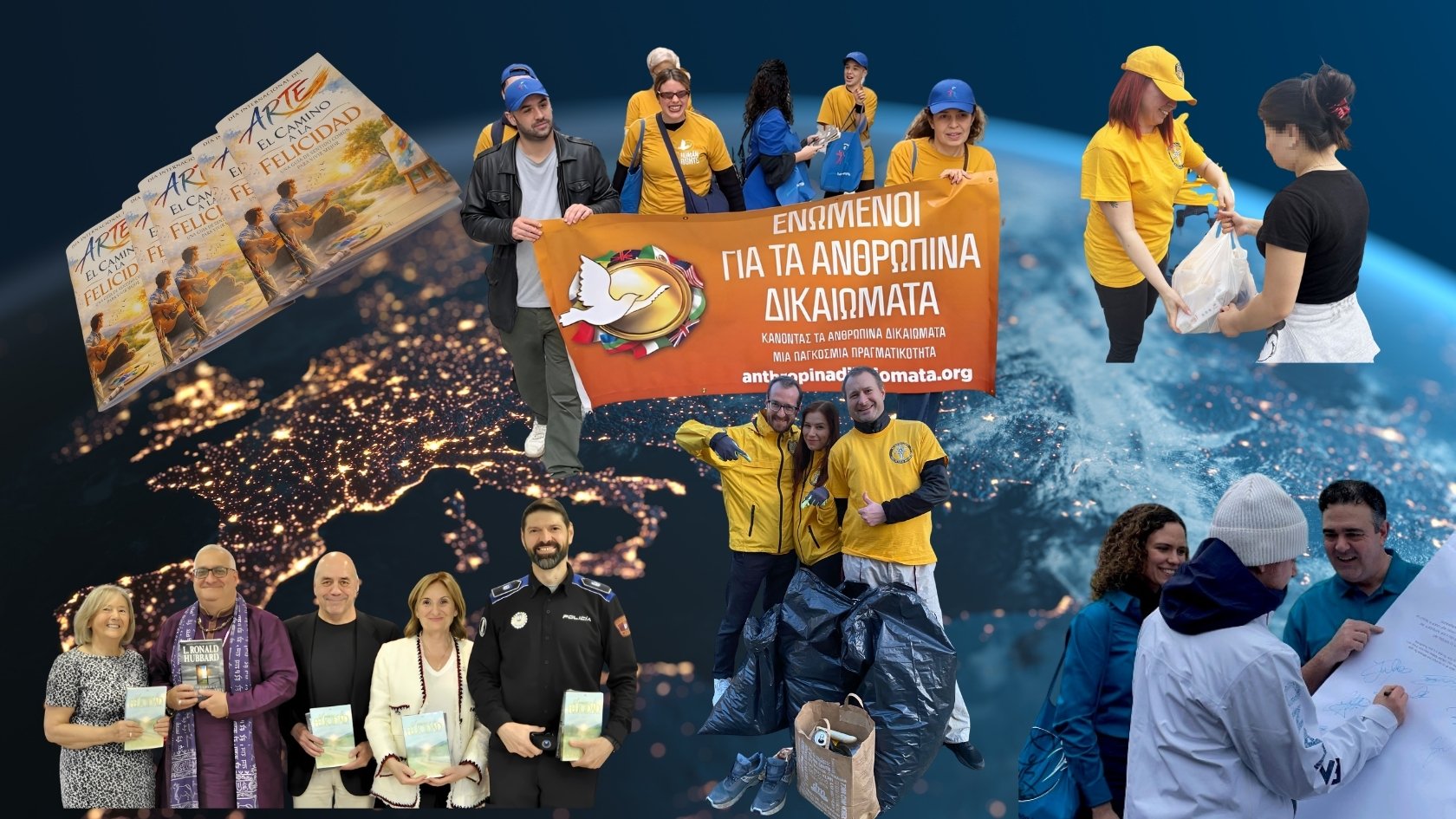
Churches and missions across the continent continue local initiatives in drug prevention, human rights education, moral education and volunteer service, linking social betterment work with European principles of dignity, freedom, equality and respect for human rights.
European Community Service Initiatives
BRUSSELS, Belgium — 30 April 2026 — Scientologists, churches and missions across Europe are continuing a wide range of community-based initiatives that contribute to public life through education, prevention and practical service. From drug-prevention campaigns and human rights education to volunteer assistance and neighbourhood-level projects, these activities reflect a longstanding commitment by Scientology communities to civic responsibility and to values widely recognised across the European project.
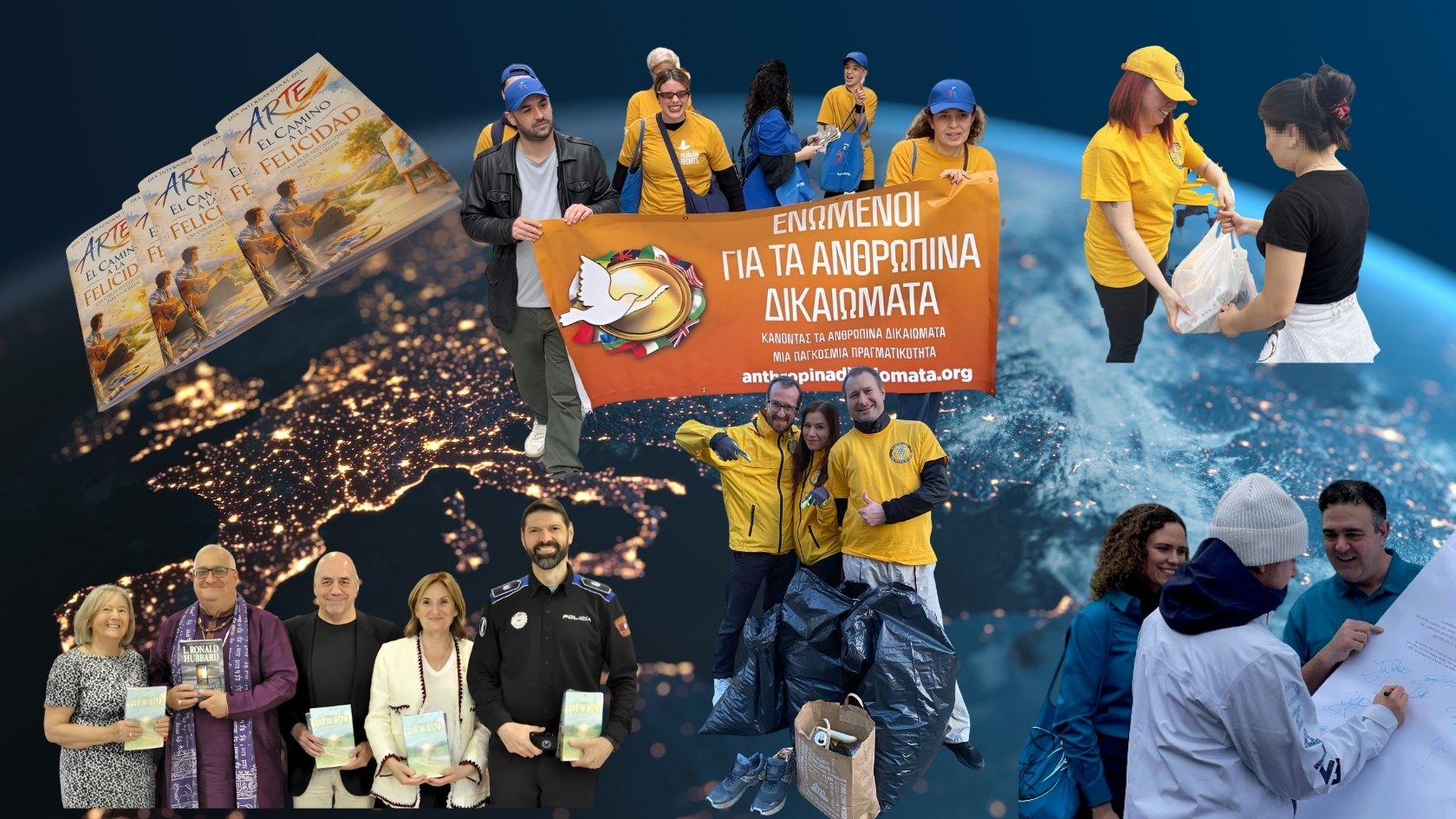
The activities are carried out by Church of Scientology churches, missions and groups in Europe, as well as by individual Scientologists and volunteers in cities and towns throughout the continent. While each initiative responds to local circumstances, they share a common purpose: helping people understand their rights, make informed choices, strengthen ethical responsibility and support their communities.
Europe’s founding values, expressed in Article 2 of the Treaty on European Union, include respect for human dignity, freedom, democracy, equality, the rule of law and human rights. Scientology communities in Europe see these principles not as abstract concepts, but as responsibilities that can be reflected in daily social action, community education and practical help.
Human Rights Education Programs
This approach has also been reinforced through the Church’s educational initiative “Europe’s Values, Your Rights”, a plain-language campaign presented by the European Office of the Church of Scientology for Public Affairs and Human Rights. The initiative explains key European protections, including the EU Charter of Fundamental Rights and the European Convention on Human Rights, using official EU and Council of Europe sources. Its purpose is educational: to help young adults and the wider public better understand the rights and civic principles that shape democratic life in Europe.
Among the best-known social betterment initiatives supported by Scientologists is Foundation for a Drug-Free World, whose “Truth About Drugs” materials are used by volunteers and community groups to provide factual information on drugs and their consequences. Across Europe, these activities have included awareness events, booklet distribution, school and neighbourhood outreach, and cooperation with local associations seeking to strengthen prevention among young people and families.
Another major area of work is human rights education. Through Youth for Human Rights and related educational activities, Scientology-supported volunteers promote awareness of the Universal Declaration of Human Rights, particularly among young people. The programme seeks to make human rights understandable in practical terms, encouraging respect for others, rejection of discrimination and recognition of the dignity of every person.
Volunteer Service Community Support
The Church’s social betterment work also includes The Way to Happiness, a non-religious moral education guide written by Scientology founder L. Ron Hubbard. Used in community settings by volunteers and partner groups, it presents common-sense principles such as respecting others, safeguarding children, being trustworthy and seeking to live honestly. In European contexts, these activities are often presented as contributions to social cohesion, personal responsibility and peaceful coexistence.
Volunteer Ministers, another international humanitarian programme inspired by L. Ron Hubbard’s writings, have also been active in Europe in response to community needs. Their activities have included assistance during emergencies, support for local clean-up efforts, logistical help at community events and practical aid where requested. The programme is based on the idea that individuals can be trained to offer help in moments of confusion, stress or difficulty.
Ivan Arjona, representative of the Church of Scientology to the European Union, the OSCE, the Council of Europe and the United Nations, said the work reflects a practical understanding of European civic life.
European Civic Responsibility Values
“European values are strengthened when citizens take responsibility for the wellbeing of their communities,” said Arjona. “For Scientologists, respect for human dignity, freedom of conscience, education, and service are not slogans. Instead, they are principles. These principles should be visible in neighborhoods, schools, families, and public spaces. In addition, our churches and missions contribute to this shared civic culture. They do this through prevention work, human rights education, and practical help.”
The Church of Scientology was founded by L. Ron Hubbard in the 20th century. Since then, it has developed a range of humanitarian and social betterment initiatives. Today, Scientologists and affiliated groups carry out these initiatives in many countries. In Europe, they adapt the initiatives to local needs and legal frameworks. At the same time, they remain connected to international campaigns in drug prevention, human rights awareness, literacy, moral education, and volunteer service.
Church representatives present these activities as contributions to community life. In this way, both religious and non-religious actors can support public welfare in democratic societies. However, these initiatives do not replace public institutions, civil society organisations, or families. Instead, they add practical support through voluntary action and education.
Religious Freedom Community Participation
Across Europe, churches and missions have increasingly worked in local settings where cooperation, dialogue and practical service are essential. In some places, volunteers support youth education; in others, they take part in neighbourhood-level prevention campaigns, interfaith initiatives, cultural events or emergency assistance. The common thread is the view that freedom of religion or belief carries with it a responsibility to contribute constructively to society.
This approach also reflects the European understanding that pluralism is not limited to tolerance, but includes the active participation of diverse communities in public life. Scientologists, like members of other religious and philosophical traditions, contribute to that pluralism through their own beliefs, institutions and voluntary activities.
Arjona added that European democracy benefits when communities are judged by their actions and their contribution to the common good.
Scientology Europe Community Presence
“In Europe, freedom of religion or belief is inseparable from respect for others,” he said. “Our experience shows that communities become stronger when people receive education. In addition, young people need help to avoid drugs. Furthermore, people must understand human rights. Citizens should also take responsibility for their environment and for one another.”
The Church of Scientology, its churches, missions, groups, and members operate across Europe. Scientology Europe reports a continent-wide presence through more than 140 churches, missions, and affiliated groups in at least 27 European nations. In addition, thousands of community-based social betterment and reform initiatives operate across the region. These initiatives focus on education, prevention, and neighborhood-level support. They are inspired by the work of Scientology founder L. Ron Hubbard.
Within Europe’s diverse national frameworks for religion, recognition of the Church continues to expand. Administrative and judicial authorities in Spain, Portugal, Sweden, the Netherlands, Italy, Germany, Slovakia, and other countries have addressed these matters. In addition, the European Court of Human Rights has reviewed and acknowledged Scientology communities under national and international freedom of religion protections.
Frequently Asked Questions (FAQs)
1. What community initiatives do Scientology groups support in Europe?
Scientology churches, missions, and volunteers in Europe support initiatives focused on drug prevention, human rights education, moral education, volunteer service, and community outreach. In addition, these groups adapt their activities to local needs through educational campaigns, neighborhood projects, and volunteer assistance programs.
2. What is the purpose of the “Europe’s Values, Your Rights” initiative?
The European Office of the Church of Scientology for Public Affairs and Human Rights created “Europe’s Values, Your Rights” as an educational initiative. It explains principles from the EU Charter of Fundamental Rights and the European Convention on Human Rights. In addition, it uses simple educational materials based on official European sources.
3. What is Foundation for a Drug-Free World?
Foundation for a Drug-Free World is a drug education initiative supported by Scientologists and volunteers. For example, communities use its “Truth About Drugs” materials in awareness campaigns, school outreach, and public education efforts. These activities provide factual information about drugs and their possible consequences.
4. What is Youth for Human Rights?
Youth for Human Rights is an educational program that promotes awareness of the Universal Declaration of Human Rights. In addition, the initiative helps young people understand human rights concepts through educational activities, discussions, and informational materials for schools and community settings.
5. What is The Way to Happiness program?
The Way to Happiness is a non-religious moral education guide written by L. Ron Hubbard. It presents general principles related to honesty, respect, personal responsibility, and peaceful coexistence. Furthermore, volunteers and community groups use the guide in educational and community activities.
6. What do Scientology Volunteer Ministers do in Europe?
Volunteer Ministers participate in practical community service activities, including emergency assistance, local clean-up projects, and support during public events. In addition, the program trains volunteers to provide practical assistance during stressful or difficult situations when communities request support.
7. How do Scientology community activities connect to European values?
Scientology representatives describe these activities as reflections of principles such as dignity, equality, freedom, and respect for human rights. These principles appear in European civic frameworks. In addition, representatives present community projects as voluntary contributions to public welfare, education, and civic participation within democratic societies.
8. In how many European countries are Scientology groups active?
Scientology Europe reports that churches, missions, and affiliated groups operate in at least 27 European nations. In addition, activities vary by country and may include education programs, prevention campaigns, volunteer service, and local community support projects adapted to regional legal and cultural systems.
9. Do Scientology initiatives aim to replace public institutions?
According to Church representatives, these initiatives do not aim to replace governments, civil society organizations, or families. Instead, representatives describe them as voluntary efforts that support existing public and community services through education, prevention programs, and practical assistance activities.
10. What role does religious freedom play in these initiatives?
Church representatives state that freedom of religion or belief includes the responsibility to contribute positively to society. Therefore, Scientology communities in Europe participate in educational, volunteer, and social activities as part of broader community engagement and public participation within democratic societies.
Company Details
Organization: European Office Church of Scientology for Public Affairs and Human Rights
Contact Person: Ivan Arjona
Website: https://www.scientologyeurope.org
Email: Send Email
Address: Boulevard de Waterloo 103
City: Brussels
State: Brussels
Country: Belgium
Release Id: 30042644574