
Student Housing Developers Are Rethinking Parking and Gaining Square Footage in the Process

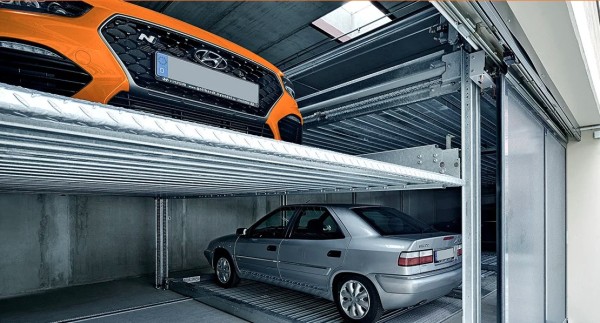
As land costs near major universities climb and parking mandates squeeze site plans, a growing number of developers are turning to automated systems to protect unit counts without sacrificing compliance.
Automated Parking for Student Housing
For developers building near major university campuses, the math has never been tighter. Land values in college towns are climbing steadily, municipal parking requirements remain firmly in place, and every square foot allocated to ramps, drive aisles, and circulation infrastructure is a square foot that cannot generate lease revenue. The result is a design tradeoff that has defined and constrained student housing development for decades: meet the required parking count, or maximize the number of leasable units.
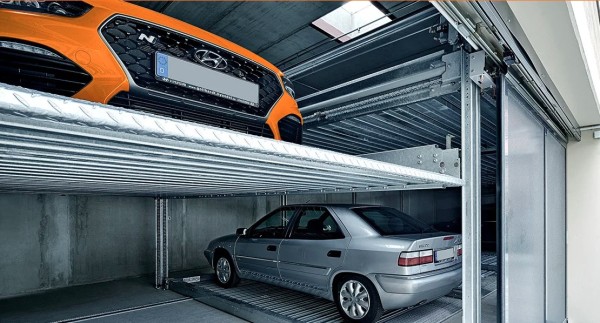
A recently completed student housing community near the University of Florida in Gainesville illustrates how that tension is starting to resolve. The project, which features fully furnished two-, three-, and four-bedroom units alongside indoor and outdoor shared spaces, delivered 46 parking spaces across two above-grade levels, without a single conventional ramp, without pit excavation, and without sacrificing a single residential unit from the original site plan.
The key was engaging the parking question early. Rather than designing the building first and fitting parking around what remained, the development team brought KLAUS Multiparking America into the conceptual design phase to evaluate automated parking feasibility alongside the project’s structural and site constraints. The resulting installation uses a TrendVario semi-automatic parking system configured for self-park operation, meaning residents drive directly onto the platform themselves, a familiar, intuitive experience that eliminates the staffing requirements of valet-operated systems.
The Footprint Problem in Student Housing
The economics of student housing have always been driven by density. Developers need to fit as many beds as possible onto a given site to make the numbers work, especially in markets where land acquisition costs are already elevated by proximity to campus. Conventional parking consumes a disproportionate share of the available footprint, not just for the spaces themselves but for the ramps, turning radii, and circulation aisles that vehicles require to move between levels.
In many cases, those circulation elements account for as much square footage as the parking spaces they serve. For a student housing developer working on a constrained urban site, that overhead can be the difference between a project that pencils and one that does not.
Automated and semi-automatic parking systems address this by eliminating ramps and drive aisles entirely. Vehicles are moved mechanically, shifted vertically and horizontally into position, which means the system’s footprint is limited to the parking bays themselves plus the transfer area where drivers enter and exit. The Gainesville project is a useful case study in what that recaptured space can mean for a development program: full parking compliance, full unit count, and no excavation below grade.
Why Early Collaboration Matters
One of the recurring lessons from projects like this is the importance of integrating parking strategy into the design process from the start. When parking is treated as an afterthought, something to be solved once the building footprint and unit mix are locked, the options narrow considerably. Developers may find themselves choosing between expensive below-grade excavation, surface lots that consume buildable area, or reducing the unit count to free up space for conventional garage circulation.
By contrast, when parking infrastructure is part of the conceptual design conversation, it becomes a tool for unlocking density rather than a constraint on it. In the Gainesville project, the no-pit, above-grade configuration was a direct result of evaluating automated parking options alongside the building’s structural system and the site’s conditions. That kind of coordination between the parking systems provider, the developer, and the design team is what allows projects to avoid the costly redesigns and value-engineering compromises that often emerge later in the process.
A Broader Trend in Campus-Adjacent Development
The Gainesville installation is not an isolated case. Student housing developers across the country, particularly in California, where land costs and regulatory environments have long pressured site plans, have been adopting automated parking technology for over a decade. The value proposition is straightforward: on sites where every square foot of buildable area carries a measurable revenue implication, replacing conventional parking infrastructure with compact, mechanized systems can meaningfully shift a project’s financial performance.
There are sustainability benefits as well. By reducing the physical volume of parking infrastructure, automated systems lower the embodied carbon associated with concrete and steel construction. A ramp-free parking structure uses fewer materials, requires less excavation, and generates less construction waste than a conventional garage delivering the same number of spaces. For developers and institutions with environmental commitments, that is an increasingly relevant consideration.
As campus-adjacent land becomes scarcer and more expensive, the developers who find ways to deliver both parking compliance and maximum density on constrained sites will hold a meaningful competitive advantage. The tools to do that already exist. The question is whether they enter the conversation early enough to make a difference.
Frequently Asked Questions (FAQs)
1. What is automated parking in student housing projects?
Automated parking uses mechanical systems to move and store vehicles without traditional ramps or drive aisles. In student housing, it can help developers meet parking requirements while using less space. The setup typically includes platforms where residents park, and the system shifts vehicles into position.
2. How does automated parking help increase usable space?
By removing ramps and circulation lanes, automated systems reduce the total footprint needed for parking. This allows more area to be used for residential units or shared amenities. The overall impact depends on the site layout, system type, and local zoning requirements.
3. Why are developers reconsidering traditional parking designs?
Rising land costs near universities and strict parking regulations make space allocation more challenging. Conventional parking structures often take up significant square footage. Developers may explore alternatives like automated systems to balance compliance with project density goals.
4. When should parking planning be addressed in a project?
Parking strategy is typically more effective when considered during the early design phase. Integrating it at the conceptual stage allows coordination with structural and site constraints. Late-stage changes may limit available options and lead to redesign or reduced efficiency.
5. What types of automated parking systems are commonly used?
Developers may use semi-automatic or fully automated systems depending on project needs. Semi-automatic systems often allow drivers to park directly on platforms, while the system handles positioning. The choice depends on budget, site conditions, and operational preferences.
6. Are automated parking systems suitable for all student housing sites?
Suitability depends on factors like site size, building design, and local regulations. Some properties may benefit more than others, especially those with limited space. Feasibility is usually determined through early evaluation and coordination with design and engineering teams.
7. How do automated systems affect construction requirements?
These systems can reduce the need for excavation, ramps, and extensive concrete structures. In some cases, above-grade installations are possible without below-ground pits. The exact requirements vary based on the system design and project specifications.
8. What role does early collaboration play in parking design?
Early collaboration between developers, architects, and parking system providers can help align design decisions. It allows teams to assess feasibility, optimize layouts, and avoid later-stage changes. This process may improve efficiency and reduce unexpected adjustments during construction.
9. Are there environmental considerations with automated parking?
Automated systems may use fewer construction materials compared to traditional garages. Reduced concrete and steel usage can lower the overall environmental impact. The extent of these benefits depends on the project scale and specific system implementation.
10. How are automated parking projects reviewed or approved?
Projects typically go through local zoning and building approval processes. Requirements may include parking counts, safety standards, and design compliance. Approvals depend on municipal regulations and may involve review by planning authorities or relevant agencies.
Company Details
Organization: KLAUS Multiparking America
Contact Person: Donna Wagener
Website: https://us.multiparking.com/
Email: Send Email
Address: 9 Schalks Crossing Rd # 724
City: Plainsboro Township
State: New Jersey
Country: United States
Release Id: 17042643931