
GlamAI Research Contribution Presented at ICML 2025 Highlights Critical Step Toward More Reliable and Realistic AI-Generated Images

San Francisco, CA, United States, 22nd July 2025 – GlamAI, the top destination for AI-driven visual marketing within the influencer economy and fashion segments, is excited to share news that team member Alexander Lobashev is a co-author of a seminal research paper released at ICML 2025 (International Conference on Machine Learning), which is considered one of the world’s highest-level AI conferences.
Understanding Instability in AI Image Editing
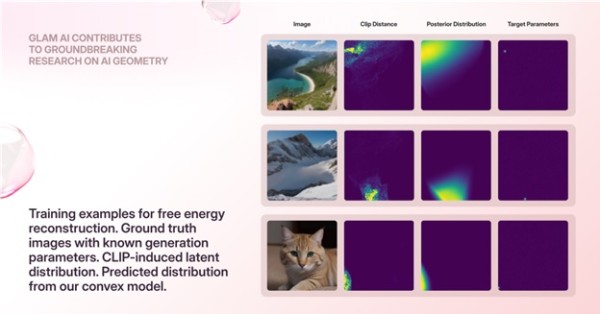
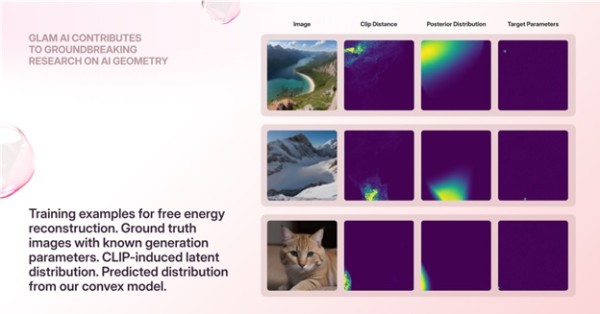
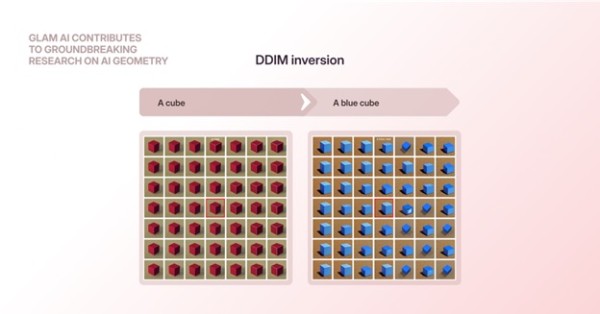
The paper, “The Hessian Geometry of Latent Space in Generative Models,” describes one of the most common frustrations of AI image editing: why trying to smoothly, gradually adjust the picture can make it leap unpredictably into a new, entirely different state. The study demonstrates that this is not an arbitrary bug, but an inherent aspect of the nature of how such models operate. This paper, co-written by a team of renowned AI researchers from top industry labs and academic institutions, makes an important contribution to the theoretical insight into the question of why generative models at times act in unstable and chaotic manners.
Solving a Critical Issue in AI Images
In practice, the paper goes some way towards explaining a significant issue with generative visual AI systems: why two very similar input images can generate radically different—and sometimes utterly unrealistic—outputs. This incoherence can appear as distorted shapes, loss of identity, or unwanted hallucinations when applying filters, styles, or transformations with contemporary AI models.
Overcoming Visual AI Frustrations for Users and Brands
For creators and consumers, this causes frustration, uncertainty, and a lowered level of trust in AI products.
GlamAI Aligns Research With Real-World Challenges
“While this issue has been a significant point of pain in the visual AI space, especially when realism and brand integrity are paramount, it’s something that is really hard to solve,” noted Paul Shaburov, GlamAI founder. “The work Alexander did is helping establish a theory to explain and solve this problem—and it’s an excellent example of how GlamAI bridges applied engineering with world-class research to advance the whole industry.”
Why This Research Breakthrough Matters
The authors propose a new technique to recover the Fisher information metric—a structure that encodes the latent space’s intrinsic geometry and curvature of a model. They show that the space is not smooth but rather separated into discrete “phases.” Models become extremely sensitive at phase boundaries, and minor input perturbations induce profound changes in the output.
A Geometric Solution to Image Distortion in AI
In simpler terms: this research offers a geometric way to understand why models can suddenly “break” or produce strange results during image manipulation. This insight is the critical step toward engineering models that are inherently more stable and deliver predictable, high-quality results. It enables teams like GlamAI’s to better tune and control model behavior, ensuring realistic and expected editing results.
Implications for Generative Photography and Visual Fidelity
The study is particularly significant in fields like generative photography, where users expect AI-enhanced visuals to look natural and identity-preserving. A poorly trained model might enlarge a person’s nose, misinterpret lighting, or distort facial features—all of which reduce the commercial and creative value of AI-generated assets.
GlamAI’s Edge: Research Plus Real-World Application
GlamAI’s platform already addresses these challenges through a hybrid model that blends open-source foundational models, proprietary training datasets, and internal tools designed to enhance image realism and preserve identity. The ICML 2025 paper aligns directly with GlamAI’s approach and validates its technical direction.
AI Stability Matters for Influencers and Fashion Brands
“Our customers—from influencers and content creators to emerging indie brands and global fashion companies—need images that are consistent, emotionally resonant, and brand-aligned,” said Paul Shaburov, Founder of GlamAI. “This research supports our mission by helping our models behave more predictably—and more humanely. We’re seeing a strong trend toward realistic-looking generated images, and this research, along with others to come, is part of the technological stack we’re using to deliver exactly what our customers demand.”
User Growth Validates GlamAI’s Technical Vision
This approach is paying off: GlamAI has reached 1.3 million monthly active users and ranked among the top five most popular apps in the “Photo and Video Editing” category on the App Store (April 2025).
Research Contributions Reflect GlamAI’s Mission
Alexander Lobashev’s contribution to the paper reflects GlamAI’s deep commitment to advancing not only its product capabilities but also the science that powers them.
About GlamAI
GlamAI is a graphical AI platform developed for content creators, influencers, and fashion and e-commerce brands. With the blend of high-fidelity generative AI with a patent-pending control layer and brand-safe architecture, GlamAI assists teams in creating campaign-ready imagery, product try-ons, social content, and more instantaneously—without photo shoots, 3D modeling, or digital artists. The company is dedicated to open research, transparency, and advancing the state of visual AI for good.
Access the ICML 2025 Research Paper
Title: The Hessian Geometry of Latent Space in Generative Models
Conference: ICML 2025
Link: https://openreview.net/forum?id=H8JTsbG4KW
Media Contact
Organization: GlamAI
Contact Person: Kseniya Zakharova
Website: https://glam.ai/
Email: kzakharova@glam.ai
City: San Francisco
State: CA
Country: United States
Release Id: 22072531256