
Crafting the Perfect Press Release Boilerplate: Tips for U.S Companies

An effective press release is an essential tool for U.S businesses in today’s fast paced media environment, when people’s attention is limited and competition for exposure is high. The press release boilerplate, a strong and brief statement that encapsulates a company’s core, is a backbone of every press release. The boilerplate is an effective section to give important information, promote your brand and make a lasting impression, yet it often gets missed.
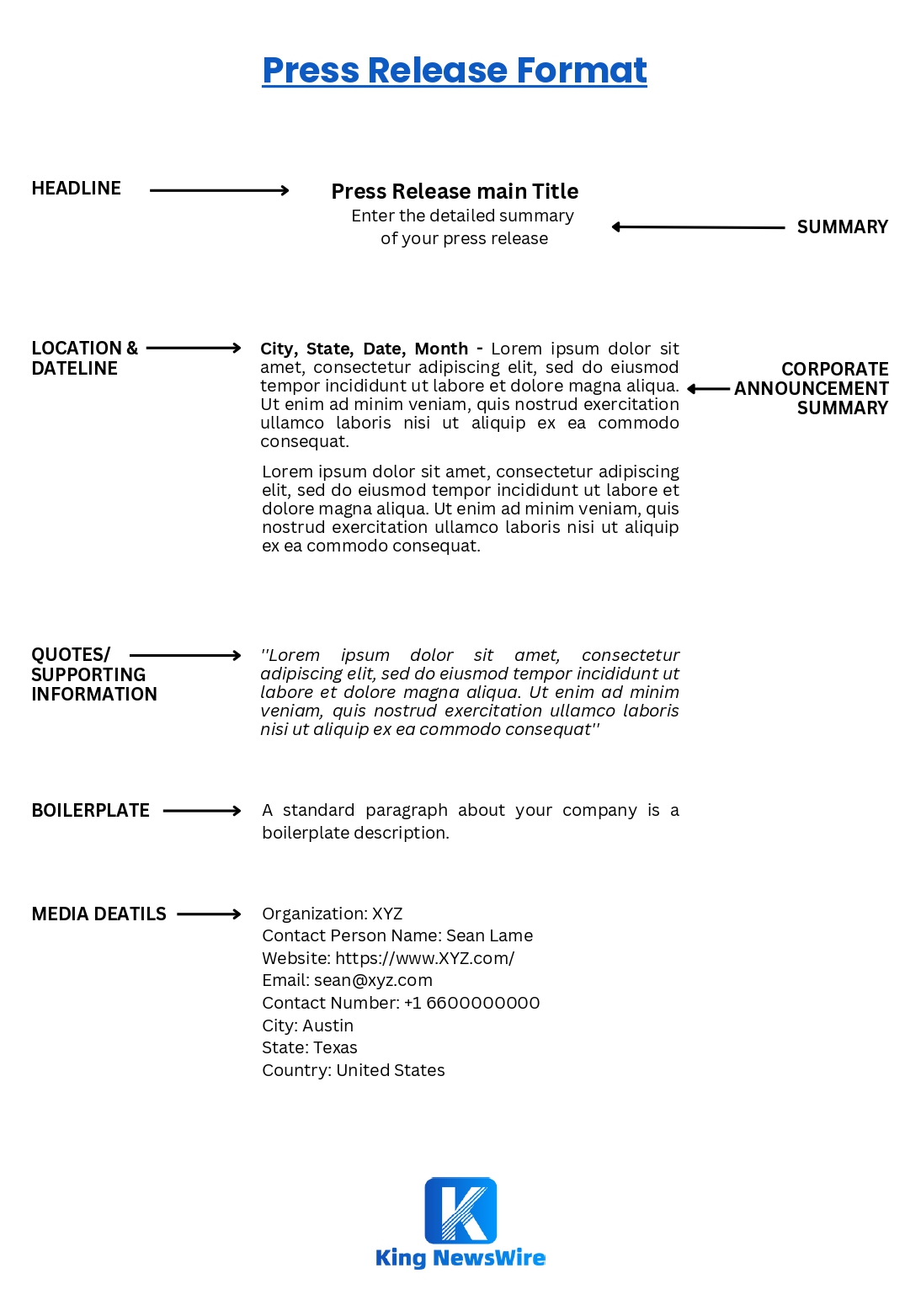
Press Release Boilerplate
Here we will go over some helpful methods for creating a press release boilerplate that will wow both your intended readers and news media.
What is Boilerplate?
It is crucial to comprehend the function of a boilerplate in a press release before delving into suggestions for creating one. Press releases often include the boilerplate, a regular paragraph, at the conclusion. It gives potential customers a taste of your business in a nutshell, outlining your mission, services, and unique selling points.
Tips for Writing an Effective Boilerplate
Your company’s communication strategy relies heavily on the boilerplate because of its frequent reuse in different press releases. Engage your audience through the following useful tips of writing an attention grabbing boilerplate
1- Begin with Firm Introduction
The opening phrase of your boilerplate should catch attention and express your company’s objective or identity. Focus on your company’s uniqueness rather than generalizations.
For e.g. instead of writing ‘(company name) is a leading provider of software solutions. Write, ‘(company name) transforms business efficiency with innovative software solutions that empower companies to thrive in a digital world.
2- Highlight Your Company’s Services and Achievements
This part should state your company’s main offerings rather than a product description, focus on the primary items and their consumer value. Also, enlist your industry leadership, recognitions and important achievements to boost the reputation and credibility of your company.
3- Include Key Statistics
Numbers demonstrate your company’s size and impact. Including accurate and updated facts and figures in your boilerplate helps boost your company’s reputation.
For e.g “(company name) continues to power the future of digital communication with over 15 million customers and 30 years of industry experience”.
4- Add Mission and Values
Integrating your purpose and beliefs in your boilerplate differentiates your brand and gives readers a reason to support it. Add your goals and values to connect with your audience emotionally.
5- Make it Brief and Focused
A boilerplate is usually 100-150 words therefore delivering a powerful message concisely is the key. Avoid complex language, jargon and irrelevant details. Give a clear and brief explanation of your organization that anybody can understand, especially journalists unfamiliar with your sector.
6- Modify Your Boilerplate Based on the Audience
It is a common practice to reuse a template for many press releases, however, always make sure to adapt it according to your target audience. Emphasize certain parts of your business that are more significant.
7- Ensure Regularity in Update
If your company enters new markets or develops major new goods, the boilerplate should reflect these changes. Updating and reviewing your boilerplate on a regular basis will keep it current and relevant. Maintaining your boilerplate helps communicate your company’s identity and value offer.
8- Evaluate and Enhance
Last but not the lease, proofread your boilerplate thoroughly to ensure it appropriately portrays your business and is error free. To obtain alternative viewpoints on how the boilerplate could be interpreted by different audiences, consider taking feedback from coworkers and or other stakeholders.
Importance of Boilerplate
Having a well-written press release boilerplate may greatly benefit your firm by increasing its reputation and exposure in the media. If you take the time to ensure your boilerplate is well-written and updated on a regular basis, it will help your public relations and marketing efforts and effectively explain what your company is all about.
Where Does the Boilerplate Go in a Press Release?
The boilerplate sits near the end of the release, usually under a heading such as About [Company Name]. A standard press release follows this order:
- Headline (and optional subheadline)
- Dateline
- Main body content
- Quotes
- Call to action
- Boilerplate
- Media contact details
This placement lets readers absorb the news first and then learn about the organization behind it. The boilerplate should never interrupt the main announcement.
Why Journalists and Brands Rely on the Boilerplate
- Brand consistency: readers see the same reliable description across every announcement, which builds familiarity over time.
- Journalist efficiency: editors get the company background without having to search for it.
- Credibility: a well-written boilerplate signals that the release follows professional standards.
- Reader context: people who have never heard of the company quickly understand what it does.
- Time saving: once written, the same paragraph is reused in future releases.
During press release distribution, journalists often scan releases quickly, so a clear boilerplate helps them identify the source and judge whether the story is relevant to their audience.
Boilerplate Template and Example
Use this fill-in template as a starting point and adapt it to your business:
“[Company Name] is a [industry] company dedicated to [primary mission]. Established in [year], the organization provides [products/services] to customers across [locations]. With a commitment to [core value], [Company Name] continues to [what the company does next].”
Here is how a finished version reads:
About King Newswire
King Newswire is a global press release distribution platform that helps businesses, startups, and agencies share news with media outlets and online audiences. The platform focuses on visibility, credibility, and structured press release publishing.
For a full release layout that includes this section, see our free press release template. You can also browse more company boilerplate examples.
Boilerplate vs Main Content vs Company Description
| Feature | Boilerplate | Main Press Release Content | Company Description |
|---|---|---|---|
| Purpose | Media reference and brand introduction | News announcement | Marketing |
| Placement | End of the press release | Beginning and middle of the release | Website pages and brochures |
| Length | Short and rarely changed | Varies by story | Longer and more detailed |
| Tone | Neutral and factual | News-focused | Persuasive |
What to Avoid in a Boilerplate
- Writing in the first person. Never use “we” or “our”; always use the company name.
- Promotional or sales language, pricing, or special offers.
- Technical jargon and buzzwords.
- Irrelevant company history.
Final Boilerplate Checklist Before Publishing
- Is it short, clear, and easy to read?
- Does it explain what the company does and who it serves?
- Is it written in the third person?
- Is it free of promotional claims?
Conclusion
To sum-up, in press release format a boilerplate is a tiny but powerful part that needs the whole focus. Companies in the U.S may strengthen their brand, convey their value and make an impact with an engaging and effective press release boilerplate by using the tips mentioned above. Remember, that your boilerplate frequently serves as the initial and final impression on readers and journalists; hence, it is imperative that it faithfully portrays the essence and purpose of your organization.
Frequently Asked Questions (FAQs)
1. What is a press release boilerplate?
A press release boilerplate is a short paragraph placed at the end of a press release that provides an overview of a company. It typically includes information about the company’s mission, services, and background. It helps journalists quickly understand the organization behind the announcement.
2. Why is a boilerplate important in a press release?
A boilerplate gives consistent background information in every press release. It helps reinforce brand identity and provides context for the news being shared. For U.S. businesses, it may support clarity and improve how journalists interpret the company’s role and relevance.
3. What should be included in a boilerplate?
A boilerplate usually includes the company’s name, mission, key services, achievements, and sometimes statistics. It may also highlight unique aspects of the business. The goal is to provide a concise summary that supports the main announcement without repeating the full content.
4. How long should a press release boilerplate be?
A boilerplate is typically around 100 to 150 words. It should remain brief while covering essential information about the company. Keeping it concise may help journalists quickly review and understand the business without unnecessary detail.
5. Can a boilerplate be reused in multiple press releases?
Yes, a boilerplate is often reused across different press releases for consistency. However, it may be updated occasionally to reflect changes in the company. Regular updates help ensure that the information remains accurate and relevant.
6. How can a boilerplate improve credibility?
Including clear facts, achievements, and accurate information may help build trust with journalists and readers. A well-written boilerplate provides context and supports the overall message. Credibility often depends on how factual and up-to-date the information is.
7. Should a boilerplate be customized for different audiences?
While the core structure remains the same, minor adjustments may be made depending on the target audience or industry. This can help highlight the most relevant aspects of the company for specific press release distribution channels.
8. Where is the boilerplate placed in a press release?
The boilerplate is usually placed at the end of the press release, after the main content. It appears before the contact details section. This placement allows readers to first understand the news and then learn about the company behind it.
9. Does a boilerplate affect press release distribution?
A boilerplate may support better understanding during editorial review by providing clear company information. Platforms like King Newswire may consider overall structure, including the boilerplate, when reviewing submissions.
10. How often should a boilerplate be updated?
A boilerplate should be reviewed regularly, especially when there are major changes such as new services, achievements, or expansions. Keeping it updated ensures that all press releases reflect the current state of the company.
11. Should a boilerplate be written in the first person?
No. A boilerplate should always be written in the third person using the company name, never “we” or “our.” This keeps the tone neutral and makes it easy for journalists to reuse the text.
12. Should a boilerplate mention dates or recent achievements?
Keep the core boilerplate accurate and up to date, and tailor it to the audience of each release by emphasising the parts of the business that matter most to those readers. Time-sensitive details, such as a one-off milestone or a recent launch, usually belong in the body of the release rather than the boilerplate.
Written by: Memona Zafar
To gain a deeper understanding of press release formats, feel free to explore the following articles.
You May Like:
Press Release Writing Service: What to Look For (+ What We Offer)
Press Kit Examples: A Complete Guide With Real-World Samples
Press Release Examples: A Complete Guide for Writing Effective News Announcements
Perfect Your Strategy with a Proven Press Release Format Example.
How to Write a Press Release: Format, Template & Expert Tips