
How to Maximize Press Release Value Across Paid, Social, Broadcast, and Owned Channels

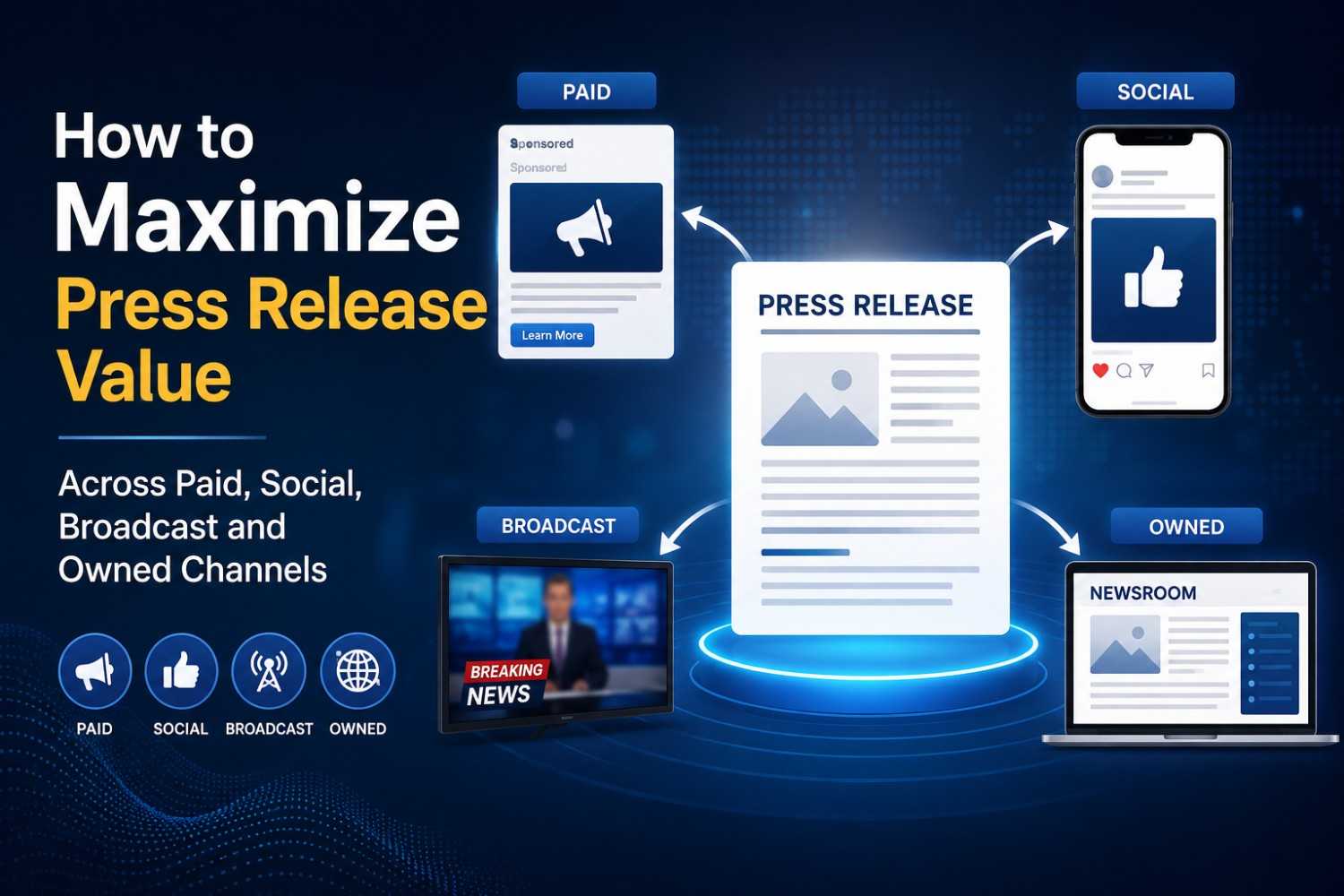
Quick Answer: A press release is more valuable when you use it as the beginning of a multichannel PR campaign. Do not treat it as a one-time announcement. Expand the narrative using owned media, social platforms, broadcast, and paid promotion. Repurpose the message for each channel. Then track traffic, engagement, media coverage, and conversions.
A press release should not stop working after it is distributed. A broader multichannel public relations (PR) campaign can reach more individuals with just the right strategy and one announcement.
Extend the story with the use of owned media, social media, broadcast, and paid channels. The channels may have different purposes, such as awareness creation and driving traffic and engagement.
The key is to adapt the message for each platform instead of copying it everywhere. The methods of press release amplification can be used to make you more visible, and your announcement can create some quantifiable value. A clear press release distribution strategy gives every channel a defined role instead of repeating the same message everywhere.
Key Takeaways
- Go beyond distribution: Turn the release into a wider campaign.
- Use channels wisely: Assign owned, social, broadcast, and paid media new functions.
- Repurpose the content: Create posts, videos, emails, and graphics.
- Track outcomes: Measure traffic, engagement, leads and conversions.
Start With the Press Release, But Plan the Full Campaign
The main resource of the campaign is a press release. Understanding what a press release is and how it fits into how press release distribution works helps you plan the full campaign. Distribution should not be the last step, though. Ahead of publication, determine what you want the announcement to accomplish and who it must be seen by.
Begin with a definite purpose. You might be interested in building brand recognition, making it into the news, generating web traffic or getting leads. Thereafter, find the audiences that matter, including journalists, customers, investors or business partners.
Then consider the placement of the announcement when distributed. The distribution strategy of your press release can be your newsroom, website, email list, social media, broadcast outreach, and paid media. This establishes a direct route towards the extension of the release and not pushing it randomly.
Give Every Channel a Different Job
All channels can amplify your press release strategy, yet not all should transmit the same message. Customize announcement according to the capabilities of the individual platforms.
Owned Media: Make the Story a Home
The message is controlled by your web page, newsroom, blog and email list. Use these platforms to offer additional information and take visitors to the entire announcement through a professional press release distribution service.
Social Media: Create Engagement
Post important details of the release on LinkedIn, X, Facebook or other applicable sites. Create graphics and short snippets from important quotes, facts, and figures. Make it more of a discussion, rather than a direct duplication of the entire announcement.
Broadcast: Add a Human Voice
The announcement can be enhanced with TV, radio, podcasts, and streaming interviews. A spokesperson is able to state the reasons why the news is important and respond to questions that cannot be answered in a written release.
Paid Media: Reach a Specific Audience
Paid promotion helps to spread the information about significant announcements. When you have a specific audience and quantifiable objective, consider sponsored content, social ads, or retargeting. Paid media will be most effective when used to complement a broader multichannel PR campaign, not to displace organic press release distribution. Compare press release distribution packages to see which tier fits a paid push.
Use Timing to Keep the Announcement Working
The press release distribution approach must not end with the release of the press release. You can use a simple timeline to remain consistent and not repeat the same message.
Launch Day
Write the release on your newsroom and website. Turn on your owned channels, and post important points on social media. Inform employees, partners, customers, and other involved parties.
Following Days
Make new angles out of the announcement. Promote media coverage as it appears. Post interview clips, quotes, or visuals. When there is a high potential for the announcement, then carry out paid promotion with an explicit audience and aim.
After the Initial Buzz
Do not stop when engagement slows. Reuse the most effective content in new forms. Continue relevant media outreach. Use performance statistics to determine what content should be more prominently featured.
Turn One Press Release Into a Multichannel Content Campaign
One press release can be turned into a number of useful marketing resources. Repurposing content aids in increasing its reach without necessarily producing each work entirely. See this press release online distribution overview for more on how each format extends reach.
| New Content Asset | Repurposed Format |
| Main announcement | Web/newsroom article. |
| Executive quote | LinkedIn post |
| Key statistic | Social graphic |
| Product news | Short video |
| Customer benefit | |
| Expert commentary | Podcast/interview |
This content amplification strategy will provide your announcement with additional chances to be exposed to various audiences. It also has the ability to make your multimedia PR campaign last longer.
Measure the Value Beyond Press Release Views
Press release views show reach, but they do not tell the whole story. A more powerful measurement approach links visibility to real business results.
Visibility Metrics
Monitor media mentions, reach, impressions, social traffic, and referral traffic. The measurements indicate the extent of visibility and sharing of the announcement.
Business Metrics
Look beyond attention. Monitor visits, leads, assisted conversions, sales opportunities, and conversion rates to the websites. These indicators demonstrate the campaign is contributing to business objectives.
Track Where Results Come From
Track channel traffic with UTM parameters, referral sources, analytics, and campaign-specific links. Google Analytics will be useful in determining the sources of visitors and their actions upon landing.
This simplifies the assessment of the ROI of press releases and the channels that add maximum value. A press release distribution service that reports on placements makes this tracking easier to act on.
Frequently Asked Questions
What should you do after distributing a press release?
Publish the announcement on your site, social media, email and other applicable media. Reuse the materials and measure their performance.
How can you extend the value of a press release?
Transform the release into social posts, videos, graphics, emails, interviews, and others. Target various audiences using different channels.
Should every press release use paid promotion?
No. Paid promotion is more applicable to big launches, funding announcements, partnerships, and news that have a specific target audience.
How do you measure press release ROI?
Monitor referral traffic, media coverage, interest, leads, conversions, and sales prospects. Use UTM parameters to identify traffic sources.
What is the difference between press release distribution and amplification?
Distribution conveys the announcement to the media and distribution channels through a press release distribution service. Amplification can be extended to owned, social, broadcast, paid, and other forms.
How long should you promote a press release?
There is no fixed timeline. Keep advertising the announcement as long as it is relevant and generates significant activity.
Conclusion
A press release must not diminish in value once released. Using the appropriate press release amplification strategy, a single announcement can be used to support several channels and connect with various audiences.
Repurpose the content for social media, owned channels, broadcast opportunities, and paid campaigns. Assign each channel a definite purpose and quantify results.
The idea is straightforward: transform any press release into a more lasting marketing resource to aid visibility, engagement, and business development.
Ready to put this strategy to work? Start your press release distribution today and give your next announcement a full multichannel campaign instead of a single send.
Author Expertise
Written by Sarah Whitfield, a press release and PR strategist specializing in multichannel campaign planning, SEO content, and audience targeting. She helps brands turn single announcements into lasting marketing assets across owned, social, broadcast, and paid channels. Last Reviewed: August 28, 2026.
Related Press Release Resources
- business expansion press release — for multi-location or new-market announcements.
- events press release — for conferences, webinars, and sponsorships.
- crisis management press release — for time-sensitive statements that need fast, controlled distribution.