
Press Release Distribution Software vs Services: What Startups Actually Need in 2026

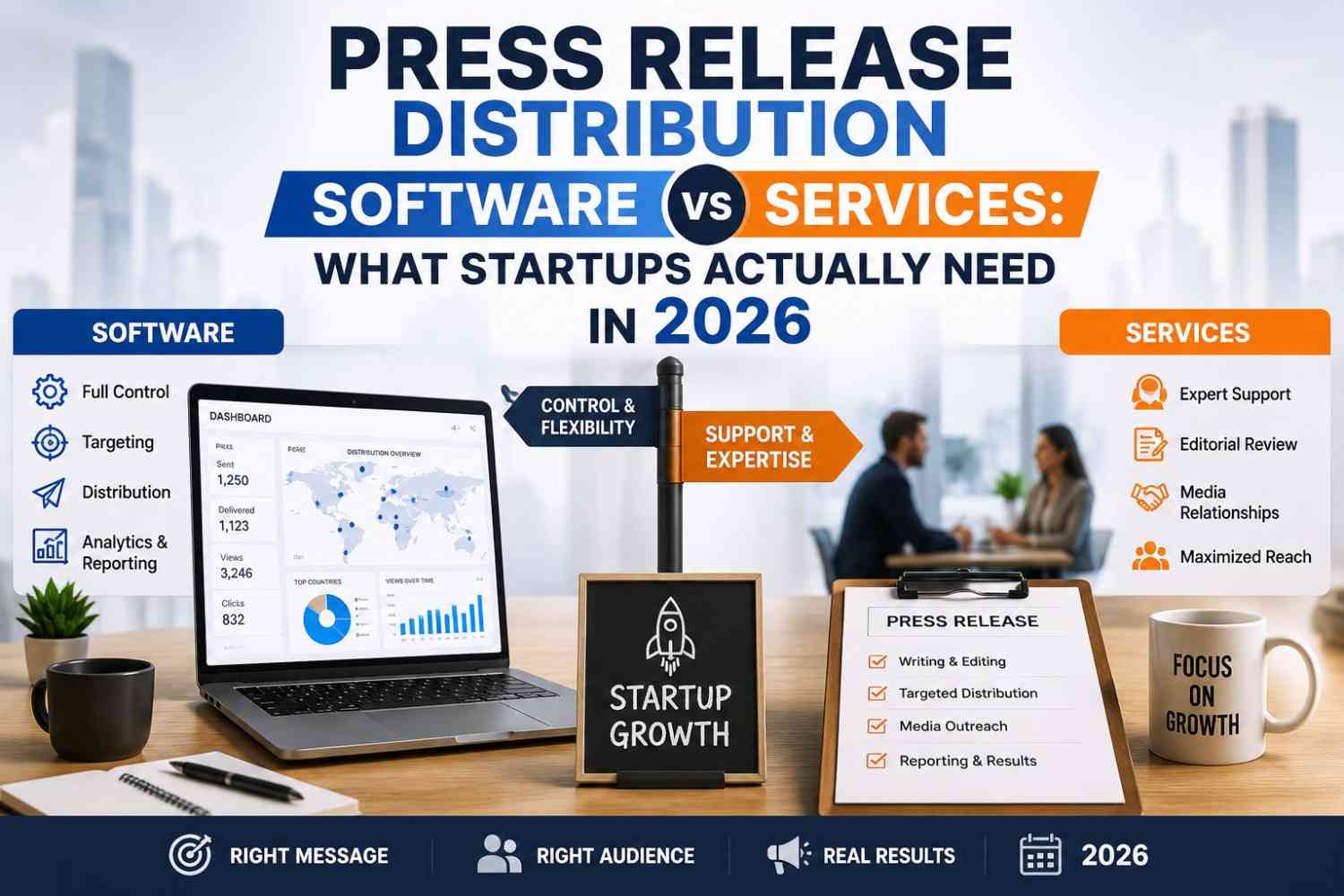
Press Release Distribution Software vs Services: What Startups Actually Need in 2026
Quick Answer: Press release distribution software gives startups more control. It assists in submission, targeting, distribution and reporting. A press release distribution service, which is managed, provides more direct assistance. The correct decision will involve your budget, PR skills, goals, audience, and the type of announcement.
Startups have several ways to share important company news. They can use press release distribution software or hire a managed press release distribution service. Some teams may also combine both options.
The decision that is best will be based on the needs of the startup. A small team might require additional assistance. A mature PR team that already understands what a press release is will want greater control over the distribution, targeting, and reporting.
So, which option makes more sense in 2026? This is a guide that will compare press release distribution software vs services. It clarifies the major distinctions and assists startups in making the appropriate decision.
Key Takeaways
- Software suits experienced marketing teams.
- Managed services suit lean startup teams.
- Hybrid options combine software and support.
- Choose based on goals, budget, reach, and support.
Press Release Distribution Software vs Services: What’s the Difference?
Press release distribution software provides companies with an opportunity to distribute on their own. It is capable of supporting submission, media targeting, publishing and reporting. Some platforms also include media databases, pitching tools, and monitoring features.
More practical help can be provided by a press release distribution service. This can consist of editorial review, distribution planning, targeting and reporting, depending on the provider. Some press release writing and distribution services also combine software with human support.
The main difference is who manages the work. Software provides startups with greater control. Partnering with a press release distribution service can lessen the burden on an internal team. Nonetheless, distribution does not necessarily imply earned media coverage. The quality of the release, targeting, and news value remain significant.
What Do Startups Actually Need From Press Release Distribution?
Startups must have more than a big number of outlets. They must have pertinent distribution that facilitates a specific business objective. Technology publications may be required in a product launch. A funding announcement might require a business and investor audience. Regional targeting may be necessary to achieve business expansion into new markets.
An effective startup press release distribution service must have transparent prices and helpful reporting. It must also offer pertinent media coverage and easy submission. Startups can employ industry and geographical targeting to reach audiences that align with their announcement. Current 2026 comparisons also emphasise reach, targeting, editorial support, reporting, pricing, and suitability for startups.
Internal resources should also be a consideration for startups. A PR experienced team might want to use press release software and take direct control. A small team may value editorial or distribution support more. The most appropriate selection is based on the announcement, the audience, budget, and the time.
DIY, Managed, or Hybrid: Which Model Is Right for Your Startup?
Press release distribution has three viable models: DIY, managed, and hybrid.
DIY Distribution
DIY distribution works well for experienced marketing teams. The startup manages the release, submission, targeting and campaign tracking. This method provides increased control and can be effective for normal announcements.
Managed Distribution
An operated press release distribution business provides more practical support. This model may apply to startups issuing a new business press release without in-house PR staff. It can also help when the announcement is important or time-sensitive.
Hybrid Distribution
A hybrid approach is a combination of software and professional support. It can provide startups with control and minimise the amount of work. This model can apply to expanding organisations that are interested in having improved tools without handling all PR functions on their own.
In 2026, some press release distribution platforms already combine distribution with media databases, pitching, monitoring, analytics, and customer support.
How Much Should Startups Spend on Press Release Distribution?
There is no one-size-fits-all price for startup press release distribution. The price of press release distribution is based on the reach, targeting, support, and package features. Current 2026 market comparisons show options ranging from low-cost services to several hundred dollars or more per release.
Value, rather than price, should be compared between startups. Low-cost services can be used for simple digital distribution. Large funding or a product announcement might be a reason to stop professional support and target even more.
Find out about the distribution network, editorial support, reporting, multimedia options, and contract terms; check them before purchasing. Also check the precise outlets and services covered by the distribution package. This will avoid unnecessary payment for features that the startup does not require.
Distribution Does Not Guarantee Media Coverage: What Startups Should Expect
Distribution of press releases will increase the coverage of a startup. Nevertheless, it is not a guarantee of coverage by journalists. Distribution broadcasts news through a network, and earned media relies on news value, relevance, timing, and interest of journalists.
Syndication and earned media are other differences that startups should be aware of. The release can be covered by news sites without any individual editorial coverage. Therefore, startups should not judge success by outlet count alone.
A strong release still matters. It must provide actual news and give journalists a strong reason to care. Startups may also integrate press release distribution with direct media outreach to target better. This approach can support both visibility and potential media coverage.
How Should Startups Measure Press Release ROI?
Startups should measure press release ROI against clear business goals. Appropriate metrics will be determined based on the objective of the announcement. As an illustration, launching a product can be based on traffic to the website. A funding announcement can be centred on brand awareness and investor attention.
Useful metrics include:
- Referral and website traffic.
- Media mentions
- Audience reach
- Link clicks
- Social engagement
- Leads and conversions
- Brand searches
- Media coverage
Distribution platforms can also provide data on views, clicks, shares, and multimedia engagement.
Most importantly, avoid vanity metrics. A high distribution figure is not necessarily an indicator of good performance. Instead, compare the campaign’s cost with meaningful outcomes. This will provide startups with a better understanding of whether their press release distribution service has brought real value or not.
FAQs
Is press release distribution worth it for a startup?
It may be helpful in cases where the startup has actual news to communicate. A strong release can be assisted by funding, launches, partnerships, research, and expansion. The price is based on the quality of the distribution and the business objective.
Does a press release guarantee media coverage?
No. Distribution has the ability to create more visibility, but not independent journalist coverage. When particular publications are important, startups ought to integrate distribution and focused media outreach.
Should startups use software or a press release distribution service?
It depends on the team. Press release software suits teams that want control and can manage distribution themselves. Startups which require additional support may be well served by a managed service.
Can startups use both software and a distribution service?
Yes. A hybrid method can be effective with growing teams. It is a combination of professional PR or distribution with software tools.
What should startups measure after distributing a press release?
Track traffic, media mentions, clicks, engagement, leads, conversions, and relevant coverage. These metrics provide more useful insight than distribution volume alone.
Conclusion
Choosing between press release distribution software and services depends on your startup’s goals. Software provides greater control of distribution and reporting. A managed service provides you with increased support and reduced work.
Your budget also matters. Nevertheless, the most affordable alternative is not necessarily the best choice. Consider your target audience, PR experience, type of announcement, reach of distribution and reporting features.
A hybrid solution can provide a beneficial compromise for a growing startup. It combines technology with professional support. Most importantly, focus on the relevant distribution and actual business outcomes, rather than the quantity of outlets covered. Whichever model you choose, a professional press release distribution service can help your startup get its news in front of the right audience.
Author Expertise
Written by the King Newswire Editorial Team
We provide press release distribution, PR, online marketing, and media outreach. Our team evaluate distribution channels with respect to reach, prices, targeting, reporting and support. We aim at offering simple and practical information.
Additional Press Release Resources
For related reading, see our guide to what a press release wire is and how it differs from a standard release, plus our guide on writing a press release for a new business.