
How Can a Product Update Press Release Increase User Adoption of New Features?

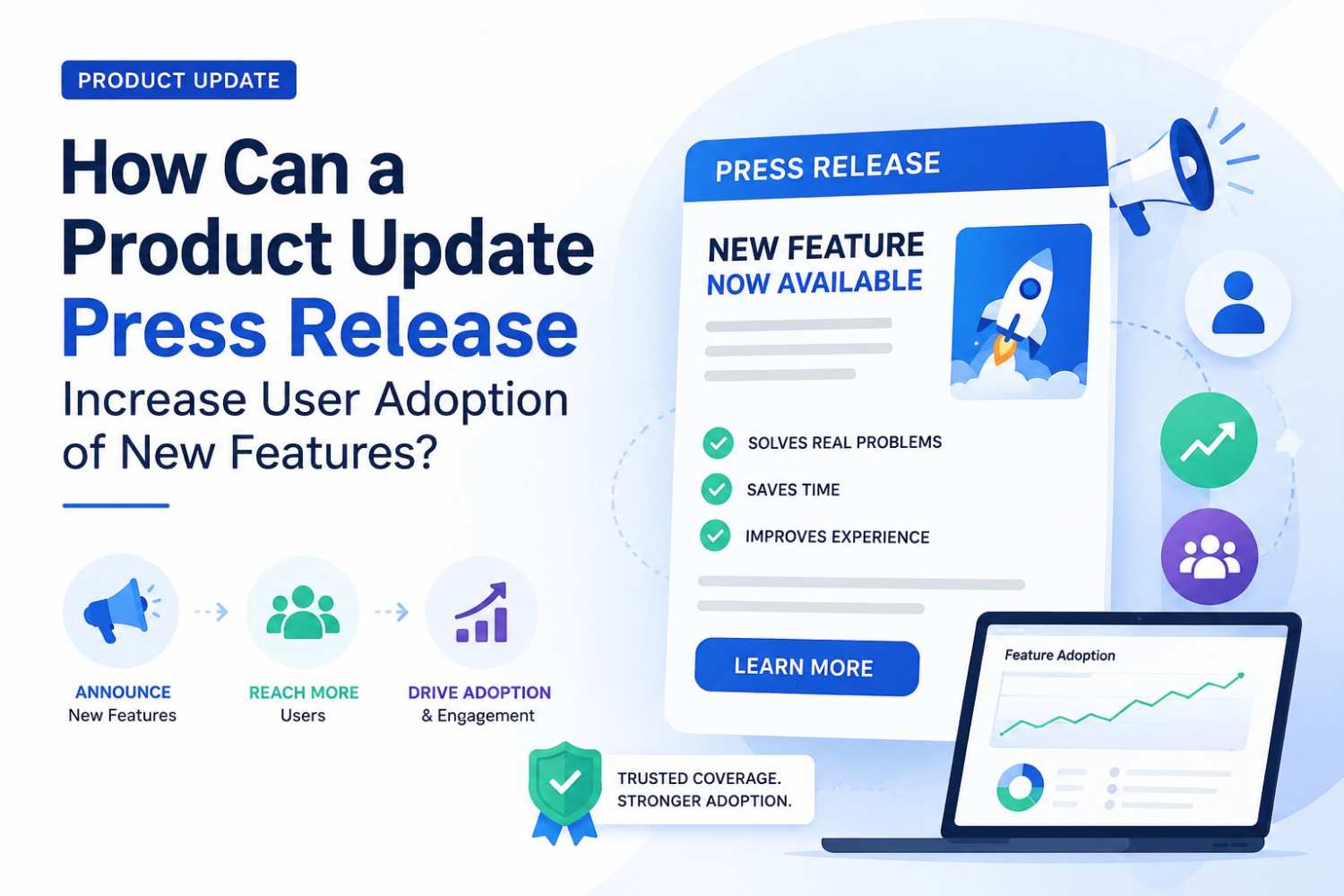
How Can a Product Update Press Release Increase User Adoption of New Features?
By King Newswire | Reviewed by the King Newswire Editorial Team | Published July 6, 2026 | Last Updated July 6, 2026
Shipping a new feature is one thing. Convincing users to find and utilize it is a whole different story. Product teams spend a lot of money building it and they don’t realize that the communication side is a big deal. That gap directly affects new feature adoption rates. Well-formulated product update Press Release helps to fill that void, placing the update in front of users who haven’t logged in to find it out for themselves. Every feature update is also a step in the broader software release lifecycle, and getting this right starts with treating the announcement as a structured product update press release rather than an afterthought.
Pendo’s 2024 State of Product Leadership report revealed that 74% of product teams indicate feature awareness is the primary hurdle to adoption, rather than product quality. A Forrester study also revealed that users that have seen a feature release announcement on a trusted news source are 2.3 times more likely to investigate that feature compared to seeing it through an in-app notification.
Why a Press Release Drives Adoption Better Than In-App Messaging Alone
Email newsletters send only to existing users, and in-app banners only to the current app user base. They don’t draw new readers. Product Update Visibility gained through earned media goes beyond that, targeting lapsed users, potential new customers, and journalists that shape the buying decision. It’s within that broad circle that new feature adoption takes a new breath.
Press coverage also carries authority that owned channels cannot replicate. Users trust product improvements more when recognised tech or trade outlets report them. They trust them less when only the company makes the announcement. Third-party validation is simply more persuasive. For teams new to structured announcements, this complete press release guide breaks down every section a newsroom expects to see.
What to Include for Maximum Impact
Lead With the User Benefit, Not the Technical Detail
A Product Update Press Release that opens with engineering specifics loses most readers immediately. Lead with what changes for the user. Emphasize any improved processing speed, fewer steps needed, or the new functionality that will fix a previously recognized issue. An effective way to promote software features is one that presents an upgrade as a user benefit, not just a technological advancement. This user-first approach is central to writing an effective product update press release that a busy editor will actually read past the headline.
Name the Problem It Solves
The strongest feature release announcement connects the update directly to a real-world frustration. Tell users what they’ve been asking for. Or tell them how this particular feature will solve an issue which has never been resolved by your competition. It’s all about context – the one that makes a product update relevant.
Include a Quote That Expresses the Idea Behind This Particular Feature
Include a quote from the product lead or founder. Describe why you built this update and what issue it will resolve. In case of software feature promotion, it’s important to reveal the idea behind the product updates and gain the trust of the users. If you’re unsure how to structure that quote alongside the rest of the release, this press release writing guide walks through placement and tone.
Link Directly to Where Users Can Access the Feature
Any additional step from learning about the feature to its usage is a barrier for adoption. Product Update Visibility is only half the task; Include a Link to the Feature. Give interested users an immediate next step. This is the same principle publishers apply when covering a new product launch announcement: readers convert when the next step is one click away.
Common Mistakes That Reduce Feature Adoption
- Writing for developers rather than end-users throughout the release
- Announcing the feature too long after it shipped, when interest has already faded
- Using jargon that obscures what the feature actually does for a typical user
- Distributing only to a general list rather than outlets that cover your product category — a mistake that a distribution checklist like our product launch press release checklist helps teams catch before publishing.
Distribution: Getting the Update in Front of the Right Audiences
A Product Update Press Release distributed through King Newswire reaches outlets including AP News, Benzinga, and MarketWatch giving your feature update visibility well beyond your existing user base. For new feature adoption particularly, it is important as it reaches out not only to the existing but those who may have been inactive as well as people who are evaluating your product for the first time. Teams can compare distribution tiers on the King Newswire plans page before choosing the right reach for a single feature update versus a full product update press release campaign.
Combine wire distribution with outreach to tech and industry-focused journalists who write about software feature promotion. A feature announcement in a relevant newsletter or tech column can drive more qualified traffic than general news coverage alone. The same journalists who cover a mobile app launch announcement are often the right contacts for a major feature rollout too.
SEO and Google E-E-A-T: The Search Value of Update Announcements
With a Product Update Press Release distributed through several media outlets, you get backlinks which enhance your domain authority in the long run. Your content will thus continue to remain visible for months to come, and people will have no difficulty finding what they need without searching through old forum discussions. This same backlink effect applies whether you’re announcing a feature update or a new service launch, since both rely on earned coverage from indexed news domains.
Google’s E-E-A-T framework favors users for rewarding content with experience, expertise, authoritativeness, and trustworthiness is favorable to content that has named authors, reliable claims, and trustworthy links. The well-distributed Product Update Press Release meets all these criteria, provided that it has been crafted in the user context and not in marketing terms.
Ready to get your next feature update in front of the right audience? Compare distribution tiers on the King Newswire plans page and pair the announcement with a dedicated feature page so readers have somewhere to go the moment they finish reading. You can also start from the King Newswire homepage to explore every distribution and writing service available.
About the Author
Written by King Newswire, and produced by the King Newswire content and distribution team, who help software companies and product brands secure coverage across AP News, Benzinga, MarketWatch, and 1000 verified media outlets worldwide. Reviewed for accuracy by the King Newswire Editorial Team on July 6, 2026. Learn more at King Newswire.
Frequently Asked Questions
1. We ship updates frequently — do we need a release every time?
No, reserve releases for updates that meaningfully change what users can do or that solve a widely reported pain point. Minor patches are better handled through product changelogs.
2. What if the update is relevant only to a specific user segment?
Name the audience segment in the headline. Target outlets that serve those readers. A focused release outperforms a broad one.
3. Should we wait until the feature is fully rolled out before releasing?
Yes, unless you’re issuing an embargoed preview. Announcing an unavailable feature frustrates readers who try to access it immediately.
4. How technical should the language be?
Target your press release to people who understand your product category but are not developers. Any technical details should be referred to elsewhere.
5. Can we quote a customer in the release instead of internal leadership?
Yes. A verified customer quote often carries more editorial weight than an internal spokesperson’s. Always get written permission before using it.
6. How soon after distribution should we expect traffic from the release?
Initial referral traffic usually appears within 24 to 48 hours. Trade publications and newsletters can generate a second wave of traffic.
7. Does the release help users who already know about the feature?
Coverage serves as indirect social proof that motivates users to use a feature after having seen it but not tried it before.
8. What metrics should we track to assess whether the release drove adoption?
Track referral traffic from syndicated outlets, feature page visits in the 48 hours post-distribution, and any uplift in feature activation rates compared to your baseline.
Related Blogs:
- How to Write a Product Update Press Release That Earns Real Media Coverage
- How to Announce a Product Enhancement: Best Practices and Distribution Tips
- What Makes a Product Update Press Release Newsworthy to Journalists?
- Why Is Distribution the Most Critical Step in a Product Update Press Release?
- How Can a Product Update Press Release Strengthen Brand Authority in Competitive Markets?
- Why Do Investors Pay Attention to Product Update Press Releases?