
Event Marketing Strategy: Where Press Releases Fit in Your Event Promotion Plan

Event Marketing Strategy: Where Press Releases Fit in Your Event Promotion Plan
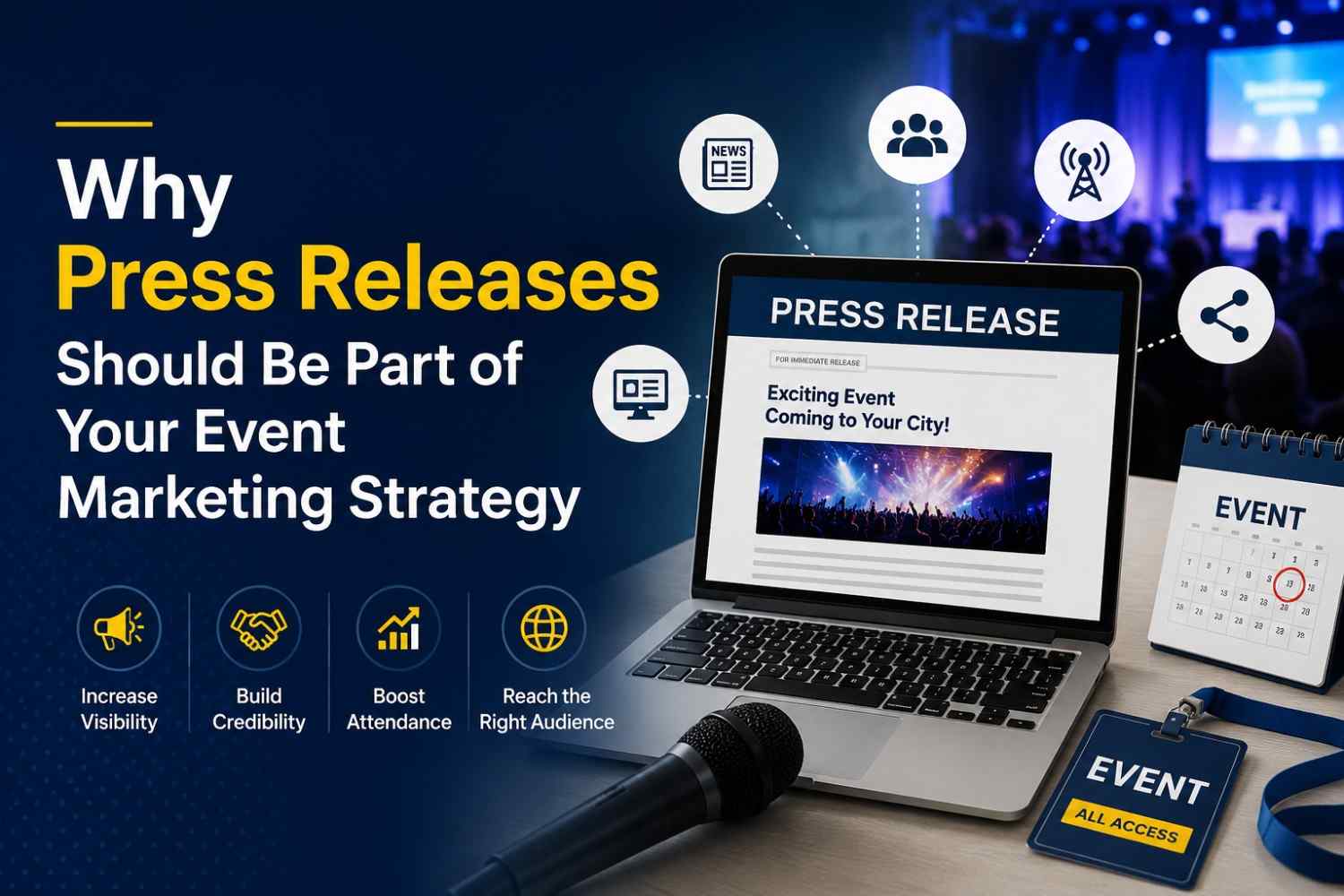
Quick Answer: In an event marketing strategy, press releases are the earned-media layer that sits alongside email, social media, partners, paid ads and event listings. Use them at the three moments when the event is genuinely news: the launch announcement, major updates such as a headline speaker or sponsor, and the post-event recap. Each release then feeds your other channels, and its coverage, backlinks and referral traffic are measured with the rest of the campaign.
Written by Sarah Whitfield, SEO & PR Strategist at King Newswire, specialists in event announcement distribution and earned media planning. (Last Reviewed: October 2026)
Most event teams treat the press release as a single task: write it, send it, move on. The events that fill seats treat it as one part of a coordinated plan, timed with every other channel. This guide shows where press releases fit in that plan, phase by phase, and how to measure what they contribute. If you need help with the release itself, see our guide on how to write a press release for an event, with templates.
Key Takeaways
- Press releases do a job other channels cannot: they earn third-party coverage that makes the event credible to new audiences.
- Plan releases around real news moments in the event timeline, not on a fixed weekly schedule.
- Every release should be reused across email, social, partner and sponsor channels.
- Measure releases against registrations, not only pickups.
The Channels in an Event Marketing Strategy
A complete event promotion plan usually combines:
- Owned channels: the event website, registration page, email list and blog.
- Social media: organic posts, speaker and sponsor content, and event hashtags.
- Partners and sponsors: co-promotion through their newsletters, websites and communities.
- Paid media: targeted ads that drive registrations from defined audiences.
- Event listings: discovery platforms where people search for events in your space.
- Earned media: news coverage, trade publication features and journalist interest, driven by press releases and media outreach.
Owned, social and paid channels speak in your voice. Earned media is the only channel where someone else confirms your event is worth attention, which is why it carries more weight with first-time attendees, sponsors and speakers.
What Press Releases Contribute to the Plan
Credibility with new audiences
Coverage in news outlets and trade publications makes the event more legitimate and trustworthy to potential attendees and sponsors who have never heard of you.
Reach beyond your existing audience
Email and social mostly reach people who already know you. A distributed release reaches news sites, industry publications and Google News, where new audiences discover events.
Lasting search value
Each outlet that publishes your release links back to your event page, adding backlink authority that continues to support search visibility after the event, including for next year’s edition.
Content for every other channel
A release gives you approved facts, quotes and a headline that email, social and partner teams can reuse, keeping the message consistent across the campaign.
The Event Promotion Timeline: Where Releases Fit
Phase 1: Launch (two to three weeks or more before the event)
Open registration with a launch announcement. Send the initial release two to three weeks before the event date; for large conferences or trade shows, six to eight weeks gives media more lead time. Coordinate the same day:
- Email to your list announcing the event and linking to coverage once it appears.
- Social posts sharing the announcement and the registration link.
- Partner and sponsor kits so they can announce their involvement at the same time.
- Event listing entries and any early-bird paid campaigns.
Phase 2: Build momentum (the weeks before the event)
Issue a separate release only when there is real news: a headline speaker confirmation, a significant sponsorship, a major partnership or a new announcement planned for the event. Each one is an independent news opportunity. Between releases, keep momentum through owned channels: speaker spotlights, agenda reveals and registration reminders. In the final days, a reminder release can support last-minute registrations alongside a final email push and targeted ads.
Phase 3: During the event
The live event is when your audience and the media are paying most attention. Publish any news you announce on stage as a release at the same time, so journalists have accurate details to report. Social and live content carry the experience; the release carries the news.
Phase 4: Post-event
A recap release covering highlights, attendance figures and key outcomes extends the media cycle and builds credibility for your next event. Send it to attendees and non-attendees by email, share it with sponsors for their own reporting and use it to open registration interest for the next edition.
Coordinating Releases With Other Channels
- Same facts everywhere: dates, prices, speakers and links in the release must match the website and emails.
- Coverage first, then amplify: once coverage is live, share it on social and in email so third-party validation appears before your own promotion.
- Give partners the release: sponsors and partners can quote it and link to it, extending reach into their audiences.
- Combine distribution with outreach: for larger events, pair newswire distribution with personal outreach to five to ten relevant journalists or influencers, and follow up two to three days after distribution.
For ready-made release formats at each phase, browse our simple press release examples for events.
Measuring the Press Release Contribution
Track releases with the same discipline as paid and email campaigns:
- Placements: where the release was published, from the distribution report.
- Referral traffic: visits from each placement to your event or registration page.
- Registrations: tag release links with UTM parameters so sign-ups can be attributed.
- Backlinks and search visibility: new links to your event page over the following months.
- Follow-on coverage: journalist enquiries, interviews and features that started with a release.
Compare these against the other channels after the event to decide how much of next year’s plan should rely on earned media.
Putting the Plan Into Action
King Newswire’s event press release distribution service sends each release to 400+ indexed news outlets with editorial review, and every distribution comes with a report showing where the release was published and the referral traffic each placement generated, so press releases can be measured alongside the rest of your event marketing. Multi-release campaigns are supported, so the launch, update and recap releases can be planned together.
FAQs
1. Why should press releases be part of an event marketing strategy?
They add earned media, which no other channel provides: third-party coverage that builds credibility, reaches new audiences and creates backlinks that support search visibility after the event.
2. How many press releases does an event need?
Plan at least two: a launch announcement and a reminder or recap. Add separate releases for genuinely newsworthy updates such as a headline speaker or major sponsor.
3. How do press releases work with social media and email?
The release provides the approved facts and quotes; social and email amplify it and link to coverage once it appears, so every channel tells the same story.
4. How do I measure the impact of event press releases?
Track placements, referral traffic, registrations from UTM-tagged links, new backlinks and follow-on media interest, then compare them with your other channels.
5. Is a post-event press release worth it?
Yes. A recap with highlights and outcomes extends coverage, gives sponsors something to share and builds credibility for your next event.