
What Are the Best Practices for an Effective Crisis Press Release?

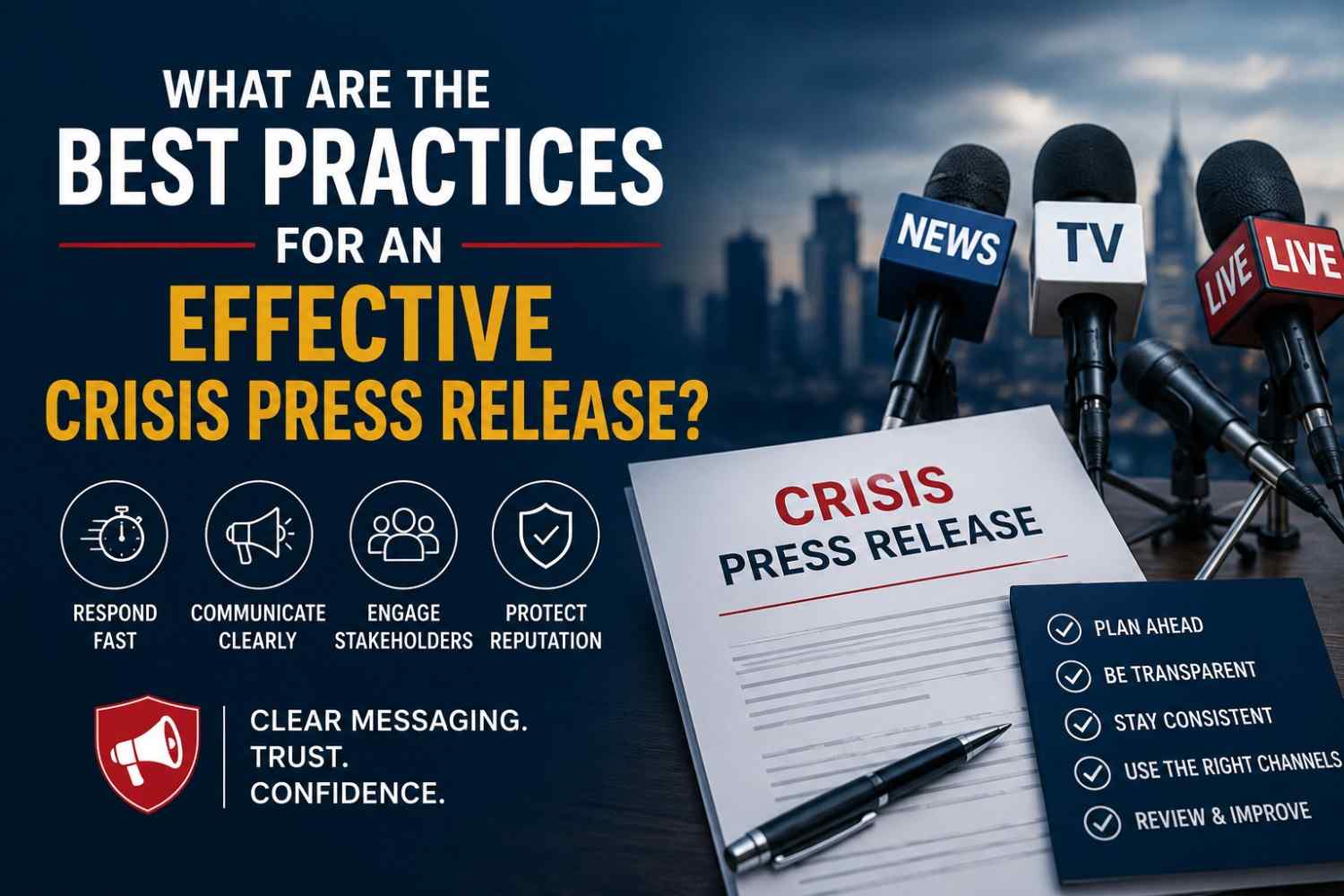
What Are the Best Practices for an Effective Crisis Press Release?
Reviewed by the King Newswire Editorial Team | Last Updated: July 2026
Every crisis is unique. However, organisations that protect their reputation usually follow the same core principles. They are not improvising at the moment. They are applying crisis PR best practices that were defined before the event occurred and that discipline shows in everything from the speed of the first statement to the tone of the last one.
This guide walks through the practices that consistently separate a controlled crisis response from one that spirals. King Newswire sends out crisis messages to more than 1,000 media channels verified by the company including Yahoo Finance, Bloomberg, AP News, Business Insider, and MarketWatch. These principles are based on what does and what doesn’t work.
According to the 2026 PRSA Crisis Response Benchmark, organizations that have a written crisis playbook resolve the situation 38% faster than those who don’t. The latter struggle more with reputational damage.
1. Have a Plan Before You Need One
A crisis communications team should prepare its holding statement before a crisis begins. Avoid waiting until the last minute. It wastes valuable time. Crisis PR best practices include pre-crisis playbook, approved in advance statement templates, defined approval process, and crisis liaison who is able to give the green light to distribute information without a complete committee’s agreement. Reviewing how to prevent a PR crisis from escalating strengthens this pre-crisis planning stage.
2. Issue a Holding Statement Immediately
A holding statement press release does not need to contain every fact. The statement should confirm three things. Organizations are aware of the problem and are investigating it. In addition, an announcement that they will give a statement on it within a certain period will be issued in the very first hour and prevent a narrative vacuum filled by speculations. For a closer look at what a crisis press release should include, review the core elements before drafting the statement.
3. Communicate Fast, Often, and Truthfully
Press release crisis timing is one of the most consistently underestimated factors in reputation recovery. Tell your organisation’s story within the first few hours. Otherwise, others will shape the narrative, and you will lose control. Teams that respond before the story writes itself typically retain more control over the final narrative.
4. Apply the Three Cs Framework
Concern, control, commitment. A crisis spokesperson statement should include concern about affected people, control of the organization, and commitment to resolution of the issue. Lack of any of these components makes statements useless. This structure mirrors the broader discipline of crisis communication studied across the public relations field.
5. Communicate With Every Stakeholder Group
Customers, employees, investors, and partners all need to hear from the organisation, not just the media. A crisis announcement distributed only to journalists while internal staff learn about it from the news creates a second trust failure layered on top of the original crisis. Understanding the role of a press release in a crisis response clarifies why every stakeholder group needs the same verified information at the same time.
6. Use the Proper Channels for Every Audience
Use multiple communication channels because audiences get information in different ways. The investors follow Bloomberg and Yahoo Finance. Customers check social media and email. A press release distributed through King Newswire reaches media and investor audiences. Owned channels cannot reach those audiences as effectively. This is also why organizations use press releases for crisis management alongside owned channels.
7. Practice the Plan Regularly
Review and update your crisis plan regularly. Update your crisis plan regularly. An outdated plan rarely works during a real crisis. Crisis PR best practices include regular checkups for making sure that the contact lists are updated, the designated crisis liaison position is still filled properly, and the template for holding statements reflects the organization’s new situation.
8. Address Each Media Inquiries Immediately
Not answering media inquiries during a crisis will not lessen the media coverage but only takes away your opportunity to influence it. A crisis spokesperson statement immediately answering journalists’ questions keeps facts of the organization from getting replaced with rumors or other information sources.
9. Bring in Independent PR and Legal Counsel
Legal-PR coordination is essential, but it should never become legal control. Independent communications counsel keeps the statement human and concise. Legal review is important in order to avoid any accidental liabilities.
10. Conduct an After-Action Review
Once the situation is under control, a post-crisis press statement must indicate how things have changed as a result of the situation, and the company should make an honest after-action review. What worked? What was too slow? Where did message consistency break down? These answers help shape the next crisis response before it happens.
How King Newswire Supports Each Stage
King Newswire’s editorial team reviews holding statement press release submissions for clarity and accuracy before distribution, manages press release crisis timing to ensure statements reach verified outlets within hours, and supports the full sequence through to the post-crisis press statement once the situation is resolved. Every distribution is followed by a verified placement report, documented proof that the organisation’s position reached the platforms that matter most. Explore King Newswire’s distribution plans to match the right visibility level to each stage of a crisis response.
Conclusion
Crisis PR best practices require discipline built before a crisis not during one. From the holding statement through to the after-action review, each stage depends on speed, honesty, and the right distribution reach. King Newswire supports every stage of that response.
King Newswire Editorial Note:
Compiled by the King Newswire content and distribution team based on firsthand experience managing time-sensitive corporate communications and press release distribution across a network of 1,000+ global media outlets.
Editorial Review: This guide has been prepared and reviewed by the King Newswire editorial team to ensure accuracy, practical relevance, and alignment with 2026 newsroom standards, industry best practices, and professional press release guidelines.
Frequently Asked Questions
1. How fast should a holding statement go out?
Respond within the first hour after you become aware of the situation, even if you have not yet confirmed every fact. Transparency will be helpful, while any additional updates can be given later.
2. Who should be the crisis spokesperson?
The most senior executive that has anything to do with the situation should take the responsibility of a spokesman.
3. Should legal review every word of a crisis statement?
Legal should review for liability, but communications should retain control of tone and clarity. Over-legalized statements lose credibility.
4. How often should a crisis plan be tested?
At least annually, with contact lists and templates refreshed each time to avoid crisis fatigue management failures during a real event.
5. Does King Newswire help with the after-action review process
King Newswire provides placement data that supports internal review, helping teams assess how widely and quickly their response reached the public record.
6. What happens if media inquiries go unanswered?
Coverage continues without your input, and journalists rely on whatever sources are available which rarely favors the organization.
7. Should the same statement be used across every channel?
Keep the core facts consistent across every channel. Adapt the format for each audience, including media, social platforms, and internal staff. This is the core of message consistency protocol.
8. Can King Newswire distribute a crisis statement outside regular business hours?
Yes. King Newswire’s editorial and distribution process is built for time-sensitive submissions, including statements issued outside standard hours when a crisis develops overnight or over a weekend. Compare options on the plans and pricing page to find a package suited to time-sensitive releases.