August PR Insights: How Stories Drive Brand Visibility and Discovery

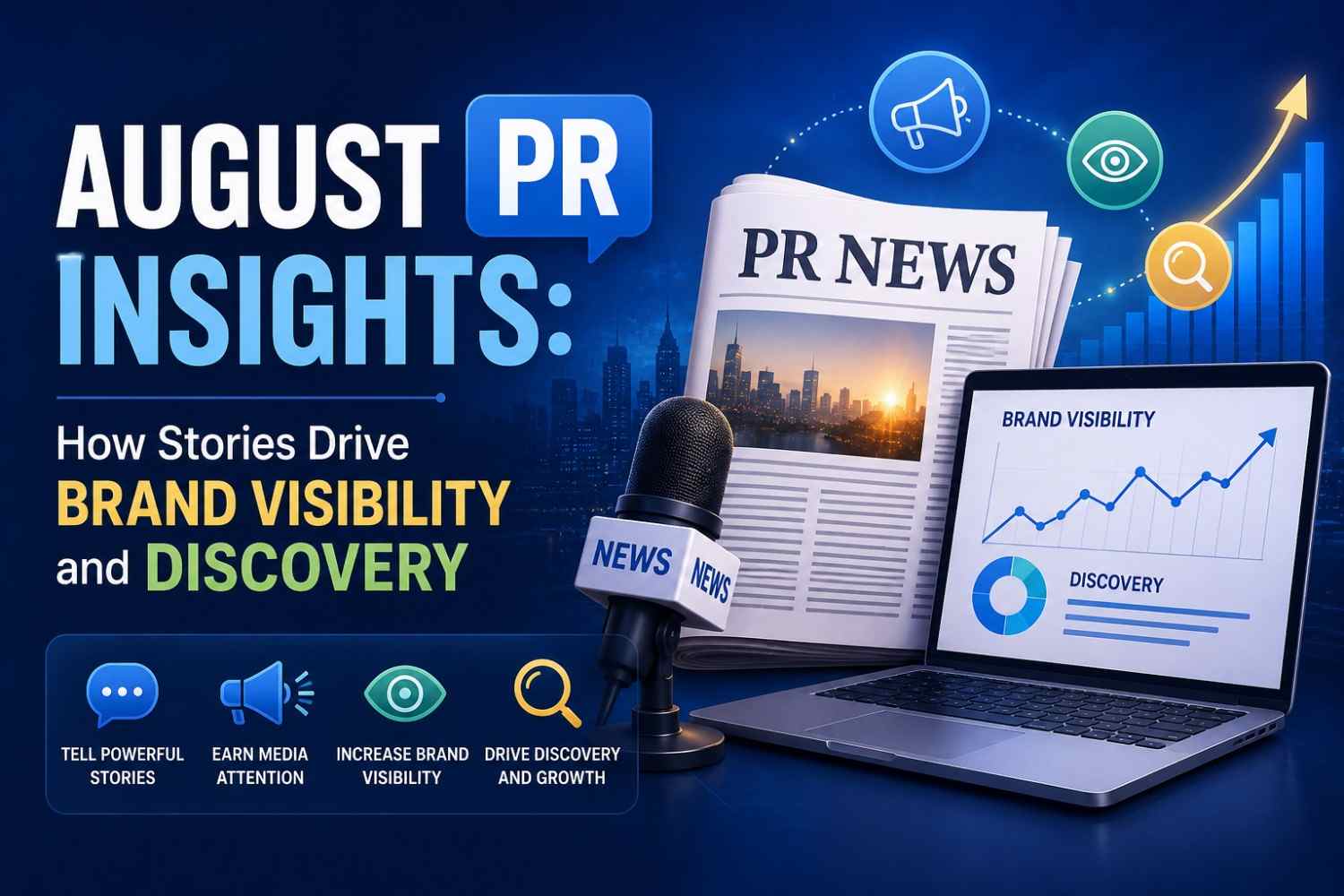
Quick Answer: A great story can put a brand in front of journalists, readers, search engines, and AI tools all at once — but only if it is told and distributed the right way. Press releases and media coverage remain one of the most reliable ways to build brand visibility and generate mentions, especially when paired with SEO, AEO, and GEO. Businesses that use press release distribution services consistently find it easier to be discovered across both traditional search and AI platforms.
Key Takeaways
- Good stories help brands get noticed.
- Brand awareness can grow through consistent press release distribution.
- Media coverage can generate positive, trustworthy brand mentions.
- SEO, AEO, and GEO each support brand discovery in a different way.
- Clear, consistent brand information helps AI tools understand a business accurately.
- PR results should be measured across the full journey — not just views and clicks.
From Storytelling to Media Coverage: How PR Creates Visibility
PR turns a brand’s news into a story worth telling. A well-shaped narrative gives people a reason to pay attention — and gives journalists a reason to cover a company, product, service, or event in the first place.
Press releases are one of the most direct ways to share these stories. Understanding what a press release actually is — a factual, clearly structured news announcement — makes it easier to write one that gets picked up. Professional professional press release distribution then places that news in front of journalists, publishers, and other audiences who are actively looking for it.
Media coverage generates brand mentions across online sources, which helps more people discover a business over time. Distribution alone does not guarantee coverage, though — the story still needs to be useful, timely, and relevant to the outlet’s audience.
What Press Releases Can Do for Search and AI Visibility
Support Brand Discovery in Search
Press releases let people learn about a brand through news and announcements rather than advertising. Each distributed release can generate additional online mentions of the company, which supports broader search exposure and brand recognition over time.
Provide Information for AI Search
AI platforms such as ChatGPT, Gemini, Perplexity, and Microsoft Copilot pull information from many sources across the web. Detailed, well-structured company information gives these tools clear background on a brand’s products, services, and news.
Strengthen Digital PR Signals
A press release works best as part of a wider digital PR strategy. Accurate news placed in relevant sources tends to generate more brand mentions and discovery over time — though it is worth being upfront that no single tactic, including distributing a press release, can guarantee AI mentions or search rankings on its own.
SEO, AEO, and GEO: Three Different Paths to Being Found
SEO, AEO, and GEO each focus on a different part of modern search. SEO helps web pages appear in traditional search results, AEO focuses on providing concise answers to specific user queries, and GEO focuses on visibility inside generative, AI-written search experiences. Structuring content for GEO and AEO — using clear headings, factual definitions, and verifiable claims — makes it easier for AI systems to quote or cite a brand accurately.
PR reinforces all three from a different angle — it helps brands communicate news and earn attention beyond their own website. Combined, these efforts help a business build a more resilient online presence across search and AI platforms alike.
The goal is not to force one tactic to work everywhere. Brands get the best results by producing useful content, providing reliable information, earning positive media coverage, and measuring outcomes across both search and AI platforms.
What Makes a Brand Easier for Search Engines and AI Systems to Understand?
Clear Brand Information
Brands should describe themselves and their offerings plainly — company name, products, services, industry, and location among the key facts. Skipping this context is one of the most common brand announcement mistakes that keeps journalists and AI tools from understanding a company correctly.
Strong Entity Connections
Entity SEO connects a brand to the people, products, places, and topics around it — a founder, a product line, an industry, a location. These associations work in a similar way to a knowledge graph, giving search engines and AI systems valuable context about how a brand fits into the wider picture.
Consistent and Accurate Facts
A business’s online presence should keep its key facts consistent everywhere it appears — company details, product information, and key claims should all line up. A clear, consistent boilerplate is one of the simplest ways to keep this information aligned across every press release, and accurate information also supports trust and E-E-A-T.
Relevant Third-Party Sources
Third-party sources add credible background to a company that self-published content cannot provide on its own. Media coverage, industry publications, and other reliable outlets all count as independent references. The goal should be earning relevant mentions naturally, not manufacturing artificial signals.
Turning Search Visibility Into Business Results
Getting found is only the first step — that attention still needs to turn into action. A well-positioned brand lets a visitor find the company through search or media coverage, land on a clear website, and immediately understand what it offers. Consistent visibility, built through a reliable press release distribution platform, makes that first impression far more likely to happen.
Brands can track several signals to understand how visibility is performing — brand mentions, referral traffic, organic impressions, branded searches, leads, and conversions. Together, these metrics show more clearly what that visibility is actually delivering.
The process matters more than any single number of views. A useful path to follow is visibility → traffic → leads → customers → revenue — and PR, SEO, and AI visibility all support that journey. Rankings and clicks are part of that picture, not the whole point of it.
How Brands Can Use AI Without Losing the Human Side of PR
AI can make PR work faster. AI tools can help teams monitor trends, scan the news, identify story ideas, and plan research — and they are often useful for routine tasks and early draft content.
But AI should not replace human judgment. PR still depends on real stories, subject-matter expertise, fact-checking, and genuine relationships with the media. People also understand audience and tone in ways an automated tool simply cannot.
The most effective approach treats AI as an assistant rather than a replacement — letting it handle repetitive tasks while people stay the writers, strategists, and fact-checkers. That balance keeps PR both efficient and trustworthy, without losing its human judgment.
Frequently Asked Questions
Can AI write an effective press release?
Yes, AI can assist in drafting a first version or structuring information. Even so, individuals should verify all facts and add new, specific information before publishing.
Do journalists still care about press releases?
Yes, when the story is topical and newsworthy. Journalists are far more likely to notice something useful to their audience and current news cycle.
Can a small business use PR without a large budget?
Yes. Instead of reaching everyone at once, a small business can focus on local media, niche publications, and targeted outreach around genuinely newsworthy updates.
What makes a brand story worth covering?
A good story usually has an obvious news angle. Useful angles include new products, high-profile partnerships, original research, business milestones, community impact, and industry changes.
Can press releases guarantee AI visibility?
No. A press release cannot guarantee mentions or citations in ChatGPT, Gemini, Perplexity, Google AI Overviews, or other AI search tools. It is one part of a broader visibility strategy.
Conclusion
Brands need more than a good story to get found — they need practical information, smart PR, relevant distribution, and a solid web presence. Distributing press releases that share real news is one of the most direct ways to open the door to media coverage and lasting brand mentions.
SEO, AEO, and GEO add further paths to discovery, and AI can help PR teams work faster — but human judgment still matters most. The most effective approach combines technology with real stories, accurate information, credible references, and clear measurement. Ready to put a story in front of the right audience? Explore press release distribution plans and get your next announcement in front of journalists, search engines, and AI platforms alike.