
Referring Domains, Not Rankings: The Metric Most Brands Get Wrong After a Press Release

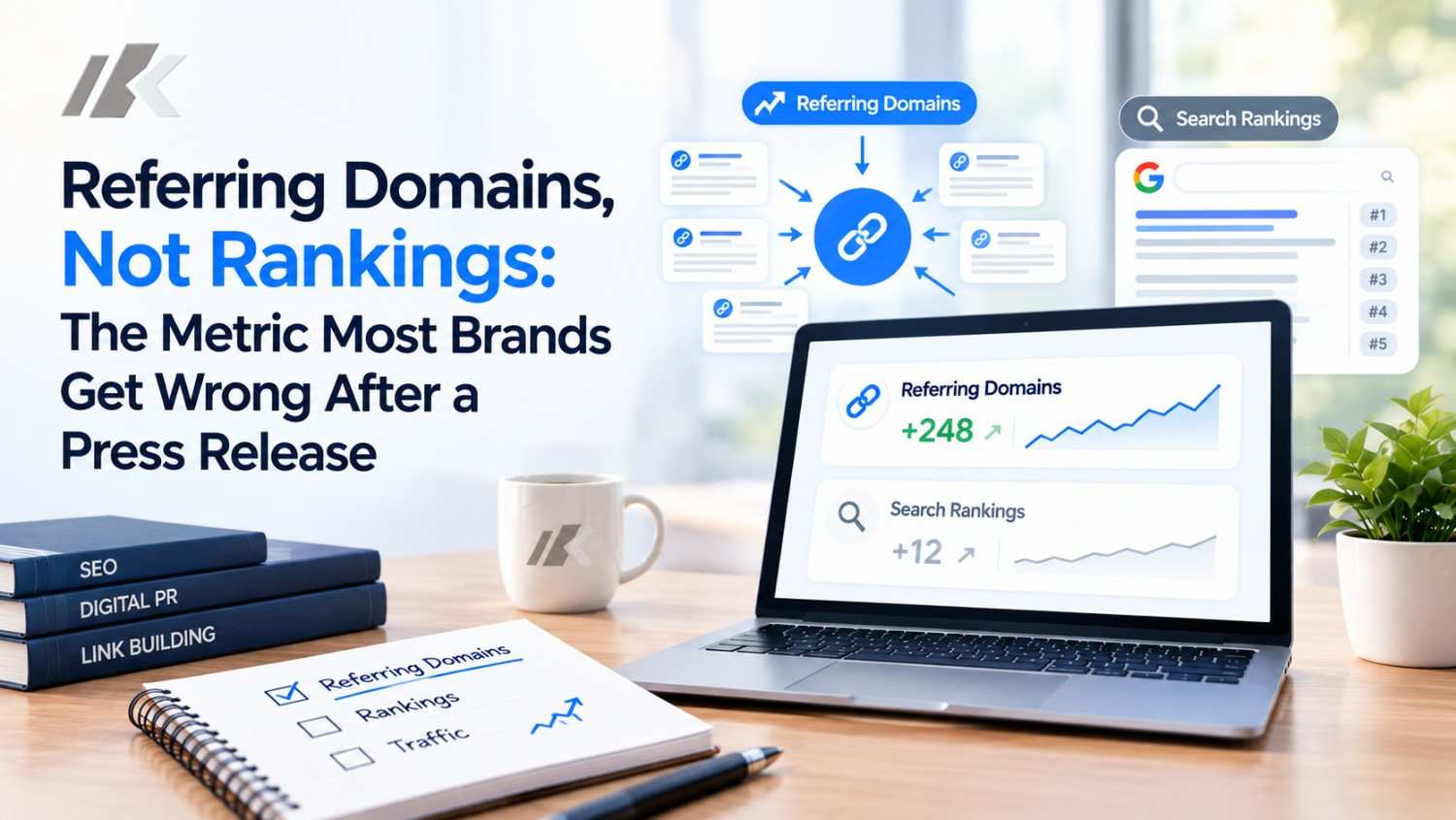
Referring Domains, Not Rankings: The Metric Most Brands Get Wrong After a Press Release
Quick Answer: The referring domains metric in the press release reveals the number of unique websites that linked to your site after a release. It assists you in viewing your connections. But it should not be your only metric. Track it with indexation, referral traffic, leads, conversions, and other press release ROI metrics.
Introduction:
Most brands look at rankings once a press release is published. But rankings do not show the full impact. A release will receive media attention, draw visitors, get links, and get brand exposure without instant ranking changes.
Another valuable measure is the referring domains. They show how many different websites link to your business. For example, 20 backlinks from one website count as one referring domain. Links from 20 different websites count as 20 referring domains.
Still, one metric cannot measure the full result. Track referring domains with indexation, referral traffic, engagement, leads, and conversions. This wider approach helps brands measure press release success and understand their real PR ROI.
Key Takeaways
- Referring domains show the unique websites linking to your site.
- Backlinks are individual links from those websites.
- Rankings show search visibility, not the full PR impact.
- Track indexation and referral traffic after distribution.
- Monitor leads, conversions, and revenue to measure real results.
- Use Google Search Console and SEO tools for PR KPI tracking.
- A press release can bring value without an immediate ranking change.
What Are Referring Domains in a Press Release Campaign?
A referring domain is a unique website that links to your website. As an example, when five pages on one news site refer to your homepage, then they are only one referring domain anyway. This renders the measure valuable in testing link-source diversity. Knowing how press release distribution works from submission to publication makes it easier to anticipate where these referring domains will come from.
In a press release campaign, the referring domains may indicate the number of various sites that are linked to your brand. This is different from counting total backlinks. A release can have numerous links but belong to few domains.
The quality and topicality of these domains are also important. A topical media platform can deliver valuable traffic and build your brand value. So, do not judge a campaign by the number alone. Look at where the links come from and what they bring.
Why Rankings Alone Do Not Measure Press Release Success
Rankings Show Only Search Visibility
Search rankings show where a page appears for specific searches. They do not show all the work done by a press release. A release can also create media coverage, referral traffic and brand mentions without even having to shift a target keyword.
Media Coverage Has Other Benefits
A press release can put a brand in front of new audiences. It can also assist individuals in learning about the company via news publications and industry magazines. These results may not appear in a ranking report. Distributing well-researched press releases can also improve search visibility and brand authority over time, beyond what a single ranking snapshot shows.
Ranking Changes Can Take Time
Search visibility does not necessarily change as soon as it is distributed. Search engines need to crawl and process new pages. Rankings may also be impacted by other changes in SEO within that period. Working with a reliable press release distribution service can still help ensure your content is properly structured for eventual indexing.
Business Results Matter More
The true worth of PR is usually seen in the form of traffic, leads, and conversions. These numbers connect the campaign with business activity. They can therefore provide more useful insight for PR KPI tracking.
Referring Domains vs. Backlinks: Which Metric Should You Track?
The two measures are applicable, although they address different questions. Backlinks show the total number of links. Referring domains show the number of unique websites providing those links.
| Metric | What It Shows | Example | Why It Matters |
| Backlinks | Total links pointing to your site | 30 links | Shows link volume |
| Unique websites that refer to your site | 10 websites | Demonstrates link-source diversity | |
| Publication count | Number of published placements | 50 placements | Shows distribution reach |
| Referral traffic | Visitors from external links | 250 visits | Shows audience response |
| Published pages that were found in search | 35 pages | Visibility of coverage indexed by search |
For most press release campaigns, track both backlinks and referring domains. Then add traffic and conversion data. This gives you a clearer view of press release ROI metrics.
The Press Release Metrics That Matter After Distribution
The number of publications is a good starting point. It shows how widely your release was distributed. A large number of placements does not necessarily imply good performance. Check the actual publication URLs and the quality of the sites carrying your news. Reviewing the available press release distribution plans in advance can help you match your budget to the reach you actually need.
Next, track indexation and referring domains. See which published pages appear in search and how many unique websites link to your site. Also check indexation speed. This can demonstrate the speed of your coverage appearing in search.
Lastly, check what visitors do upon arrival. Track referral traffic, engagement, leads, and conversions. If a campaign introduces qualified visitors or new customers, such outcomes can assist you to determine the success of a press release more precisely.
How to Measure Press Release ROI Beyond Rankings
Track Referral Traffic
Test the number of visitors because of links in your media coverage. Examine landing pages, traffic sources and sessions. Pay attention to qualified visitors and not only the traffic number. A dependable press release distribution platform can make this tracking easier by centralizing your coverage links.
Measure Leads and Conversions
Monitor activities that are important to your business. These may include form submissions, demo requests, calls, sign-ups, or purchases. Link these activities to the press release campaign where applicable.
Calculate Cost Per Result
Compare your campaign cost with measurable results. You can calculate cost per qualified visit, lead, or conversion. This facilitates easy comparison of your press release ROI measure across campaigns.
Check Assisted Conversions
A press release might not produce the ultimate conversion. Your brand can be covered and then found by someone at a later time in a different channel. Assisted conversion data can help capture this indirect value.
How to Track Referring Domains and Indexation After a Press Release
Check Your Referring Domains
Use SEO tools such as Ahrefs or Semrush to review new referring domains. Compare the data before and after distribution. Search new fields, useful locations, and link profile modifications.
Check Published URLs
Create a list of the pages that published your release. Check every URL upon distribution. This will assist you in differentiating between real coverage and projected or reported coverage. If you are unsure where to start, our guide on how to distribute a press release walks through the full process.
Check Indexation
Search for published URLs in Google Search Console. The URL Inspection tool can help you check whether a specific page is indexed. Note that indexing is not guaranteed by publication. This matters even more now, since press releases improve Google and AI search visibility only when they are properly indexed and structured.
Track Indexation Speed
Record when each coverage page goes live. Then record when it becomes indexed. This provides you with an indexation timeline. You can measure the speed at which your coverage gets in search results over a series of campaigns.
FAQs
Can a press release increase the number of referring domains?
Yes, it can. A press release can gain links on websites that receive or report the announcement. However, the number of new referring domains depends on the distribution and media coverage your release receives.
Should I remove low-quality referring domains from my report?
Not automatically. First, check the sources of the links and whether they are traffic-generating or give quality coverage. A referring domain report must provide you with the complete picture, and quality checks enable you to see its value.
How soon should I check press release results?
Begin to check shortly after publication. Check tracking of URLs, indexing, and referring domains initially. Then examine traffic, leads, and conversions in the long run since these outcomes might require a greater duration.
What if my press release gets coverage but no new referring domains?
That does not imply that the campaign was unsuccessful. Other coverage might bring your brand without referring to your site. Track brand mentions, referral traffic, indexed coverage, and other results and referring domains.
Can referring domains prove that a press release improved rankings?
No. A rise in referring domains does not prove that a press release caused better rankings. Search visibility is influenced by numerous factors; thus, referring domains are one component of your overall measurement.
Conclusion
A press release should not be measured by rankings alone. Referring domains, indexed coverage, referral traffic, leads, and conversions may present a broader picture. These metrics can also help you know what was happening when your release went live.
For better PR KPI tracking, compare results before and after distribution. Look at the list of websites that were linked to you, which pages were put in the index, and whether people did useful things. King Newswire can help brands track and report these post-distribution results. Choosing a trusted press release distribution service from the start makes this ongoing tracking far simpler.
The right metrics depend on your campaign goal. If your goal is visibility, focus on coverage and indexation. If your goal is growth, pay closer attention to traffic, leads, conversions, and revenue.