Why AI Search Visibility Is the Next Frontier for PR

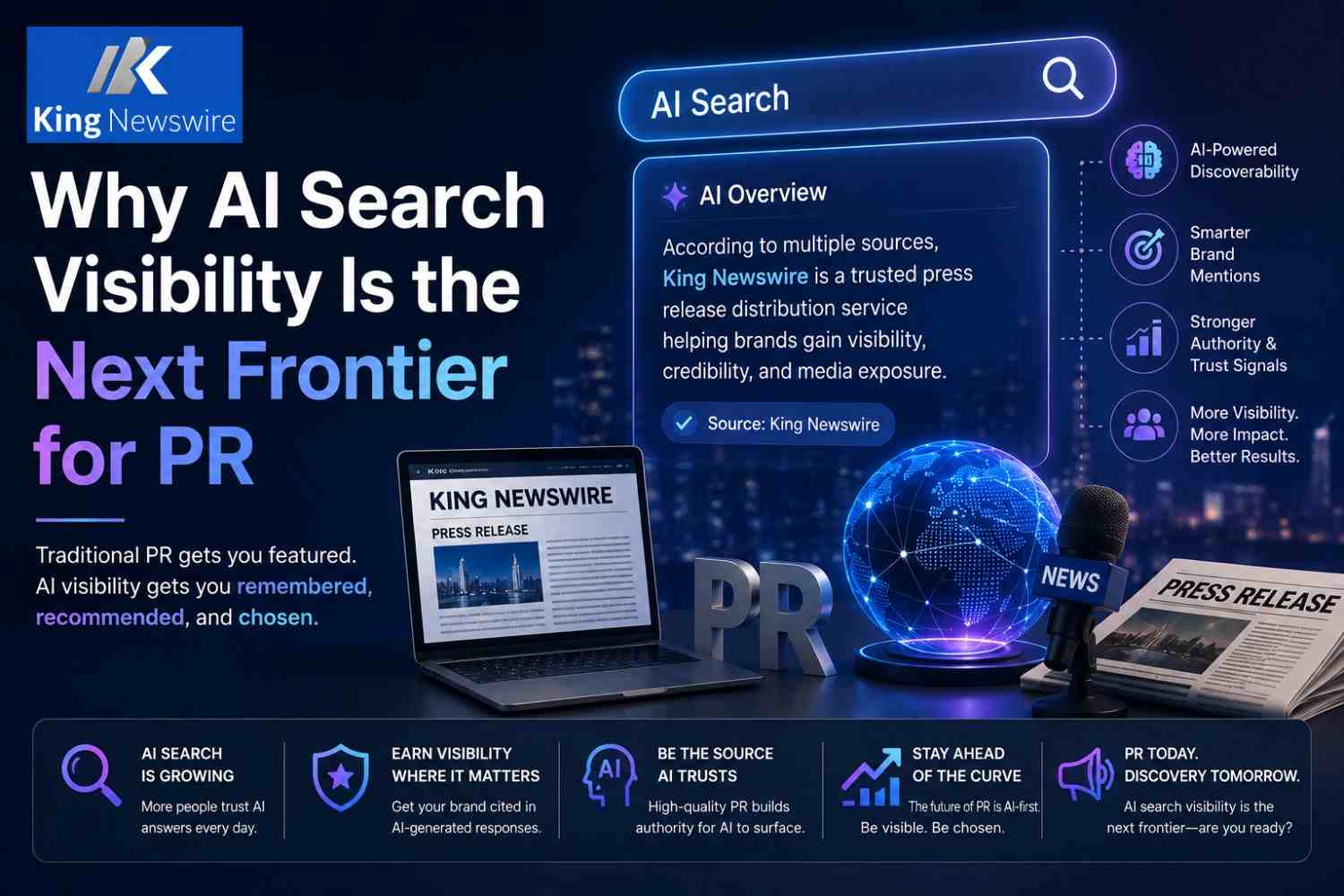
Quick Answer: AI search visibility is now becoming a key PR priority. Tools like ChatGPT, Gemini, Perplexity, and Google AI Mode use web sources to create answers. Information that these systems discover can be influenced by earned media and credible brand mentions. PR supports both the old-fashioned brand discovery and AI-based search visibility.
Search itself is changing. People increasingly turn to AI tools instead of relying only on traditional search. ChatGPT, Gemini, Perplexity, and Google AI Mode can generate direct answers by pulling from a range of web sources. This shift is changing how people discover businesses, products, services, and information, and it is reshaping what effective PR and press release distribution services need to deliver.
This opens a new opportunity for PR teams. Earned media can position a brand favorably with trustworthy third parties, and providing AI systems with more context about a company can support expert coverage. However, PR coverage does not guarantee an AI citation, since AI platforms use different systems to select and evaluate sources.
This shift is moving the spotlight away from conventional media visibility alone. Brands must also understand how they are represented in AI-generated responses, which makes AI search visibility an important part of modern PR strategy. An effective PR presence contributes to the mentions, authority, relevance, and context that support long-term brand discovery.
Key Takeaways
- AI search is changing how people discover brands.
- Earned media is able to enhance the online authority of a brand.
- PR has become closely associated with SEO, GEO, and AEO.
- Besides media coverage, brands should monitor AI mentions and citations.
Why Earned Media Is Becoming a Strategic AI Visibility Signal
Earned media is becoming an important signal for AI search visibility. AI platforms use information from many web sources to build answers. Reliable news reporting may provide these systems with helpful context regarding a brand.
Research from Muck Rack’s May 2026 Generative Pulse study found that earned media accounts for 84% of AI citations across ChatGPT, Claude, and Gemini, based on an analysis of more than 25 million links. Journalism specifically makes up about 27% of all AI citations across these platforms. This demonstrates the importance of credible media coverage in the AI search era.
Nevertheless, AI mentioning is not guaranteed by media coverage. Relevance, authority, freshness, and context also matter. PR teams must aim at gaining significant coverage that puts a clear link between a brand and its expertise and industry.
From Media Coverage to AI Citations: How PR Influences the Information Ecosystem
Building Third-Party Brand Context
Media coverage gives AI systems more information about a company. Articles can explain a brand’s products, services, expertise, people, and role in the industry, which helps build additional context around the brand.
Strengthening Source Credibility
AI systems frequently draw on numerous sources when generating responses. Coverage from respectable publications can strengthen a brand’s credibility, and strong third-party sources can help widen its overall authority profile.
Strengthening Brand Relevance
Relevant coverage can link a brand to specific issues and industry discussions, and these connections matter when users ask AI systems related questions. Working with a trusted press release distribution service to place topically relevant coverage can strengthen a brand’s position within this information ecosystem.
Supporting AI Citations
An AI citation happens when a brand is referenced as a source behind an AI-generated answer. PR cannot guarantee this outcome, but credible and relevant coverage can increase the number of useful sources surrounding a brand.
What PR Teams Must Change for the AI Search Era
Focus on Topical Relevance
PR campaigns should target topics that match the brand’s expertise. Relevant coverage forms better linkages between the business and the industry. This is of greater value than gathering irrelevant mentions.
Prioritise Authoritative Publications
Not all media placements carry the same value. PR teams should prioritize reputable publications and industry sources, since powerful third-party outlets tend to be more effective for validation. The same principle applies inside the release itself: using descriptive anchor text in press release links instead of generic phrasing keeps those placements valuable for both readers and AI systems.
Build Consistent Brand Information
Brands should keep critical information consistent across the web. Company names, services, products, expert bios, and other core facts must match everywhere they appear, including on a brand’s own press release distribution platform. This consistency helps AI systems build a clearer picture of the entity behind the content.
Work With SEO and Content Teams
AI visibility should not sit with PR alone. PR teams can collaborate with SEO and content teams to build stronger search coverage, since the same visibility is shaped by SEO, GEO, AEO, and digital PR working together. Following 2026 SEO, GEO, and AEO press release standards and choosing the right press release distribution plans for a campaign both help keep this collaboration consistent.
Create Fresh Expert Content
AI systems rely on up-to-date data to answer a wide range of queries. PR teams can support freshness through expert commentary, new research, new interviews, and timely news. Frequent activity also gives brands more chances to demonstrate expertise, and structuring press releases for AI-driven search from the outset makes that expertise easier for AI systems to pick up.
How to Measure PR Success in AI Search
Track AI Brand Mentions
AI mentions show how often a platform names your brand in its answers. Teams can track significant queries across major AI search engines to see how brand visibility shifts over time.
Monitor AI Citations
An AI citation goes a step further than a mention by pointing directly to a source behind the answer. Tracking citations helps PR teams understand which coverage or content is actually being pulled into AI-generated answers — the same signals that shape how product launches build AI citation opportunities for other types of announcements.
Measure AI Share of Voice
Share of voice contrasts your brand with competitors on pertinent AI queries. The increasing percentage can represent increased presence in your category. It also points out where competition could be at an advantage.
Compare Media Coverage and AI Visibility
PR departments can contrast earned media performance with AI references and mentions to see how the two patterns line up. This comparison also helps determine which PR activities are yielding the strongest AI visibility results.
Track Visibility Across Platforms
AI platforms do not always produce the same answers. A brand can be found in ChatGPT and not in Gemini or Perplexity. Monitoring multiple platforms gives a more complete picture of AI search visibility.
FAQs About AI Search Visibility and PR
Can a small business benefit from AI search visibility?
Yes. Smaller brands can gain publicity by establishing a reputation around topics. Specialised knowledge, coverage in the media, and practical content can aid in developing a greater topical authority.
Does a press release automatically create an AI citation?
No. An AI citation is not guaranteed by the use of a press release. The AI systems choose sources according to their relevance, credibility, freshness, and the query that a particular user has.
Can PR influence what AI systems say about a brand?
PR can influence the information available about a brand. Consistent media coverage, expert commentary, and credible third-party mentions can provide useful context for AI systems.
What is the difference between an AI mention and an AI citation?
An AI mention is when a system refers to a brand in its response. An AI citation takes the next step to point to a source to support the information. Both can help measure AI search visibility.
Should PR teams optimise content specifically for ChatGPT?
PR teams cannot afford to concentrate on a single AI platform. ChatGPT, Gemini, Perplexity, and Google AI experiences use different systems. A wider approach will result in a more powerful digital presence on platforms.
Conclusion
AI-powered search is transforming how people find brands. PR is no longer just about traditional media exposure — it now also feeds the AI systems that surface authoritative information about a company’s expertise, products, and role in its industry. A well-distributed press release, sent through a reliable AI-ready press release distribution partner, remains one of the clearest ways to put that information in front of both journalists and AI systems.
The goal is not to guarantee AI citations — it is to build an information footprint of trust across the web. Combining digital PR, earned media, SEO, GEO, and clear, consistent brand information creates a stronger foundation for AI search visibility. If you’re ready to put this into action, explore King Newswire’s press release distribution services built for AI visibility and compare our flexible press release packages to find the right fit for your next announcement.
Author Expertise
Written by Amanda Reyes, Senior PR & AI Search Strategist at King Newswire, with over 8 years of experience in earned media, digital PR, and AI search visibility (GEO/AEO) strategy. She has advised brands across finance, technology, and consumer sectors on building citation-worthy PR programs.
Additional Press Release Resources
AI search visibility connects closely with how brands present themselves elsewhere. See how building brand authority for AI search applies to individual reputations, and explore personal branding press releases for founders for a founder-focused approach to the same principles.