
Perfect Your Strategy with a Proven Press Release Format Example

Producing a strong press release is essential in today’s fast-paced digital world if you want to grab media attention and get your point across the preferred audience. A well-crafted press release may greatly impact your public relations strategy by guaranteeing that your announcements are seen by the appropriate people and accomplish your communication objectives. We will go over a tried-and-true press release style sample and explain how to use it to improve your PR efforts in order to help you master this crucial skill.
Comprehending the Example Press Release Format
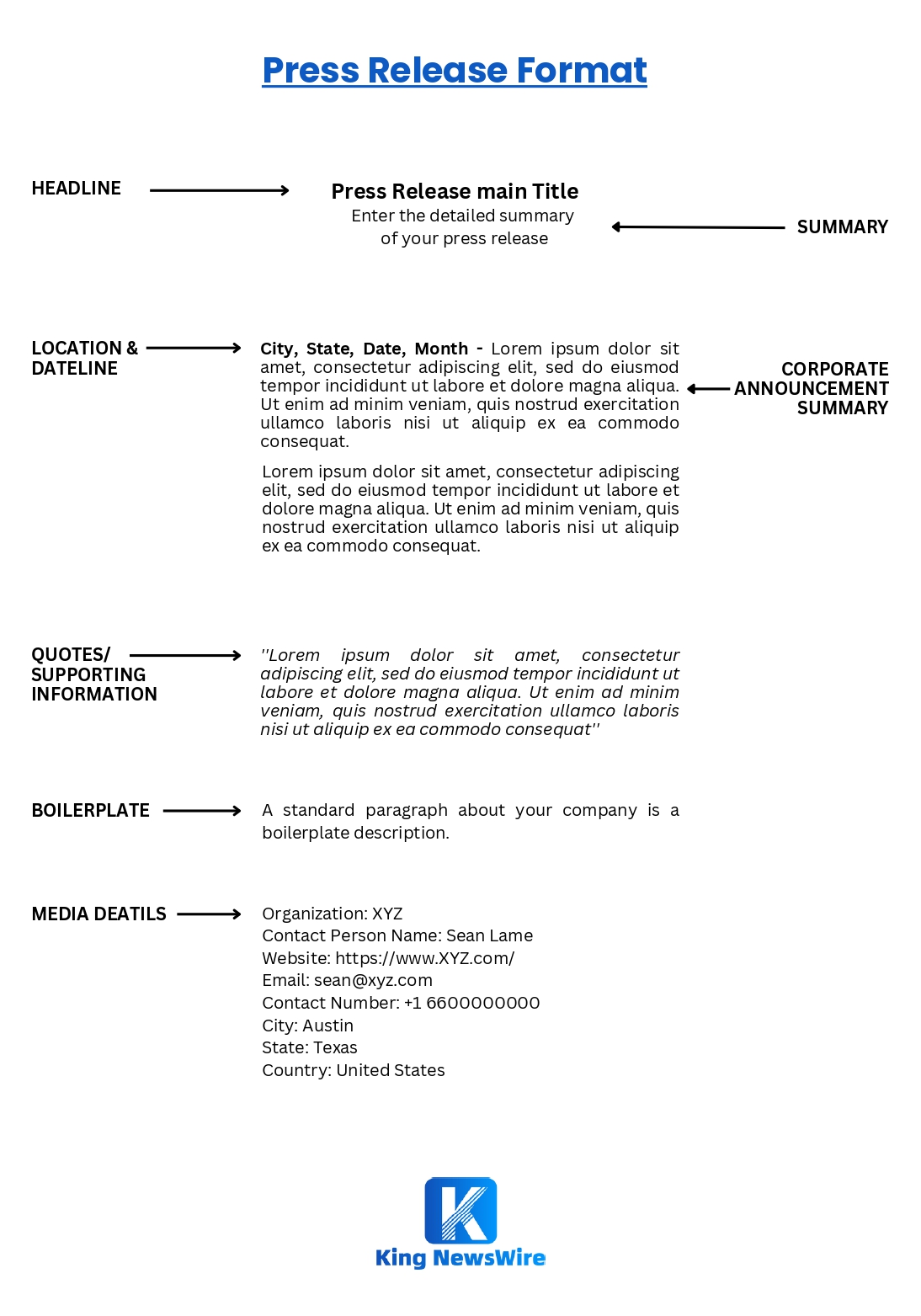
A press release is a brief yet informative document sent to media outlets and journalists with newsworthy information. Creating interest and publicity is the aim, but getting there calls for a polished and unambiguous presentation. A press release format example acts as a guide that lists the necessary elements of a successful release. The typical sections you should include are broken down as follows:
- Headline: The headline is the first thing readers see, so it must be attention-grabbing and informative. It should succinctly convey the essence of your news and compel the reader to continue. A strong headline often incorporates the main message and hints at the significance of the announcement.
- Subheadline: Although optional, a subheadline can provide additional context or detail that supports the headline. It should add value by offering a brief overview or highlighting a key aspect of the news.
- Dateline: The dateline includes the city where the press release is being issued and the date. This information helps establish the timeliness of your announcement and situates it within a specific geographical context.
Complete Press Release Structure
- Introduction: The opening paragraph should immediately address the who, what, when, where, why, and how for your announcement. This section needs to be compelling and informative, giving readers a clear understanding of the news and why it matters.
- Body: The body of the press release provides detailed information about the announcement. It should be organized in a logical sequence, often with the most important information first. Include relevant quotes from key stakeholders, statistics, and additional context to support your message.
- Boilerplate: The boilerplate is a brief paragraph at the end of the press release that provides background information about your company or organization. It should offer a succinct overview of who you are, what you do and any relevant achievements or accolades.
- Contact Information: Conclude the press release with contact details for media inquiries. This typically includes the name, phone number, and email address of a media contact person who can provide additional information or arrange interviews.
How to Use a Press Release Format Example
Utilizing a press release format example can streamline the process of creating effective press releases. Here’s how you can leverage this format to enhance your PR strategy.
- Consistency is Key: By adhering to a proven press release format example, you ensure consistency in your communication. This consistency helps build a recognizable and professional image, making your press release easier for journalists to read and understand. Consistent formatting also reinforces your brand’s credibility.
- Highlight Key Information: A well-structured format allows you to present the most important details prominently. Start with a compelling headline and a strong introduction to grab attention. By following a format example, you can effectively highlight key information and ensure that your message is clear and impactful.
- Maintain Professionalism: The format example provides a guide for maintaining a professional tone and appearance. This is crucial for gaining the trust of journalists and media professionals. A polished and well-organized press release reflects positively on your organization and increases the likelihood of media coverage.
- Optimize for Readability: The layout of a press release format example is designed to enhance readability. Using clear headings, short paragraphs, and bullet points helps break up the text and makes it easier for journalists to quickly grasp the main points of your announcement. This is especially important in a media environment where time is often limited.
Implementing the Press Release Format Example
To make the most of a press release format example, start by tailoring it to your specific needs, Customize each section to fit the unique aspects of your announcement while adhering to the general structure. Pay attention to the details, such as the headline and introduction, which are critical for capturing interest.
After drafting your press release, review it carefully to ensure accuracy and clarity. Consider having a colleague of a PR professional review it as well. A fresh perspective can help identify any areas for improvement and ensure that your message is as effective as possible.
Press Release Guidelines: What to Check Before Submission
Before submitting a press release, review the King Newswire press release guidelines to make sure your announcement meets key editorial and formatting requirements:
- Headline: Be straight, newsworthy, and 8-16 words. Google News releases should have headlines under 110 characters.
- Summary: Keep the summary concise and within 25 words.
- Length: Length: The average length of the press releases should be 500-1500 words.
- Material: Pay attention to an authentic news release and do not use promotional or sale oriented words.
- Tone: Be objective, professional, and authoritative.
- Quations: Use proper and original quotation where necessary.
- Links: Include pertinent links and ensure they are properly formatted.
- Accuracy: Verify names, facts, grammar, spelling, and contacts by checking them before posting.
- Compliance: Ensuring that the content adheres to editorial guidelines and that it contains no banned content.
By adhering to them, you will be able to write a concise, professional, and submission-ready press release.
Press Release Sample Templates for Different Announcements
Different types of news require different information. Use the template that best matches your announcement.
1. New Product Launch
Headline: [Company] Launches [Product Name] for [Target Audience]
Subheadline: [Briefly highlight the product’s main feature or benefit.]
Dateline: [CITY, State — Date]
Introduction: Announce the product and explain why it matters.
Body: Cover key features, benefits, availability, pricing, and a relevant company quote.
Boilerplate: Brief company overview.
Contact: [Name | Email | Phone | Website]
New Product Launch Press Release Samples:
-
Pleume Paris Launches the World’s First Hands-Free Hair Dryer
-
GoSun Announces Launch of the GoSun Moonrider Electric Tractor
-
MobiLoud Launches DTC Mobile Apps
-
Teslong Launches the Lightweight 20V Brushless Leaf Blower
-
CLOOMS Launches SearchByVideo
2. Partnership Announcement
Headline: [Company A] Partners With [Company B] to [Purpose]
Subheadline: [Briefly explain the partnership’s goal.]
Dateline: [CITY, State — Date]
Introduction: Announce the partnership and its purpose.
Body: Explain responsibilities, goals, timeline, expected impact, and quotes from both companies.
Boilerplate & Contact: Company information and media contact details.
Partnership Announcement Press Release Samples:
-
MultiHopper Partners with TRM Labs
-
Your Genetic Wellness Partners with Lance A. Slatton
-
Teslong Partners with NASCAR Star Patrick Emerling
-
Fence Company Valdosta & Warner Robins Strategic Partnership
-
J. Awan Capital and Neovision Wealth Management Forge Strategic Partnership
3. Event Announcement
Headline: [Company] Announces [Event Name] in [Location]
Subheadline: [Date, purpose, or main attraction.]
Dateline: [CITY, State — Date]
Introduction: Announce the event and its purpose.
Body: Include date, location, speakers, activities, registration details, and relevant quotes.
Boilerplate & Contact: Organizer information and contact details.
Event Announcement Press Release Samples:
-
MultiHopper Partners with TRM Labs
-
Your Genetic Wellness Partners with Lance A. Slatton
-
Teslong Partners with NASCAR Star Patrick Emerling
-
Fence Company Valdosta & Warner Robins Strategic Partnership
-
J. Awan Capital and Neovision Wealth Management Forge Strategic Partnership
4. Company Expansion
Headline: [Company] Expands Operations With New [Location/Facility]
Subheadline: [Explain the purpose of the expansion.]
Dateline: [CITY, State — Date]
Introduction: Announce the expansion and explain its significance.
Body: Include location, investment, jobs, operations, timeline, and an executive quote.
Boilerplate & Contact: Company background and media contact.
Company Expansion Press Release Samples:
-
King Newswire Expands Operations in the UAE
-
DTF Printing Expands Operations in Dallas
-
Parker Capital Investments Expands to Toronto
-
Rubicon Recovery Center Expands into Mental Health Services
-
Zima Bank Expands into Cryptocurrency Financial Services
5. New Service Launch
Headline: [Company] Introduces [Service Name] for [Target Audience]
Subheadline: [Describe the service’s primary benefit.]
Dateline: [CITY, State — Date]
Introduction: Announce the service and the need it addresses.
Body: Explain how it works, key features, availability, and relevant supporting information.
Boilerplate & Contact: Company and media contact details.
New Service Launch Press Release Samples:
-
Jane Fischer Trust Funds Introduces Managed Account Services
-
Body Works Introduces Airbrush Art Service
-
Luzar Publishing Introduces Book Marketing Service
-
Hunt Home Remodeling Unveils Custom Deck-Building Services
6. Company Milestone
Headline: [Company] Reaches [Milestone] Following [Development]
Subheadline: [Explain why the achievement matters.]
Dateline: [CITY, State — Date]
Introduction: Announce the milestone and its significance.
Body: Add relevant figures, achievements, growth details, background, and a company quote.
Boilerplate & Contact: Company overview and contact details.
Company Milestone Press Release Samples:
-
Bitomato Reaches 1 Million Monthly Visitors
-
FinaGames Reaches 10M iPhone Downloads
-
Wooden Twist Celebrates Milestones in UAE
-
Blaze Estimating Marks 15-Year Milestone
-
Junk Quest Marks 600 Five-Star Review Milestone
7. Research or Study Announcement
Headline: [Company] Releases Research on [Topic]
Subheadline: [Highlight the key finding or purpose.]
Dateline: [CITY, State — Date]
Introduction: Explain the research and why it matters.
Body: Present key findings, methodology, statistics, context, and relevant expert comments.
Boilerplate & Contact: Organization information and contact details.
Research or Study Announcement Press Release Samples:
-
Cloud2Me Survey Reveals Key Trends in Cloud Adoption
-
2026 National Study Reveals Rising Reading Tutoring Costs
-
Firsd Tea Sustainability Perspectives 2023 Report
-
New Study Reveals Generational Shifts in CBD Usage
-
UK Connect Reveals Connectivity Solutions Based on Industry Research
8. Executive Appointment
Headline: [Company] Appoints [Name] as New [Position]
Subheadline: [Briefly highlight the executive’s background or role.]
Dateline: [CITY, State — Date]
Introduction: Announce the appointment and explain the executive’s new responsibilities.
Body: Include professional background, role details, company goals, and an executive quote.
Boilerplate & Contact: Company and media contact information.
Executive Appointment Press Release Samples:
-
Bazaars Names Raja Al Khatib CEO
-
Nano Cures International Appoints Robert Aranda as President
-
Taiwan Media Music Group Appoints Monica Ramirez
-
Real Street Capital Appoints Gregory Stula as Chairman
-
SmartMarket Solutions Welcomes Rick Medina
9. Award or Recognition
Headline: [Company] Receives [Award/Recognition] for [Achievement]
Subheadline: [Briefly explain the recognition.]
Dateline: [CITY, State — Date]
Introduction: Announce the award and explain its significance.
Body: Provide details about the award, achievement, awarding organization, and a relevant quote.
Boilerplate & Contact: Company background and media contact details.
Award or Recognition Press Release Samples:
-
Teslong Recognized for Innovation at 2025 SEMA Show
-
BrandSpark & Newsweek Launch “Worth It” Awards
-
Karviva Wins Progressive Grocer Editor’s Pick Award
-
Maids in Brown Earns Best of Arlington Award
-
Integrated Learning Systems Wins Silver Award
10. Funding or Investment Announcement
Headline: [Company] Secures [Funding Amount] to Support [Purpose]
Subheadline: [Explain how the funding will be used.]
Dateline: [CITY, State — Date]
Introduction: Announce the funding or investment.
Body: Include the funding amount, investors when appropriate, intended use, business goals, and relevant quotes.
Boilerplate & Contact: Company information and media contact details.
Funding or Investment Announcement Press Release Samples
-
Exotic Snack Guys Secures $3 Million Funding
-
Girin Labs Secures Funding from XRPL Japan and Korea Fund
-
Wealthlane Financial Secures Funding
-
IPO Genie Closes $1.3 Million Funding Round
-
Fintech Dopay Secures $13.5 Million Series A Extension
Press Release Report Samples
A press release distribution report displays where your announcement was posted and it also includes live publication links so that you can review the campaign results. King Newswire provides sample reports of various distribution packages and lets companies preview how publication outcomes are displayed, before selecting an option.
Sample reports are available on the following packages of King Newswire:
Basic Package — $20
- Designed for essential press release distribution.
- Suitable for businesses with a basic distribution need.
- View the sample report to review publication results.
Download Basic Package Sample Report
Standard Package — $30
- Provides broader distribution than the basic option.
- Suitable for businesses seeking additional exposure.
- View the sample report to see the available coverage.
Download Standard Package Sample Report
Premium Package — $70
- Offers a wider press release distribution option.
- Designed for businesses seeking broader media exposure.
- Review the sample report for publication details.
Download Premium Package Sample Report
Yahoo Package — $400
- Focuses on Yahoo-related news and finance properties.
- Designed for announcements seeking Yahoo distribution.
- View the sample report for available publication results.
Download Yahoo Package Sample Report
Business Insider + Yahoo Package — $500
- Combines Business Insider and Yahoo distribution.
- Provides access to multiple high-profile publication options.
- Review the sample report to see the distribution results.
Download Business Insider + Yahoo Package Sample Report
Digital Journal — $20
- Provides a dedicated Digital Journal publication option.
- Suitable for announcements seeking targeted media exposure.
- View the sample report for publication details.
Download Digital Journal Sample Report
US Times Now — $15
- Provides a dedicated US Times Now distribution option.
- Suitable for businesses seeking an individual media placement.
- Review the sample report to see the publication result.
Download US Times Now Sample Report
AP News — $125
- Provides a dedicated AP News distribution option.
- Designed for announcements seeking AP News exposure.
- View the sample report for publication details.
Download AP News Sample Report
Yahoo Finance — $175
- Focuses on distribution through Yahoo Finance.
- Suitable for relevant business and financial announcements.
- Review the sample report to see available coverage.
Download Yahoo Finance Sample Report
Frankly Outlets — $15
- Provides distribution through Frankly-related outlets.
- Offers an individual publication option.
- View the sample report for publication details.
Download Frankly Outlets Sample Report
StreetInsider + US Times Now — $30
- Combines StreetInsider and US Times Now distribution.
- Provides two publication options in one package.
- Review the sample report for available results.
Download StreetInisder + US Times Now Sample Report
US Times Now + Frankly — $30
- Combines US Times Now and Frankly distribution.
- Provides access to two publication options.
- View the sample report to review the results.
Download US Times Now + Frankly Sample Report
Business Insider — $125
- Provides a dedicated Business Insider distribution option.
- Designed for announcements seeking Business Insider exposure.
- Review the sample report for publication details.
Download Business Insider Press Release Sample Report
StreetInsider — $25
- Provides a dedicated StreetInsider distribution option.
- Suitable for relevant business and financial announcements.
- View the sample report to see the publication result.
Download Street Insider Press Release Sample Report
Native Spring News — $15
- Provides a dedicated Native Spring News option.
- Suitable for businesses seeking individual publication coverage.
- Review the sample report for available results.
Download Native Spring Press Release Sample Report
The House Detective — $15
- Provides a dedicated publication option through The House Detective.
- Suitable for relevant announcements and industry content.
- View the sample report for publication details.
Download The House Detective Press Release Sample Report
openPR — $15
- Provides a dedicated openPR distribution option.
- Suitable for businesses seeking an individual publication.
- Review the sample report to see the publication result.
Download OpenPR Press Release Sample Report
MSN News — $200
- Provides a distribution option featuring MSN News.
- Designed for announcements seeking broader news exposure.
- View the sample report for available publication results.
Download MSN News Press Release Sample Report
USA TODAY
- Provides a USA TODAY distribution option.
- Pricing is available upon request.
- Review the available sample report for publication details.
Download USA TODAY Press Release Sample Report
These sample reports will help you determine how King Newswire delivers distribution outcomes and select a package that aligns with your announcement and media objectives.
To Sum Up:
Consequently, a proven press release format example is an invaluable tool for perfecting your PR strategy. By following a structured format, you can craft press releases that are professional, compelling, and effective in conveying your message. With practice and attention to detail, you can enhance your PR efforts and achieve greater success in capturing media attention and driving your communication goals.
Frequently Asked Questions (FAQs)
1. What is a press release format example?
A press release format example is a structured guide showing the typical sections of an effective press release. It helps U.S. businesses organize headlines, datelines, body content, boilerplates, and contact information clearly. Using such a format may make it easier for journalists to understand your announcement and can support consistency in all press communications.
2. Why should U.S companies use a press release format example?
Using a format example ensures consistent, professional, and readable press releases. It helps companies present important information logically, highlight key points, and maintain credibility. Following a proven structure may also save time and reduce errors, while supporting media coverage by making the content easier for journalists to process.
3. How should the headline be written in a press release format?
The headline should be concise, attention-grabbing, and summarize the main point of the announcement. In a press release format example, the headline appears first and may hint at the significance of the news. A clear headline helps readers and journalists immediately understand the topic and decide whether to read further.
4. What is the purpose of a subheadline in a press release?
A subheadline provides additional context or highlights a key aspect of the news. While optional, it supports the main headline by giving a brief overview or clarifying the announcement. Subheadlines in a format example may help journalists quickly identify the most important details of your press release.
5. How is a dateline used in a press release format?
The dateline lists the city and date of the announcement, establishing timeliness and geographical context. In a press release format example, it is placed near the top to help journalists verify the origin and timing of the news. Accurate datelines contribute to credibility and support proper reporting.
6. What should be included in the introduction paragraph?
The introduction should cover the who, what, when, where, why, and sometimes how of the announcement. Using a press release format example, this paragraph is concise and compelling to immediately inform readers about the significance of the news. It sets the tone for the rest of the release.
7. How should the body be structured in a press release?
The body should present detailed information in a logical order, often starting with the most important points. Quotes, statistics, and supporting context may be included to strengthen the story. A format example ensures that the content flows clearly and that journalists can easily extract key information for reporting.
8. What is the role of the boilerplate in a press release?
The boilerplate is a short paragraph at the end that provides background on the company or organization. In a press release format example, it summarizes the company’s mission, services, achievements, and industry position. A concise boilerplate helps journalists and readers understand the organization’s identity.
9. Why is contact information important in a press release?
Contact details allow media professionals to reach the company for follow-up questions or interviews. In a press release format example, it usually includes the name, phone number, and email of a media contact. Providing accurate contact information may improve response times and facilitate accurate reporting.
10. How can a press release format example improve media engagement?
Following a structured format enhances readability, highlights key points, and maintains professionalism. Journalists can quickly grasp the news, which may increase coverage opportunities. U.S. companies using a format example can communicate clearly and consistently, improving the chances that their announcements will be picked up by relevant media outlets.
You May Like:
Master Your Marketing with These Essential Press Release Examples for US Businesses
Enhance Your Media Strategy with These Effective Press Release Kit Examples
How to Write a Winning Event Press Release: Examples for U.S. Companies