
Press Release Format: The Structure Journalists Actually Want

Press Release Format: The Structure Journalists Actually Want
Quick Answer: A press release format is the standard way to organize a news announcement. It typically consists of a headline, dateline, lead, body, quotes, company summary and contact information. This format assists journalists in locating important information very quickly and makes it easier for journalists to write about your story. Last Updated: July 2026, Last Reviewed: July 2026
A press release format is the standard structure used to present news clearly and professionally. Even a newsworthy announcement may be neglected if the information is not organised in the best way possible. As journalists read numerous press releases every day, a clear structure allows them to get the story and its worth fast.
An effective press release presents the most significant information at the beginning, and it is thus less complicated for reporters to evaluate whether the news is worth investing in. The Cision State of the Media Report 2024 shows that press releases continue to be one of the most useful sources that journalists rely on to research their story.
Be it a product launch, company news, or significant success, the correct format can increase your likelihood of securing media coverage. Websites such as King Newswire’s press release writing and distribution service are used to spread the news to a larger population; however, the success of the press release remains to be determined by the effectiveness of writing and organisation. Understanding the standard definition of a press release also helps clarify why structure matters so much for media pickup.
Key Takeaways
- A clear format helps journalists understand your news faster.
- Good headlines and lead paragraphs can enhance media interest.
- Promotional language is not as effective as news-based content.
- Organized press release assists both journalists and search engines.
What Is a Press Release Format and Why Does It Matter?
The standard format for sharing news with journalists and media houses is a press release format. It breaks down information in a manner that is easy to read and comprehend. An average press release consists of a headline, introductory paragraph, supporting information, quotations and contact details.
The form is important since journalists are, in general, time-starved. They must grasp the nature of the news, its significance and relevance to their audience. An effective design assists them in locating these answers within seconds and enhances the likelihood of media coverage.
A press release should be well-structured and appear more professional and credible. Regardless of whether you are announcing a product, a partnership, or an update about your company, the appropriate format can make your message noticeable. This is why a lot of companies send out their announcements in services such as King Newswire, where professionally formatted releases can be understood more readily by both journalists and search engines. For a full breakdown of every section, see our step-by-step press release template and format guide.
What Journalists Look for in the First 10 Seconds
The Headline Check
The first thing journalists see is a headline. They desire a headline that is a clear explanation of the news without using promotional language. An objective, fact-based headline has a much higher chance of catching the reader’s eye than a generalised or excessively promotion-oriented one.
The Lead Paragraph Check
A lead paragraph is the first part of a press release, which provides a summary of the most significant information. Journalists expect to find the who, what, when, where, and why within the first few sentences. If the main news is difficult to find, they may stop reading.
The Newsworthiness Check
Newsworthiness describes the relevance, timeliness and importance of a story to the audience. The first question that reporters would ask themselves right after the announcement is whether it is something new, important, or interesting enough to report.
Common Reasons Journalists Move On
A lot of press releases are neglected due to a general headline, excessive promotion, or the inability to convey the core news in a concise manner. It doesn’t matter whether you are posting news yourself or using sites such as King Newswire’s distribution plans; it is often a good idea to put the most crucial information first in line, and you are likely to attract the interest of the media.
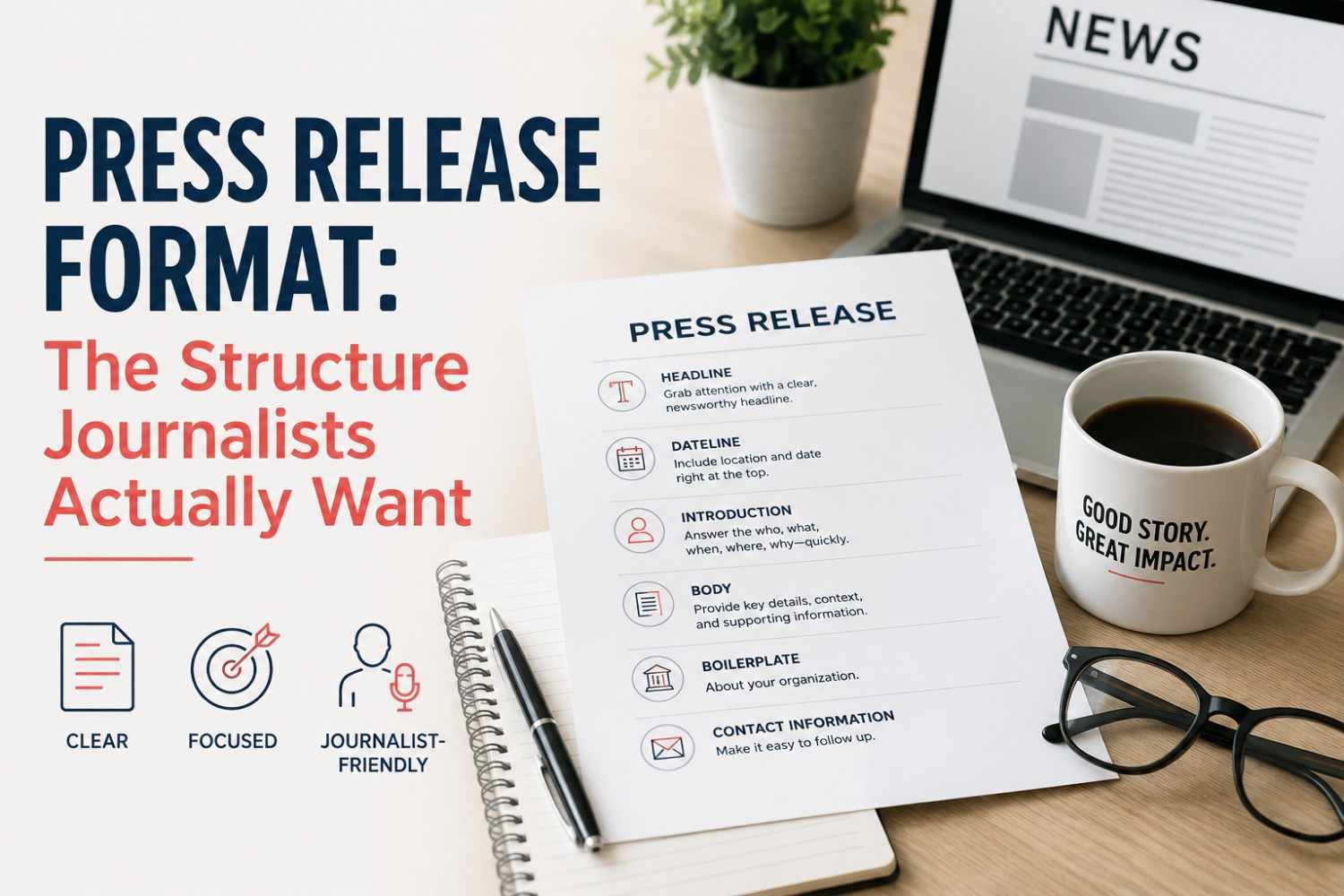
The Standard Press Release Structure Journalists Actually Want
A typical press release format is an effective format that assists journalists in locating significant information promptly. Every section has its purpose and simplifies the process of reporters comprehending and utilising the story.
Headline
The title of the press release is a headline. It must be able to summarise the news in a couple of words. Powerful headlines are centred on facts and conclusions rather than promotion.
Subheadline
A subheadline is additional context to the headline. It aids in comprehending the importance of the announcement and motivates journalists to continue reading.
Dateline
A dateline will contain the date and place of announcement. This data provides reporters with instant context of timing and location of the news.
Lead Paragraph
A lead paragraph is the most important part of the press release. It must provide answers to the major questions: who, what, when, where, and why. This is the section which journalists make their choice to read or not to read.
Body Content
The body includes supporting information, background and pertinent facts. This is where you expand on the announcement and explain why it matters to the audience.
Quote Section
A quotation segment gives the story a human touch. The quotes of company leaders, industry specialists, or other stakeholders might be used to make the announcement more credible.
Boilerplate
A boilerplate is a brief paragraph about the company or organization. It provides journalists with background information they can reference while writing their stories. If you’d like to learn more about this section and how to write it effectively, see What Is a Boilerplate in a Press Release?
Media Contact Information
Media contact information in the media notifies journalists on whom to contact in case of interviews, questions, or other details. Contact details should be provided correctly to facilitate follow-up and be professional.
Press Release Format Example: Good vs Bad Structure
An example of a press release can make you realise what is working and what is not. Most companies have significant news to tell, but how the news is delivered usually influences the continued reading by journalists.
Weak Headline Example
A bad headline is usually generic, marketing or obscure.
Example:
“ABC Company Announces Exciting New Business Development”
This headline does not inform the journalists of what and why the news is important.
Strong Headline Example
A powerful headline conveys the news and the effect of the news.
Example:
“ABC Company Launches AI Platform that Reduces Customer Response Time by 40%”
This version is specific, news-intensive and provides journalists with a sense of a reason to read further.
Weak Lead Paragraph Example
Weak lead paragraphs will tend to be dedicated to the promotion of the company and not the news.
Example:
“ABC Company is pleased to inform you about another step in its path towards innovation and excellence.”
This is a promotional statement that does not give much valuable information.
Strong Lead Paragraph Example
A strong lead paragraph quickly delivers the key facts.
Example:
“ABC Company today introduced a new AI-based customer support system that enables businesses to cut down the response time by up to 40%, enhancing customer satisfaction and efficiency.”
This version elaborates on the announcement, its aim and its worth in a single sentence.
Key Lessons From the Comparison
The most effective press releases present the news at the outset. Journalists desire fact and context, relevance to them, not marketing language. A good headline and introduction paragraph make reporters grasp the story in a short time, and this enhances the possibilities of media coverage. Regardless of whether you are putting out your news via your channels or platforms such as King Newswire’s press release writing service, being focused on clarity and news value can make your press release a lot more effective. The same headline and lead-paragraph discipline applies whether you are announcing a new product launch or a company milestone.
How Newsrooms Use Each Section of a Press Release
How Reporters Use Headlines
A headline assists reporters in identifying easily if a story is of interest to their audience. An explicit and concise headline straightforwardly conveys the core news and will provoke further reading.
How Editors Evaluate Lead Paragraphs
A lead paragraph presents editors with the most important facts of the story that should be used to determine the significance of the story. A lot of editors determine whether a story should be given attention or not by what is written in the first few sentences.
How Quotes Add Value
A quote provides insight, context, and a human perspective. Journalists can also use direct quotes in their articles, particularly when they provide expertise or how the announcement will affect things.
Why Boilerplates Matter
A boilerplate is a brief description of the company that assists journalists in knowing who is announcing. It provides a background without the need to do any other research.
Why Contact Information Is Essential
Contact media details enable journalists to seek interviews, check facts or to get additional information. A lack of contact details may cause delays and decrease the probability of coverage.
Once all sections do their job, the journalists will be able to work more efficiently and correctly. That is why professionally issued releases on websites such as King Newswire’s press release writing and distribution service are usually written in a more organised form that facilitates newsroom processes and reader comprehension. This is especially true for new business announcements, where editors decide quickly whether a launch story is worth covering.
Press Release Checklist Before You Hit Send
A press release checklist will assist in ensuring your announcement is clear, accurate and is ready to be distributed. The following are some of the key areas to be reviewed before releasing your release.
Check the Headline
Ensure that the headline conveys the news well. It must be clear, concise and devoid of promotional language.
Review the Lead Paragraph
Ensure that the first paragraph addresses the who, what, when, where and why. The journalists ought to comprehend the overall story in a few seconds.
Verify Facts and Data
Verify all names, dates, statistics and company information. Minor mistakes can impact credibility.
Evaluate Quotes and Supporting Information
Only quotes that add value should be used, not those that have already been stated in the release.
Test Links and Contact Details
Verify that all links work correctly and that media contact information is complete and up to date.
Read It From a Journalist’s Perspective
Before hitting send, ask yourself one question: Is the news clear, relevant, and easy to cover? One last check-up will enhance your likelihood of receiving media coverage by sources and platforms such as King Newswire. Before you publish, compare available distribution packages and pricing options so your release reaches the right outlets from day one.
Why Believe This Guide?
Written and reviewed by Sarah Bennett, Senior SEO & PR Content Strategist at King Newswire. Our content team has been working in the field of press release writing, SEO, media outreach, and news distribution for years. We regularly study journalist preferences, newsroom practices, and search trends. As a result, we understand what makes a press release easier to read, publish, and discover online. We also have experience working with news distribution platforms such as King Newswire.
Conclusion
A press release format is not merely a model but a device that guides journalists to interpret and consider your news promptly. The headline and the first paragraph, the quotes and contact details all contribute to your easier story coverage.
The best press releases are those that are clear, relevant and of news value as opposed to those based on marketing language. Businesses have a better opportunity to attract media attention by adhering to a credible format and placing valuable information on the front line. Be it the launch of a new product, a company milestone, or an upcoming company event, a properly structured press release issued via outlets such as King Newswire can assist in ensuring that your message reaches the appropriate audience and makes a greater impact.
Frequently Asked Questions
What is the standard press release format?
A typical press release will contain the following: a headline, dateline, lead paragraph, body text, quotations, boilerplate and contact information.
How long should a press release be?
The majority of press releases have a range of 400 to 800 words based on the complexities of the announcement.
What do journalists look for in a press release?
Journalists seek efficient headings, high news value, valid information and a lead paragraph.
What is the difference between a press release and a media pitch?
A press release is an official announcement of the news, whereas a media pitch is a personal message to a journalist.
Can a press release help with SEO?
Yes. An optimised press release can enhance visibility on the Web, brand recognition, and search findability.
Related Blogs: