
Press Release vs Media Advisory: What’s the Difference?

Press Release vs Media Advisory: What’s the Difference?
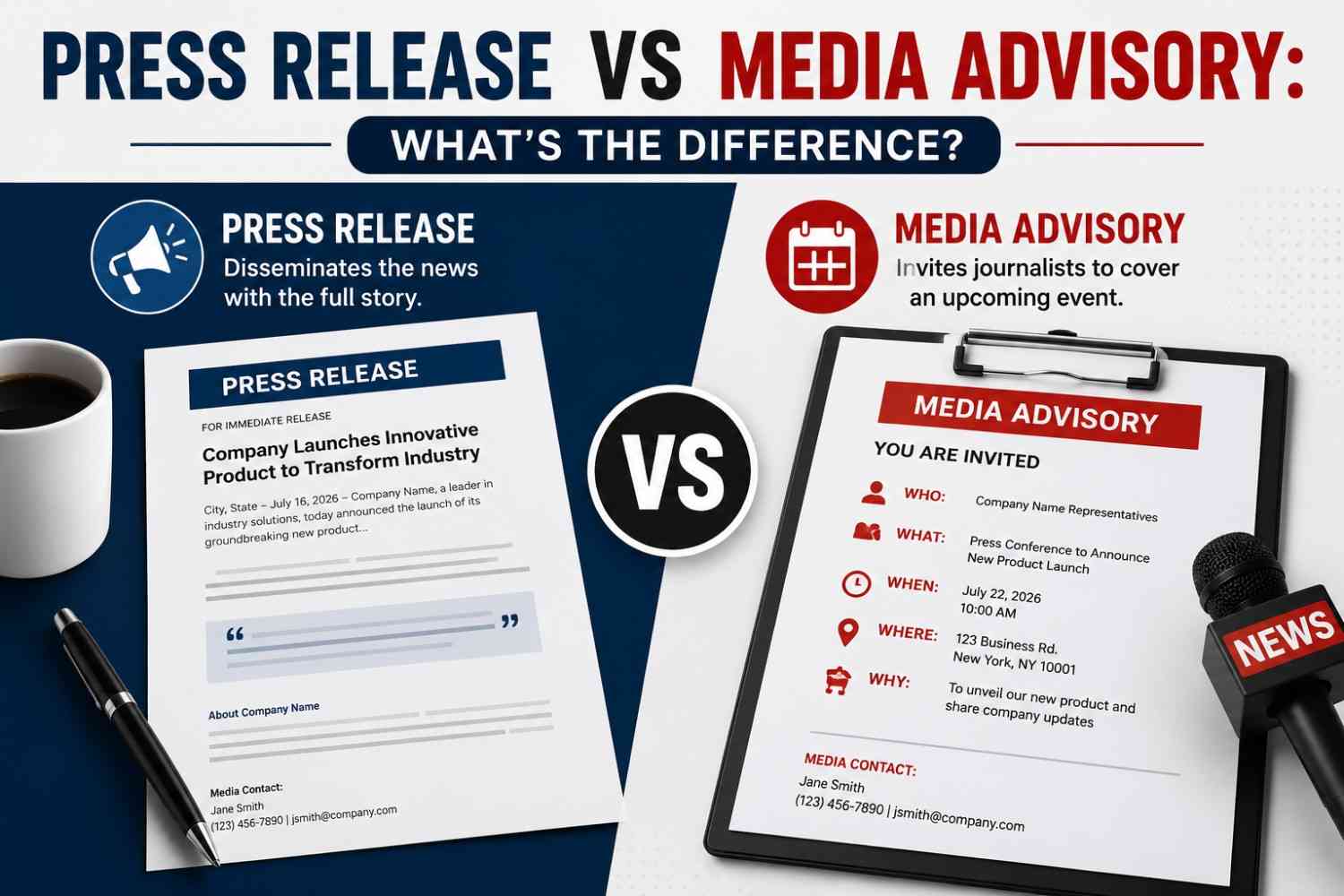
Quick Answer: A press release disseminates the news, including the whole story. Conversely, a media advisory is an invitation to journalists to cover an occasion. Knowing the difference helps PR professionals choose the right format, improve media outreach, and increase the chance of strong news coverage. Last Reviewed: July 2026
A press release and a media advisory are two of the most common tools used in public relations. Although they might appear to be alike, they have very different purposes. The decision made can help you make your media outreach effective.
A press release is news that gives journalists information which is necessary to write a story. A media advisory is much shorter. It serves as an invitation that notifies reporters about a new event and why they should be present.
Knowledge of the difference can assist you in communicating with the media better. Whether you are announcing company news or advertising an event through a press release distribution service, the correct format can make media more attentive and give you more chances of coverage.
Key Takeaways
- A news release provides precise information on a newsworthy event.
- A media advisory highlights event details and encourages media attendance.
- Most PR campaigns combine both documents to achieve improved results.
- Selecting the appropriate form helps journalists have a quick grasp of what you are saying.
Author Expertise: Sarah Bennett, PR & Communications Strategist at King Newswire
King Newswire’s editorial group collaborates with businesses, PR agencies, and organisations to write and release press statements in numerous industries. Moreover, our experience in media outreach and distributing news also makes us realise what journalists want to expect in both press releases and media advisories.
What Is a Media Advisory?
A media advisory is a brief document that requests journalists to come to an upcoming event. It will give the necessary information that reporters require to make a decision on covering the event or not. It is not a complete story, and it does not include as much background information as a press release.
Purpose of a Media Advisory
A media advisory is used to draw the attention of the media before the event actually occurs. It informs reporters, editors and news crews about an impending coverage opportunity. Consequently, it will be able to boost attendance and enhance media exposure.
Organisations tend to use media advisories for press conferences, big openings, fundraisers, product launches, and neighbourhood activities.
What Information Does a Media Advisory Include?
A media advisory normally responds to the 5 Ws:
- Who is involved?
- What is happening?
- When is the event?
- Where will it take place?
- Why does it matter?
Also, it needs to have the contact details regarding the media queries.
Media Advisory Template Essentials
An effective media advisory is well-defined and scannable. It must consist of an event title, date, time and location, summarised event details, and media contact. Most importantly, keep it short. Journalists should understand the key details within seconds. If you need a starting point, our free press release template is a useful reference for structuring your information clearly.
Numerous organisations use a press release and media outreach platform to access media contacts who are likely interested in covering events.
What Is a Press Release?
A press release is a formal news statement, used to provide significant news to journalists and the general population. It contains information regarding a newsworthy incident, company news or release, product or release, partnership or accomplishment. For a complete breakdown of the format and purpose, see our full guide on what a press release is.
Purpose of a Press Release
A press release assists an organisation to release news professionally. It provides journalists with facts, context and background to build a story. Consequently, it is able to raise publicity and awareness in the media. Following a proven structure, like our guide on how to write a press release, helps ensure nothing important gets left out.
Key Elements of a Press Release
A typical press release consists of:
- Headline
- Dateline
- Lead paragraph
- Body content
- Quote
- Boilerplate
- Media contact information
Every section helps journalists grasp the announcement’s essence and its significance quite rapidly. For a closer look at how these pieces fit together, check out our press release format guide and some real press release headline examples for inspiration.
Common Press Release Use Cases
Press releases are very effective when you want to convey news. An example would be a business announcing a product release, capital round, acquisition or industry recognition. In contrast to a media advisory, it does not aim at inviting the reporters to an event but presenting a full news story. These moments highlight the benefits of a press release for building credibility and long-term visibility.
To reach media outlets, journalists and online audiences more efficiently, many organisations follow best practices for how to distribute a press release using a press release distribution platform built for wide media reach.
Media Advisory vs Press Release: Key Differences
Purpose
A media advisory concentrates on attendance. It motivates reporters to report on a future event.
There is a press release that is communication oriented. It presents both news and reasons why this news is important and some background information.
Length
A media advisory is concise and to the point. The majority of them are one page or smaller.
A press release is more detailed. It can have a number of paragraphs, quotes, and company details.
Content
A media advisory provides the simple event questions:
- Who
- What
- When
- Where
- Why
A press release goes further. It comprises facts, background, quotations, and supportive information that aids reporters in creating a story.
Timing
Media advisories are typically dispatched in advance of an event. They focus on raising attendance at media.
Depending on the news being shared, press releases can be issued before, during, or after the event or milestone they cover.
Quick Comparison
| Feature | Media Advisory | Press Release |
| Main Purpose | Invite media to an event | Share news and information |
| Length | Short | Detailed |
| Focus | Event details | Complete story |
| Timing | Before an event | Before or after news |
| Includes Quotes | Usually no | Yes |
| Goal | Media attendance | Media coverage |
Which One Should You Choose?
If you want journalists to attend an event, use a media advisory. A press release should be used in case you want to make announcements and give a full story.
In most situations, a combination of the two is the most appropriate strategy. To illustrate, a company can provide a media advisory prior to an event showing a product launch, and then release a press statement later using a press release service to ensure the event gets the highest possible number of media reports.
When Should You Use a Media Advisory and Press Release?
The media advisory and press release are best suited to various objectives. The correct option is based on the need to invite journalists to an event or to cover a news announcement.
Use a Media Advisory for Events
When you want the media to be a part of an event, a media advisory is the better choice. It provides journalists with the most important information that they need to make a decision whether to attend.
Common examples include:
- Press conferences
- Grand openings
- Charity events
- Product demonstrations
- Community programs
- Ribbon-cutting ceremonies
Use a Press Release for News
A press release would be appropriate when you have some important news. It gives the media information, context and background.
Common examples include:
- Product launches
- Company milestones
- New partnerships
- Awards and recognition
- Executive appointments
- Funding announcements
Unlike a media advisory, a press release tells the full story.
Sometimes You Need Both
Both of the documents are utilised in successful PR campaigns. As an example, a company can release a media advisory prior to an event to promote attendance. It can then issue a press release afterwards to disseminate important announcements and highlights.
This is a strategy of maximising media involvement and coverage of the news. A lot of entities spread the press releases by means of such services as King Newswire after the event has taken place and reach more journalists and media outlets.
How to Write a Media Alert in 5 Simple Steps
A media alert, also known as a media advisory, is a brief message that informs journalists about an event that will happen and motivates them to attend. It does not narrate a story, but concentrates on the necessary details.
1. Start With a Clear Event Title
Start with a basic and descriptive heading. The intention of the event should be known to journalists at a glance. Avoid creative or promotional headlines.
2. Answer the 5 Ws
Provide the key pivotal details of the event:
- Who is involved?
- What is happening?
- When is it to be done?
- Where is the event?
- Why is it important?
The information must be readily available and simple to read.
3. Add Media Contact Information
Always include the name, phone number, and email address of a media contact. This enables journalists to pose questions or verify attendance in a short time.
4. Keep It Short and Focused
Media alert must be concise. Be ready to use the main points but not to use the long explanations. Usually, a single page suffices.
5. Send It at the Right Time
Timing matters. Issue the media alert some days ahead of the event to enable reporters to arrange coverage. Then, do follow up when necessary.
Conclusion
Knowing how to distinguish between a media advisory and a press release can enhance your media outreach efforts. Although a media advisory will draw journalists to an event, a press release will convey the news and provide the complete story.
This is because the best option will vary depending on your objective. A media advisory should be used in case you desire media coverage. If you want to share an announcement, use a press release. The combination of the two can be more effective and can have more media coverage in most instances.
Additional Press Release Resources
Want to go deeper into press release strategy? These guides cover distribution, cost, and best practices in more detail:
- How to optimize a press release for SEO
- How much press release distribution costs
- Whether paid press release distribution is worth it
- How to choose the best press release distribution service
- Choosing the best anchor text for press releases
- Real press release examples you can learn from
Frequently Asked Questions
What is a media advisory?
A media advisory is a brief press release that is brief and is dispatched to journalists ahead of an activity. It highlights the key details of the event and invites media to attend.
Can a media advisory replace a press release?
No. A press release and media advisory are used to achieve different things. A media advisory helps to publicise attendance, and a press release disseminates information and context.
What is a media release?
A media release is another term for a press release. Both refer to an official statement that was sent to the media. If you’re still unsure of the basics, our guide on what is a press release breaks it down in simple terms.
What is news advisory?
A media advisory is similar to a news advisory. It warns journalists of an upcoming occurrence and contains the information on which to cover.
How long should a media advisory be?
The length of a media advisory must be concise and scannable. In most instances, it ought to be on a single page and limited to the necessary event information.
When should I send a media advisory?
A media advisory is usually issued by most organisations a few days before an event. This allows journalists ample time to go over the information and strategise.