
Ukrainian Parents in Denmark Receive Guidance at Church of Scientology on Education

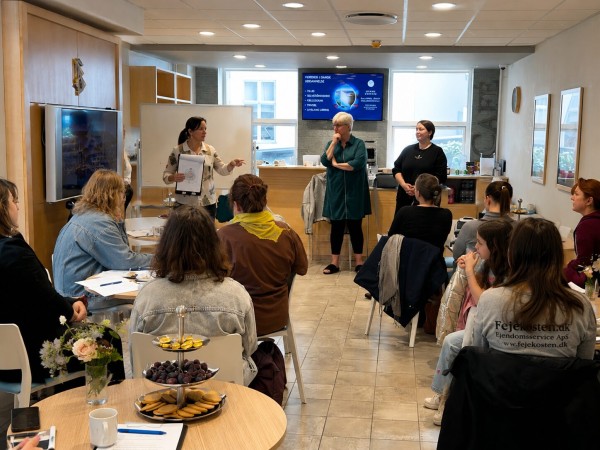
Community seminar in Copenhagen focused on integration, education and support for displaced families adapting to life in Denmark.
Ukrainian Family Education Seminar
Brussels, Belgium, 14th May 2026 — Ukrainian parents living in Denmark gathered in Copenhagen for an educational seminar aimed at helping families better understand the Danish school system, child development approaches and the social integration process facing many displaced families since the outbreak of the war in Ukraine.
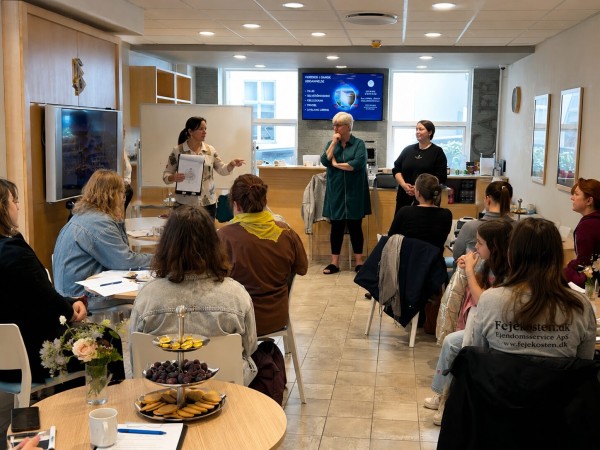
The seminar was organized by the Church of Scientology Denmark and held in Copenhagen, bringing together Ukrainian mothers seeking practical guidance on how to support their children’s adaptation to Danish educational culture while maintaining stability within the family environment. The initiative was reported by MyNewsDesk Denmark, highlighting the growing need for community-based educational support programs for refugee and migrant families across Europe.
The seminar was led by Marianne, an experienced educator and founder of a private kindergarten with nearly 30 years of professional experience. During the session, she explained key aspects of the Danish educational philosophy, including the importance placed on independence, social interaction, play-based learning and close cooperation between schools and parents.
Danish School System Guidance
Participants discussed the differences between educational expectations in Denmark and those common in Ukraine. One example that generated considerable discussion involved the Danish emphasis on exploratory outdoor activities for children, even when that means children return home with dirty clothing after a day of learning and play. According to attendees, the example helped illustrate broader cultural differences regarding childhood development and education.
The seminar also addressed practical concerns that many Ukrainian parents experience when interacting with Danish institutions, including communication with teachers, pedagogues, speech specialists and municipal educational services. Questions surrounding parental authority and cooperation with schools were discussed openly. Organizers explained that the Danish system encourages active parental participation while also providing professional support structures designed to assist children with language acquisition, social integration and academic development.
One participant, identified as Iriny in the report, described the seminar as “interesting and practical,” noting that it provided valuable insight into how Danish educational institutions cooperate with families and support children adapting to a new cultural environment. The event forms part of a broader pattern of local initiatives organized by Scientology communities across Europe focused on education, social betterment and humanitarian support. Churches, missions and affiliated groups regularly host activities connected to drug prevention, volunteer assistance, literacy, human rights education and community support programs.
Community Integration Support Efforts
These initiatives are inspired by the humanitarian principles and social philosophy developed by Scientology founder L. Ron Hubbard, whose writings on education, communication and social responsibility continue to influence many Scientology-supported social programs worldwide. Ivan Arjona, representative of the Church of Scientology to the European Union, the OSCE, the Council of Europe and the United Nations, commented on the broader significance of such community initiatives in Europe:
“Successful integration is built through understanding, access to information, mutual respect and the active participation of families within society. Community initiatives that help parents understand educational systems and social structures contribute positively to social cohesion and to the well-being of children adapting to new environments.” Organizers indicated that additional seminars and educational activities are being considered in the future, including further discussions on cultural adaptation and the integration of children into Danish society.
The Church of Scientology, its churches, missions, groups and members are present across the European continent. Scientology Europe reports a continent-wide presence through more than 140 churches, missions and affiliated groups in at least 27 European nations, alongside thousands of community-based social betterment and reform initiatives focused on education, prevention and neighbourhood-level support, inspired by the work of Scientology founder L. Ron Hubbard.
Scientology Religious Recognition in Europe
Within Europe’s diverse national frameworks for religion, the Church’s recognitions continue to expand, with administrative and judicial authorities in Spain, Portugal, Sweden, the Netherlands, Italy, Germany Slovakia and others, as well as the European Court of Human Rights, having addressed and acknowledged Scientology communities as protected by the national and international provisions of Freedom of Religion or belief.
Frequently Asked Questions (FAQs)
1. What was the purpose of the seminar for Ukrainian parents in Denmark?
The seminar in Copenhagen supported Ukrainian parents as they adapted to life in Denmark. In addition, it helped families understand the Danish school system and child development methods. It also explained social integration processes. As a result, parents could better adjust to new educational and cultural environments after leaving Ukraine.
2. Who organized the education seminar in Copenhagen?
The Church of Scientology Denmark organized the seminar in Copenhagen. It also brought together Ukrainian parents who needed practical guidance on education and integration. In addition, the event was part of broader community activities that supported displaced families and encouraged local social engagement.
3. What topics were covered during the seminar?
The seminar covered several key topics. For example, it discussed the Danish education system, child development practices, and school communication. In addition, it explained parental involvement. It also compared Ukrainian and Danish education systems, including play-based learning, outdoor activities, and cooperation between parents, schools, and municipal services.
4. Who led the seminar sessions?
Marianne led the seminar sessions. She is an experienced educator and the founder of a private kindergarten. She has nearly 30 years of experience. In addition, she explained Danish educational philosophy. She also shared how children develop independence and social skills in school environments.
5. What challenges do Ukrainian parents face in Denmark’s education system?
Ukrainian parents face several challenges in Denmark’s education system. For example, they may struggle with new educational expectations and communication with teachers. In addition, they may find classroom approaches different. The Danish system focuses on independence, collaboration, and play-based learning, which may differ from Ukraine’s system.
6. How does the Danish school system approach child development?
The Danish school system focuses on independence, social learning, and exploration. In addition, children learn through play, outdoor activities, and group interaction. Schools also work closely with parents and support services. As a result, they help children develop both academic and social skills.
7. What role do parents play in Danish education?
Parents play an active role in Danish education. For example, they communicate with teachers and take part in school activities. In addition, the system encourages cooperation between families, educators, and municipal services. This teamwork supports children’s learning and integration.
8. What feedback did participants share about the seminar?
Some participants described the seminar as practical and informative. They said it helped them understand how Danish schools work. In addition, they learned how institutions support children adapting to a new culture. This included both learning and social integration.
9. Are there plans for more similar seminars?
According to the report, organizers are considering more seminars in the future. These may focus on education systems, cultural adaptation, and family support. In addition, they aim to support displaced families depending on community needs and planning.
10. What is the broader context of this initiative?
This initiative is part of community-based education and social support programs. It helps displaced families adapt to new environments. In addition, it reflects wider efforts in Europe. These efforts support education guidance, social systems, and cultural adjustment for migrant and refugee families.
Company Details
Organization: European Office Church of Scientology for Public Affairs and Human Rights
Contact Person: Ivan Arjona
Website: https://www.scientologyeurope.org
Email: Send Email
Address: Boulevard de Waterloo 103
City: Brussels
State: Brussels
Country: Belgium
Release Id: 14052644803