
The Anatomy of a Press Release Headline That Ranks (Under 90 Characters, Keyword-First)

By Sarah Mitchell, Senior PR Content Strategist | Published: September 19, 2026 | Last Updated: September 19, 2026 | Reviewed by the King Newswire Editorial Team
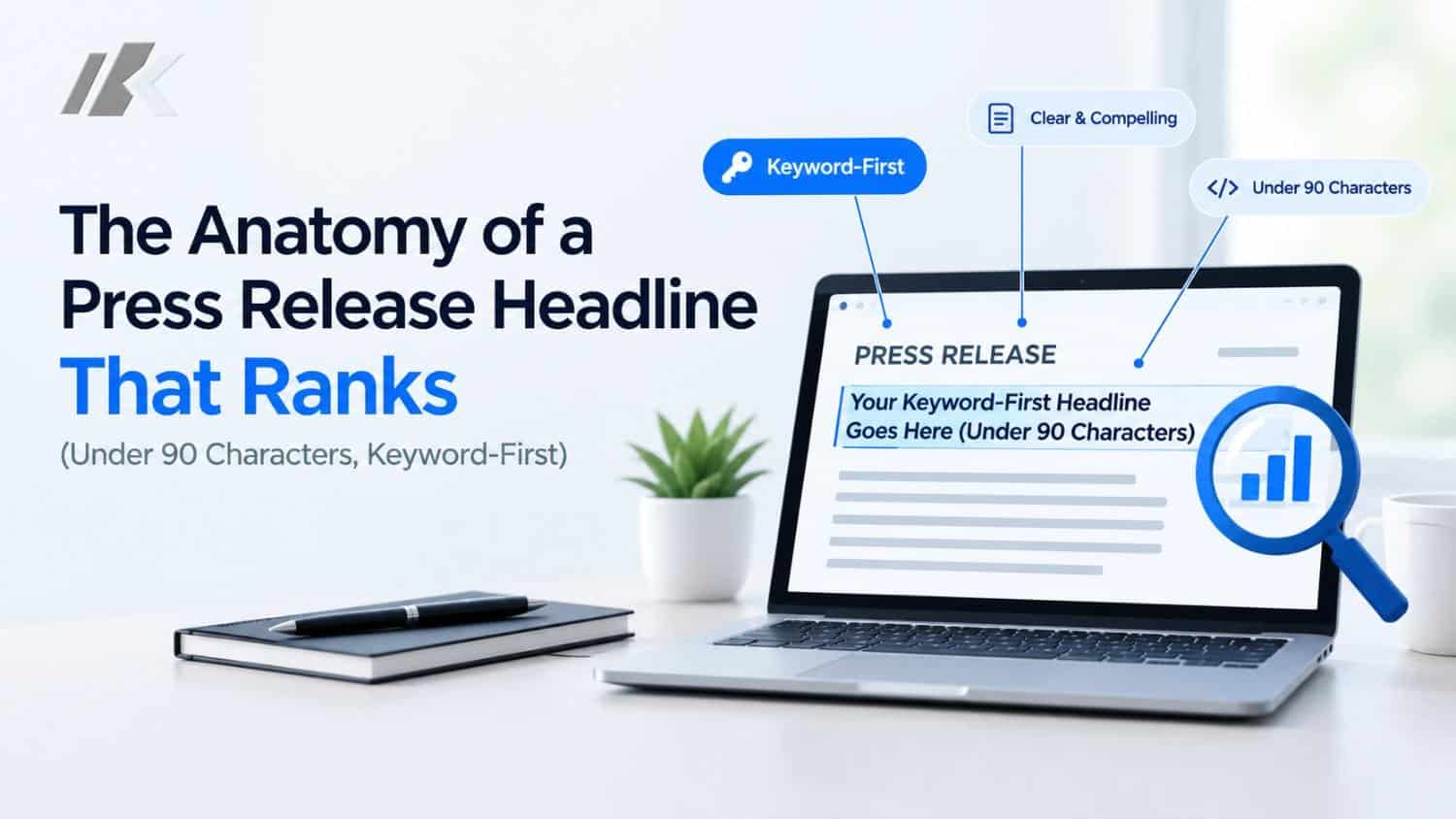
Quick Answer: A good press release headline includes the main keyword, clear news, a relevant entity, and a specific detail. For effective press release headline SEO, place the main topic early when it sounds natural. Keep the headline short and easy to understand. Under 90 characters is a useful writing target, not a Google ranking rule. A simple formula to follow: brand + action + main subject + specific detail, moving the main subject to the front when it reads naturally.
Introduction:
In a crowded inbox or news feed, the headline is often the first thing an editor, journalist, or reader sees, and sometimes the only thing they read before deciding whether to continue. A press release headline should tell the news fast. It should help your readers and search engines understand what the announcement is. A good headline makes the announcement easy to understand without using excessive or confusing words. SEO in press release headlines begins with a clear message, not keyword stuffing.
Yet many releases lose attention at exactly this step. Headlines that open with hype, hide the main topic at the end, or leave out the company name are harder to find in search results, on syndication pages, and in AI-generated summaries. The fix is rarely more keywords. It is a clearer structure.
Strong headlines tend to include the main subject, a related entity and the key news. The keyword in a PR headline should fit naturally and appear early when possible. The company, product, service, event or other entity should also be readily identifiable. This makes the headline more useful for readers and easier to understand.
Length matters, but 90 characters is a helpful writing aim, not a Google ranking rule. The objective of press release title optimization is to write a headline that is clear, detailed, newsworthy, and easy to read.
Get this right and the benefits compound. A clear headline is easier for journalists to evaluate, easier for editors to publish as written, and easier for search engines and AI tools to summarize accurately. This guide shows what makes a headline SEO-friendly, how to structure one, how to place a keyword without stuffing, and how a headline differs from an SEO title tag. No headline can guarantee rankings or coverage, but a clear one gives your news the best chance to be understood.
Key Takeaways
- Use the main keyword naturally.
- Include a relevant entity.
- Keep the headline clear and concise.
- Avoid keyword stuffing.
- Balance SEO and news value.
- Write the headline for readers and a separate, shorter SEO title tag for search results.
- Use active voice, present tense, and a specific detail instead of hype.
What Makes a Press Release Headline SEO-Friendly?
State Clear and Precise News
A good headline tells readers what happened. State the announcement directly, using active voice and present tense, such as “Launches” instead of “Has Launched.” Clear wording helps search engines understand the topic and context of the release.
Use a Relevant Primary Keyword
The primary keyword should match the news in the release. Use the main search term early if it fits naturally. Don’t add a keyword to the headline if it sounds unnatural.
Include a Relevant Entity
Add company, product, service, person, location or event where appropriate. These entities provide more context to the headline. They can also help readers quickly identify who or what the announcement is about.
Lead With Strong News Value
SEO should not replace news value. A headline should focus on the actual announcement, such as a product launch, a partnership announcement, a business expansion, a research finding, or a business milestone. This makes the headline useful beyond search engines. For a research-backed look at what journalists respond to, read about the news factors behind a successful press release.
The Anatomy of a High-Performing Press Release Headline
In the traditional press release structure, the headline comes first, followed by the dateline, introduction, and body. Because it leads, every part of the headline has to earn its place.
Focus Keyword or Main Subject
If you can, begin with the main point. For example, an announcement about a new AI platform may open with “AI Platform” instead of burying the topic toward the end.
Brand, Company or Entity
The company or brand that is making the announcement provides the headline context. It can follow the main subject or come first when the brand is the news itself.
Action or Announcement
Use an action verb that clearly describes what happened. Action words such as launches, announces, opens, partners, and expands convey the news quickly. Avoid all caps and exclamation marks, which read as promotion rather than news.
Add a Specific Detail
Add one detail that makes the announcement more interesting. This could be a product name, a location, a market, a number, a service, or a business milestone. Headlines become more informative when they contain specifics. For a practical example, see our guide on how to write a product update press release.
Highlight the Newsworthy Angle
The headline should say why the news is important. A new product, a new market, a new partnership, a new research result or a big company development could be a good angle. To see what journalists look for, read about what makes an announcement newsworthy to journalists.
Keep the Structure Concise
Remove words that do not add meaning. A focused structure helps readers quickly grasp the announcement.
Formula in action: Brand + action + main subject + specific detail. For example, “BrightPath Launches AI Scheduling Platform for Small Clinics” names the brand, uses a clear action verb, leads with a searchable subject, and adds the audience in just 60 characters.
Pair the Headline With a Subheadline
A subheadline can carry the supporting detail so the headline stays short. Use it for a second fact, such as a figure, a location, or a benefit, instead of packing everything into one line. The headline delivers the news; the subheadline adds context.
How to Use a Keyword in a Press Release Headline Without Keyword Stuffing
Begin with the keyword that best describes the announcement. If it fits naturally at the beginning, use it. This clarifies the subject without forcing the exact term into the headline.
Don’t repeat the same keyword or add lots of similar phrases. Search engines can interpret related terms and context. When a headline repeats itself, it can also sound unnatural to readers.
A headline strategy should support the news, not overpower it. Write a clear headline first. Then check whether the primary keyword can be added or moved closer to the beginning without hurting readability.
For instance, focus on the product and announcement itself rather than stuffing “press release title optimization” into a headline about a product launch. The keyword strategy should match the story.
Headline vs. SEO Title Tag: What Is the Difference?
A press release headline and an SEO title tag are related, but they are not the same thing. The headline is the H1 that readers, journalists, and editors see at the top of the release. The title tag is the HTML title element that search engines may use to build the blue link in search results.
Google states that there is no limit on how long a title element can be, but the title link is truncated in search results as needed, typically to fit the device width. Read Google’s title link guidelines for the full guidance. This is why many SEO teams keep title tags near 60 characters, while a headline of up to 90 characters can still display in full on the release page.
Example: This guide’s headline runs 87 characters, so a shorter title tag such as “Press Release Headline SEO: A Keyword-First Guide” (49 characters) is safer for search results. When you publish through a press release distribution platform, keep the two consistent: the same announcement, the same main keyword, and no repeated phrases.
Why Your Headline Matters More After Distribution
Once a release goes live, the headline travels with it. Outlets generally publish a distributed release as submitted, and it usually cannot be edited after it appears on partner sites. That makes the headline the one line that has to work everywhere: on the release page, on syndication pages, in search results, and in AI-generated summaries.
A reliable press release distribution company reviews each release before it goes out, and releases can be rejected for excessive promotional language or missing information. That is one more reason to keep the headline factual. Our press release submission guidelines explain the formatting requirements for submitted releases.
Google News is a separate matter. It pulls only from publisher websites that meet its own rules, so pickup depends on which outlets carry your release, not on distribution alone. When comparing packages, look at the outlets each plan includes, such as Yahoo Finance press release distribution, and review all press release distribution plans before choosing.
Headlines in the Age of AI Search
AI search tools also work from clear, extractable statements. A headline that names the company, the action, and one specific detail is easier to interpret and summarize accurately. A press release writing and distribution service can structure the release so that facts, names, and quotes are easy to reference, but no service can guarantee a mention or citation in ChatGPT, Google AI Overviews, or any other AI-generated answer.
Why Keeping a Press Release Headline Under 90 Characters Works
Keeping a press release headline under 90 characters helps writers stay focused. It pushes them to keep the announcement unambiguous and cut unnecessary words. A shorter headline is also easier to read across platforms and screens.
The 90-character figure is not a Google ranking factor. No rule states that a press release headline must be under 90 characters to rank. Treat this number as a practical writing aim rather than an SEO formula.
Clarity is the most important goal. If removing a few characters makes the headline confusing, keep the important context. A good press release title is optimized for length, keywords, entities, news value, and readability.
Before-and-After Press Release Headline Examples
Comparing weak and strong headlines makes press release headline SEO easier to understand. A good headline clearly states the news, names the main entity, and removes extra words. The company names below are fictional and used for illustration only, and the Characters column shows how each improved headline compares with the 90-character target.
| Original Headline | Issue | Better Headline | Characters | Key Change |
| BrightPath Is Excited to Announce Its New AI Platform | Too promotional | BrightPath Launches AI Scheduling Platform for Small Clinics | 60 | Clear news, named audience |
| Summit Foods Announces Exciting Expansion Plans | Too vague | Summit Foods Opens New Texas Distribution Center | 48 | Adds a clear detail |
| Technology Solution Changes the Future of Business | Unclear message, no entity | Orbit Systems Launches AI Platform for Business Automation | 58 | States the topic and brand |
| GreenTech Introduces New Renewable Energy Product Line | Generic description | GreenTech Launches Rooftop Solar Panel Line for Homeowners | 58 | Names the product and audience |
| Leading Brand Announces Strategic Partnership | Missing details | Medix Partners With CareLink to Expand Telehealth Services | 58 | Adds entities and purpose |
The main lesson is simple: use fewer words, add clear details, and focus on the actual news. The same approach works for a new service launch or an award or industry recognition announcement.
FAQs
Should I put my keyword at the start of the headline?
If it sounds natural, yes. It can make the main topic clear right away.
Is a 90-character headline required by Google?
No. Under 90 characters is a useful writing target, not a Google rule.
How many keywords should a headline have?
Usually, one main keyword is enough. Avoid adding too many similar terms.
Should I add my company name?
Add it when the company is an important part of the news. Keep it out if it makes the headline too long.
What makes a PR headline easy to read?
Use simple words, clear details, and a direct action. Avoid hype and unnecessary phrases.
Should a PR headline sound like an SEO title?
It should be search-friendly but still sound like real news. Write for people first, then refine it for SEO.
What is the difference between a press release headline and an SEO title tag?
The headline is the H1 readers see on the release page. The title tag is the shorter HTML title that search engines may show in results. Keep both accurate and consistent, and keep the title tag closer to 60 characters.
Can a headline guarantee Google News or AI search coverage?
No. A clear, specific headline makes your news easier to understand, but Google News pulls only from publishers that meet its rules, and no service can guarantee a mention in AI-generated answers.
Conclusion
A good press release headline does more than just include a keyword. It should tell the news, introduce the main subject and give the reader a good reason to read on. These elements build a better foundation for press release headline SEO.
Good press release title optimization is a matter of balance. Strong headlines serve readers, journalists, publishers, and search systems alike. Write the news first, and then refine it to make it search-friendly and readable.
Ready to Distribute Your Press Release?
A strong headline deserves to reach the right outlets. Explore professional press release distribution built for journalists, search engines, and AI platforms, or compare all distribution plans to find the package that fits your announcement and budget.
Author Expertise
This guide is written by Sarah Mitchell, Senior PR Content Strategist, who specializes in press release writing, SEO content, headline optimization, digital PR, and search visibility. The guide was reviewed by the King Newswire Editorial Team, which draws on more than 10 years of press release distribution experience. The focus is on creating clear, newsworthy headlines that balance keyword relevance, readability, and audience intent.
Editorial note: This guide is published by a press release distribution service. Examples in the table below use fictional company names and are for illustration only. No writing technique or distribution service can guarantee search rankings, media pickup, or AI citations.
Additional Press Release Resources
Explore more guides on writing and distributing announcements in our press release guides and industry insights.
- Announcing an update: read how to announce a product enhancement with the right distribution tips.
- Investor angle: see why investors pay attention to product update announcements.
- Research news: avoid the common mistakes in research and R&D announcements.
- Timing: learn why timing matters in crisis communication.