
How to Choose the Right Keywords for a Press Release

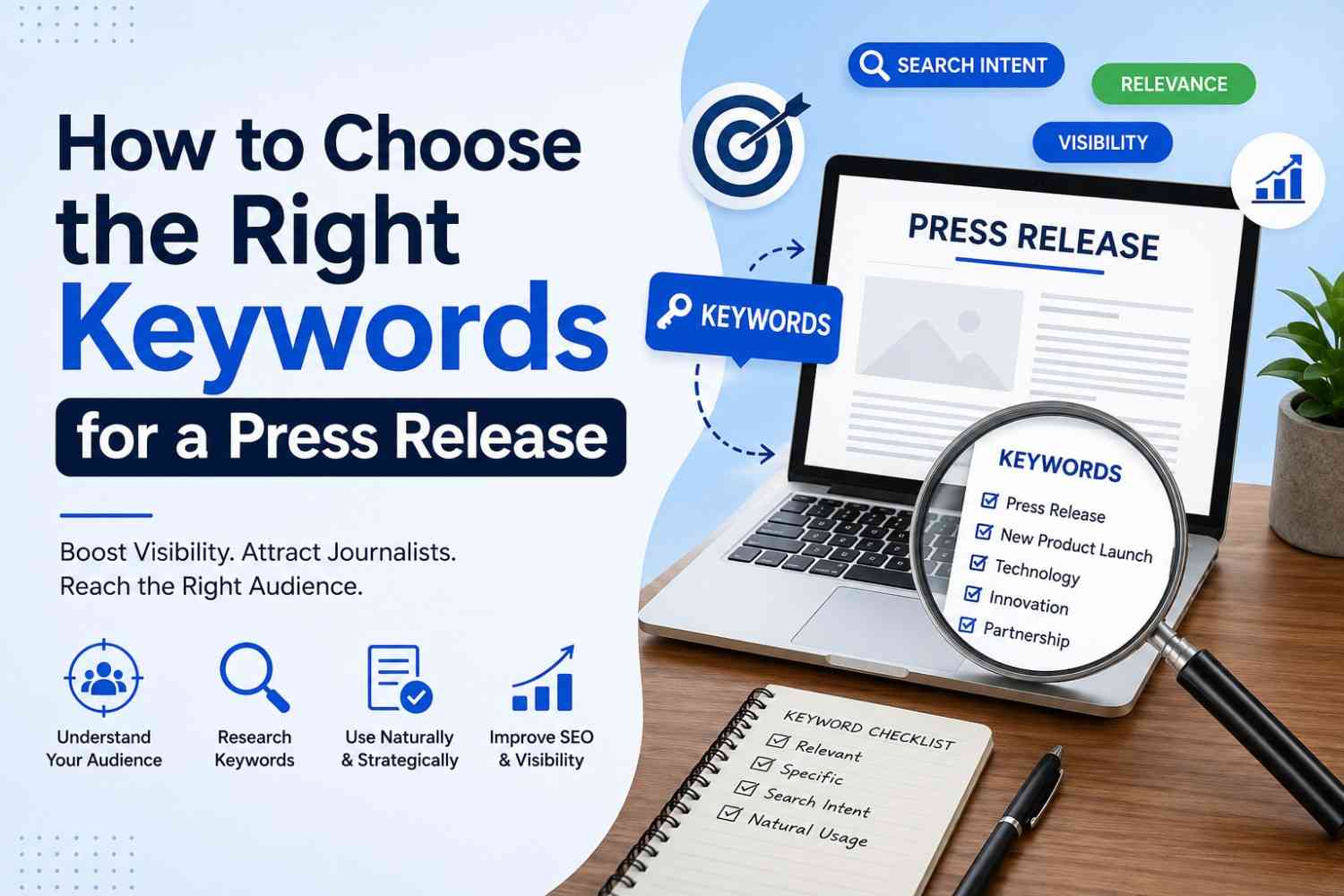
How to Choose the Right Keywords for a Press Release
Quick Answer: The first step in selecting the correct keywords in a press release involves the right audience, search intent, and topic of the announcement. Find appropriate keywords that individuals actually type in, and then incorporate them naturally within the release. The appropriate keyword approach can enhance search visibility, media discovery, and AI search references.
A press release keyword is an expression or phrase that assists search engines, journalists, and readers in comprehending the subject of your announcement. Selecting the appropriate words is one of the crucial elements of press release optimization.
A large number of businesses do not go beyond writing the news. Nevertheless, a well-written press release might not be able to achieve visibility when it uses the incorrect keywords. Keywords help search engines to comprehend the content, and journalists usually search using keywords to locate relevant stories. This is a core principle of search engine optimization, which rewards content that matches real user queries, and it’s just as true for press releases as it is for any other webpage. Understanding the wider benefits of press release distribution also helps you see why keyword choice matters so much before you publish.
Google, AI-powered search tools, and news platforms analyse context, entities, and search intent when deciding which content to surface. This implies that companies require a wiser approach to keywords to enable them to be seen and reach their intended audience.
Be it the announcement of a product launch, partnership, event or company update, the right choice of keywords can make your press release rise up the search engine ranks and news sites. Pairing strong keywords with reliable press release distribution can also enhance that visibility by sending optimized press releases to an even wider audience.
Key Takeaways
- Choose keywords that fit your news.
- Focus on search intent, not just search volume.
- Use keywords naturally throughout the release.
- Prioritize relevance over repetition.
What are Keywords on a Press Release and Why is it important?
Press release keywords are the words and phrases that describe the main topic of your announcement. They assist search engines, journalists and readers in grasping what your news ought to talk about swiftly. People can easily find your press release when searching online using relevant keywords.
The right keywords can improve your press release’s visibility. They are used by search engines to match content with user searches and by journalists to find stories by searching industry terms and trending topics. Giving relevant words that will match your announcement will enable you to connect with a more relevant group.
Modern search engines, such as AI search engines, also rely on keywords. A properly optimized press release will be more likely to be presented in search data, news sources, and AI-based responses. The right keywords will also enable your news to reach a broader audience when you combine them with professional press release distribution services. Once your keyword list is ready, reviewing the available press release distribution plans can help you match the right package to your announcement’s reach.
How to Research Keywords for a Press Release
Identify the Main Topic of Your Announcement
Keyword research starts with understanding what your news is about. Consider the primary message of your press release and words that people may use to locate the press release. If you haven’t drafted your announcement yet, mapping out how to write a press release first makes keyword research far easier.
Use Keyword Research Tools
Keyword search engines can assist you with finding out what your audience is searching. Platforms like Google Keyword Planner, SEMrush, Ahrefs, and Google Search Console can reveal related keywords, search volume, and trending topics. These tools enable you to select keywords that have actual search potential. Understanding whether a press release actually helps SEO in 2026 can also guide which keywords are worth targeting in the first place.
Analyze Competitor Press Releases
Examining press releases by competitors may help identify good keywords. Look at the headlines, subheadings, and the subjects they address. This will assist you in establishing the terms frequently used by the industry and areas where you can make the content more relevant. Reviewing real press release examples from different industries can also reveal keyword and structure patterns worth borrowing.
Focus on Search Intent
Not all keywords are suitable in a press release. Use keywords relevant to your purpose of announcement and what the user wants to see. Search intent keywords should be used to obtain the appropriate audience and enhance interaction.
Choose Primary and Supporting Keywords
When you are ready with a list of keyword ideas, one of the main keywords that best suits your announcement should be chosen. Then add a few supporting and long-tail keywords that provide additional context. This makes the strategy of the keyword more natural and makes your press release be seen by a broader but more relevant audience. Structuring these keywords within a clear press release format also ensures search engines and journalists can quickly find the context they need.
Where Should You Place Keywords in a Press Release?
Add Keywords to the Headline and Subheadline
The most significant location of your main keyword is the headline. Including it in the title helps search engines and readers instantly understand the topic of your announcement. Looking at strong press release headline examples is a quick way to see this principle in action.
Use Keywords in the Opening Paragraph
The introductory paragraph must show the news in a clear manner and must automatically contain your main keyword. This can serve to create relevancy early on and enable search engines to detect the primary subject of the press release. Following AP style press release conventions here also keeps the tone professional and consistent with what journalists expect.
Place Keywords Naturally Throughout the Body
The keywords must be in the body content where they are relevant. Rather than writing the same line, employ supporting keywords, related words, and other entities to develop context and enhance readability. Using a free press release template can help you map out exactly where these supporting keywords fit best throughout the body.
Optimize Images and Media Elements
When you have pictures, videos, or other types of media in your press release, give descriptive file names and alt texts where possible. This gives you extra context and can help to make your content generally more visible.
Include Keywords in the Boilerplate
The boilerplate is the short company description at the end of a press release. The branded keywords and industry-related words fit well in this section, as they will help establish what your company does, but they will not sound promotional. If you’re also linking back to your newsroom or homepage from the boilerplate, choosing the best anchor text for press releases makes that link far more effective for both readers and search engines.
Author Expertise
By Sarah Whitfield, Senior SEO & PR Content Strategist. Our editorial team has extensive hands-on experience in press release writing, SEO content strategy, and digital PR. We have helped companies strengthen their online presence with optimized press releases published across major media networks, including distribution through King Newswire and other news services. Last Updated/Reviewed: July, 2026
This article was reviewed by King Newswire’s editorial team for accuracy, clarity, and alignment with 2026 SEO and press release best practices.
Conclusion
Choosing the right keywords for a press release is about more than finding popular search terms. The most effective keywords are relevant to your announcement, user-intention-focused, and give clear context to search engines and artificial intelligence-based systems. You can make your news more visible and reach more people by researching the keywords, positioning them, and eliminating possible pitfalls. Once your keyword strategy is solid, comparing press release distribution plans helps you pick the package that fits your announcement.
With the ongoing evolution of search, effective press releases are based on relevance, clarity, and audience requirements, instead of simple volume of keywords. A good keyword strategy, when combined with a reliable press release distribution platform, can make your press release find its way to journalists, potential customers, and AI-powered search experiences more easily.
FAQs
Should every press release target the same keywords?
No. Every press release must address keywords that are relevant to the particular topic and purpose of the press release. The repetition of the same keywords may restrict your reach and minimise relevance.
Can branded keywords improve press release performance?
Yes. Branding of keywords can assist individuals in searching for news concerning your company, products or services. These are most effective when they are used together with non-branded keywords that possess broader search commands.
Do keywords affect visibility in AI-generated search results?
Yes. AI search engines analyse the keywords and context, entities, and content quality. Relevant and clear, well-organised press releases have a higher chance of being included in AI-generated responses.
How often should you update your keyword strategy?
Review your keyword strategy before every new press release. Trends and topics in industries and the interests of the audience may vary over time, and frequent research is necessary to remain visible.
Should the same keywords be used in the headline and the boilerplate?
Not necessarily. The headline should carry your primary keyword for immediate clarity, while supporting and branded keywords fit more naturally in the boilerplate. This keeps the announcement relevant throughout without repeating the same phrase.
Additional Press Release Resources
- Learn how to distribute a press release
- See how much press release distribution costs
- Find out if paid press release distribution is worth it
- Compare how to choose the best press release distribution service
- Understand the difference between a press release and a media advisory
- Read how to write a fintech press release
- Read how to write a SaaS press release
- Read how to write a press release for a gaming or Web3 launch
- Read the biotech press release guide
- Compare free press release vs. paid distribution