
Why ChatGPT and Google AI Overviews Are Citing These Press Releases (And Yours Isn’t)

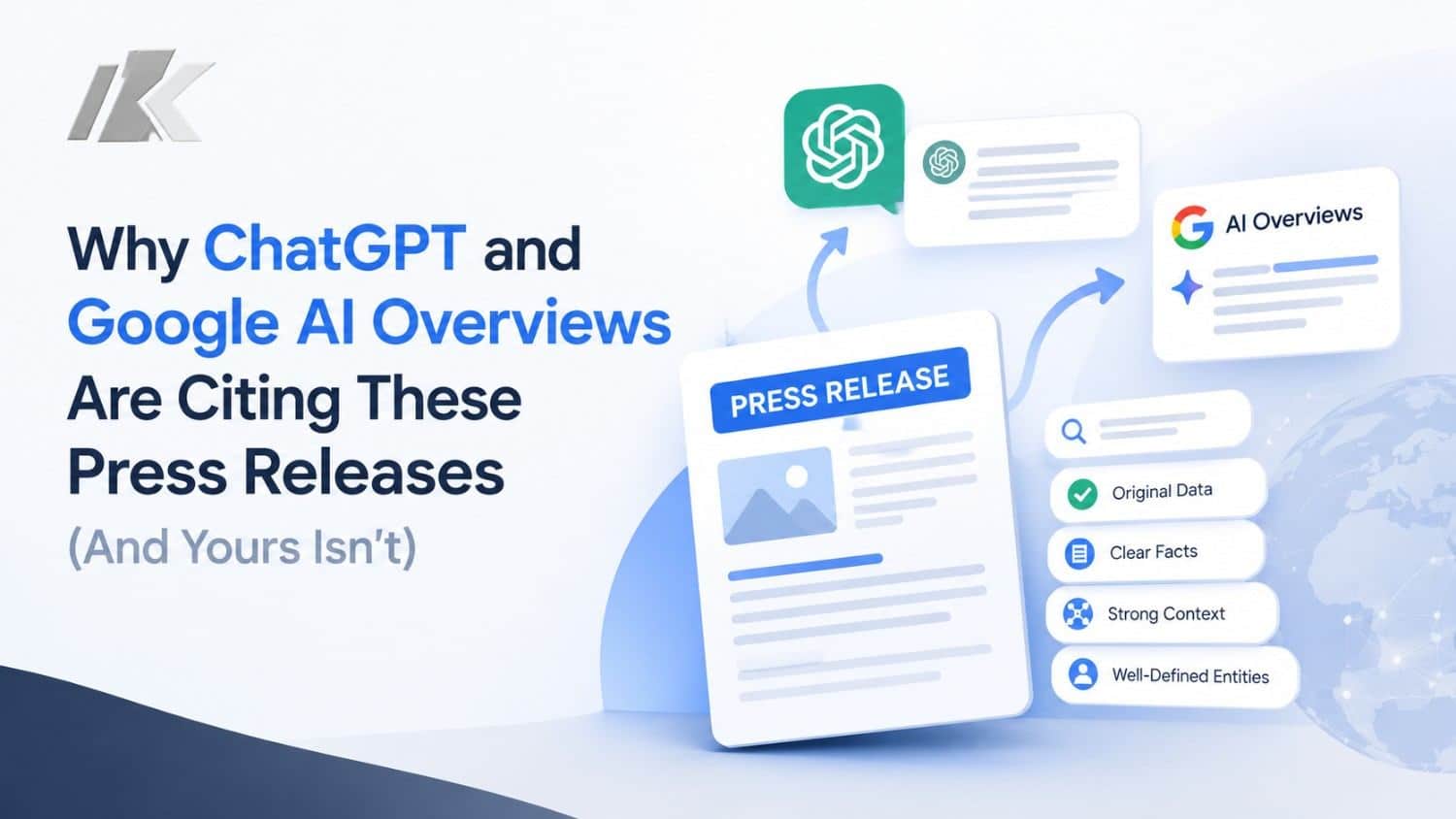
Quick Answer: ChatGPT and Google AI Overviews can cite press releases when they contain useful and relevant information. But distribution alone does not guarantee a citation. The press release can be easier to understand and be used by AI systems because of clear facts, original data, strong context, and well-defined entities.
Introduction:
A press release can appear on many news websites but still not get cited by ChatGPT or Google AI Overviews. Even a well-run press release distribution service cannot guarantee that outcome. That leads to a simple question: why does a certain press release get mentioned whereas other ones do not?
The answer goes beyond distribution. AI search systems look for useful and relevant information that can answer a user’s query. A press release can be simplified to be read and remembered through clear facts, original data, strong context, and clear entities.
This makes AI overviews press release citation different from traditional PR distribution. In this guide, we look at ChatGPT press release citation, GEO for PR, and AI search to understand what can make a press release more useful as an AI source.
Key Takeaways
- Distribution of press releases does not ensure AI citation.
- Releases can be easier for AI to comprehend with original facts, clear entities and useful data.
- A citation and a brand mention are not always the same.
Why Some Press Releases Get Cited by AI While Others Don’t
AI Looks for Useful Information
A press release can be published on many websites and still receive little AI visibility, even through a wide-reaching press release distribution platform. AI search systems require data to assist in responding to a user’s query. According to Google, AI Overviews and AI Mode may utilise multiple related searches to discover supporting information.
Clear Facts Make a Difference
A good press release ensures that its key points are easy to grasp. It has clear information about the company, product, people, dates, places and events. Following a set of press release writing guidelines makes this structure consistent. This gives AI systems useful context when they retrieve information for a query.
Publication Does Not Mean Citation
These are different outcomes: being published, being indexed, being retrieved, and being cited. A press release can clear every earlier step and still never show up as a source in an AI answer.
Original Content Gives AI More to Work With
Generic announcements offer little information that is unique to a brand. An AI-citable press release can be even more valuable with original research, specific numbers, product details, survey results, and other useful facts.
What 2026 AI Citation Research Reveals About Press Releases
According to a 2026 study, AI citation behaviour is not as simple as releasing more press releases. Research on massive citation has identified that news and editorial sources are significant in AI responses, whereas direct press-release and newswire citations may contribute a significantly smaller portion of total citations.
At the same time, other research focused specifically on distributed press releases has reported much higher citation rates. These analyses apply various datasets, platforms, queries, and definitions of a citation. They are not to be taken as direct comparisons.
GEO for PR is better served by the bigger lesson. AI systems can have access to a press release without it turning into one of the most popular sources. The quality of content, relevance, originality, the context of the source, and the query itself may influence what an AI system will recall. Google also explains that its generative AI capabilities are based on Search systems that find relevant web pages and then come up with responses. We explain share of model as a metric beyond GEO in a separate guide.
What Makes a Press Release Easier for AI to Retrieve and Cite?
Include Original Information
A press release should include more than just promotional language. Insert original information, research, product description, survey findings or targeted business data. This applies whether the news is a product launch announcement or a business expansion update. This provides AI search systems with information that can be used to respond to genuine queries.
Make Entities Clear
Use clear and specific names for companies, products, people, organisations, places, and events. Entity information that remains consistent assists with entity SEO and builds more context around the announcement.
Answer the Main Questions
An effective press release must be precise and should quickly present who, what, when, where, why and how. This simplifies the information. It also facilitates AEO since important facts are capable of triggering particular user queries.
Use Specific Facts and Data
Numbers are more useful than vague claims. Rather than stating that a product is highly effective, describe what it does and, when possible, give evidence for the same, as covered in our guide to the key elements a press release should include. Specific information can also make an LLM citation press release more useful as a source.
Add Evidence and Attribution
Back up relevant assertions with referenced studies, facts, statements of specialists, or other reputable sources. Clear attribution assists readers in learning the origin of information. It will also enhance the credibility of the release, in general.
Build Independent Coverage
The press release is just a part of a broader digital PR plan. Independent news, professional commentary, interviews and industry publications can provide context to the announcement. This will help in making AI more visible to press releases. For more guides like this, see our press release news room.
Lead With a Clear Headline and an Answer-First Opening
State the news directly in the headline and name the company, product, or development involved, avoiding general or overly promotional wording. Then put the most significant information first: the opening paragraph should cover the Five Ws (who, what, when, where, and why) so readers and AI systems can grasp the announcement quickly. Background belongs further down. For the fundamentals, see our guide on how to write a press release.
Keep Paragraphs Short and Easy to Extract
Write in brief paragraphs with descriptive headings and simple language. Important facts buried in large blocks of text are harder to locate, while a well-organised release lets AI systems recognise key facts and understand their context.
Use Quotes That Add Real Value
Quotes should provide information, experience, or a distinct point of view rather than generic enthusiasm. A relevant quote from a named executive or expert adds credibility and gives AI systems useful material to work with.
Keep Brand Information Consistent
Different company names, product details, or facts across websites can create confusion. Keep entity information the same in your press release, on your website, in your newsroom, and across other trusted sources.
Add Relevant Structured Data
Structured data can help search engines understand a news page. Where appropriate, apply markup such as NewsArticle schema to describe the article, publisher, and headline, and make sure it matches the content visible on the page.
Example: Weak vs. Strong AI-Citable Press Release
Imagine a software company launching a new AI customer support tool. A weak press release might only call the product “innovative” or “industry-leading.” Those claims are promotional and give AI systems very little to use.
A stronger version explains what the tool is, when it launched, who it serves, and what supporting evidence exists, such as verified results from testing. It adds a quote from a company executive and references the source of any data. The more specific the facts and the clearer the context, the more useful the release becomes as a potential source.
ChatGPT vs. Google AI Overviews: How Press Release Visibility Differs
Both ChatGPT and Google AI Overviews utilise web information, though not in the same manner. According to Google, query fan-out and various models or methods can be used to generate AI Overviews or AI Mode. This means their responses and supporting links can vary.
| Platform | What matters for press release visibility |
| ChatGPT Search | Relevant public web content that can be discovered and cited in search results |
| Google AI Overviews | Indexed pages that are eligible for Google Search and relevant to the user’s query |
| Google AI Mode | Deeper queries, related searches, and supporting web sources |
| Gemini | AI-generated answers that may use different sources based on the query |
| Perplexity | Web-based answers that commonly provide source citations |
For ChatGPT, OpenAI says public websites can appear in ChatGPT Search. It also advises enabling OAI-SearchBot should publishers desire their materials to be found, surfaced, and referenced.
In the case of Google, no distinct technical need exists in AI Overviews. Google states that the same foundational SEO practices are also relevant, and pages should be indexed and qualify to be shown in Search.
Why Press Release Distribution Alone Isn’t Enough for GEO
Distribution through a press release distribution service can have the announcement on additional websites. Availability is not an automatic generative engine optimisation PR value creator.
AI systems require helpful information to provide a query. The act of publishing the same announcement in numerous sources might not introduce new facts or context. A more effective GEO PR strategy is one that involves distribution, original information, transparent entities, helpful data, and autonomous coverage.
This is also the reason why a press release syndication AI search strategy cannot sit on the number of placements. The usability and quality of the information are also important. Google now advises emphasising valuable and unique non-commodity content instead of producing content whose primary purpose is to shape generative AI responses.
The goal is not to force ChatGPT or Google AI Overviews to cite a release. The aim is to make the announcement understandable, helpful, verifiable, and discoverable in case it is pertinent to a user query. For a broader view, read about AI search visibility for PR.
Distribution still plays an important role. Publishing on reputable news websites makes a release easier for search engines and AI systems to discover, and it puts the announcement in front of a larger audience. Learning how to distribute a press release effectively, and understanding whether press releases help SEO, will help you combine distribution with the content practices above.
Common Reasons AI Search Ignores a Press Release
- Overly promotional content: releases that focus on sales language rather than news give AI systems little to reference.
- Weak evidence: unsupported claims reduce credibility. Provide data, studies, references, or expert remarks where relevant.
- Poor content structure: key facts hidden in long blocks of text are harder to find and extract.
- Inconsistent brand information: conflicting names or details across sources make entities harder to understand.
- Limited supporting coverage: a single release offers minimal information about a brand; credible supporting coverage reinforces authority.
Press Release SEO vs. AEO vs. GEO
SEO, AEO, and GEO support different forms of search visibility. Used together, they help a press release reach both traditional search users and AI-powered search users.
| Strategy | Main Goal | How It Helps Press Releases | Key Tactics |
| SEO | Improve search rankings | Helps releases reach users through Google and other search engines | Keywords, useful content, links, technical SEO |
| AEO | Answer user questions | Helps content appear in direct answers and featured snippets | Clear headings, FAQs, concise answers |
| GEO | Improve AI visibility | Helps AI systems understand, summarise, and cite releases | Entities, facts, expert quotes, trusted sources |
| SEO + AEO + GEO | Build broader visibility | Helps releases reach both search users and AI audiences | Keywords, answers, structured data, authority |
For the traditional search side, see how to optimize a press release for SEO.
AI Search Citation Checklist for Press Releases
- Write a clear headline: state the main news directly.
- Lead with key facts: cover who, what, when, where, and why.
- Use explicit entities: name companies, people, products, and places.
- Add evidence: include accurate data, dates, and expert quotes.
- Keep details consistent: use the same information across trusted sources.
- Make it legible: use short paragraphs and clearly defined sections.
- Add structured data: apply appropriate markup, such as NewsArticle schema.
- Use reputable media: distribute through trusted channels.
- Support the announcement: publish related, authoritative content.
- Check accuracy: verify any significant claims before publication.
FAQs
Can ChatGPT cite a press release?
Yes. ChatGPT can cite public web pages when they are found and used as sources for a search answer. However, citation is not guaranteed.
Why is my press release not showing in AI answers?
Visibility can be influenced by a number of factors. The published release might not include any exclusive information, explicit context, or connection to the query. Citation does not come with distribution.
Do press releases help with GEO?
They are able to accommodate a wider GEO approach. The higher value they have is attributed to original facts, clear entities, useful data, and coverage.
Does a press release need to rank on Google to appear in AI search?
Not always. AI search systems can use different retrieval processes. Nevertheless, the page typically should be publicly visible and findable.
Can AI mention my brand without citing my press release?
Yes. An AI can discuss a brand but give a different source as a reference. A brand mention and a source citation are not always the same.
How can I check if AI cites my press release?
Search relevant questions in ChatGPT, Google AI Overviews, and other AI search tools. Record the sources that appear. Check whether your press release URL is among them.
Is press release syndication enough for AI visibility?
No. Syndication has the ability to expand distribution. The visibility of AI also requires relevance, the quality of information, novelty, and usefulness of the content to a given query.
What is the difference between SEO and GEO for press releases?
SEO focuses mainly on visibility in conventional search results. GEO focuses on visibility in AI-generated responses and citations. A strong press release can support both.
Does schema markup help AI understand a press release?
Structured data can give search engines more explicit information about a page. NewsArticle schema can describe the article type, publisher, headline, and other details, as long as it matches the visible content.
Which parts of a press release are most likely to be used in AI answers?
The headline, opening paragraph, key statistics, and expert quotes are commonly the parts AI systems draw on when summarising information.
Conclusion
Sending your news out through a press release distribution platform can make your news available online. Nonetheless, it does not assure an AI reference.
A stronger strategy starts with real news and useful information. Releases can be made easier to understand and retrieve through clear facts, original data, strong context and supporting coverage.
The goal is not to force AI systems to cite your release. The aim is to provide material that is helpful when individuals are seeking information that pertains to your news.
Ready to get your next announcement in front of journalists, search engines, and AI platforms? Explore King Newswire’s press release distribution plans and see how a professional press release distribution service can get your story published in as little as 24–72 hours.
Author Expertise
By Sarah Whitfield | Last Reviewed: September 2026
This article is based on research into AI search, SEO, GEO, AEO, digital PR, and press release distribution. It looks at how ChatGPT, Google AI Overviews, and other AI search systems find, understand, and cite online information.