
How to Pitch Your Press Release to a Journalist

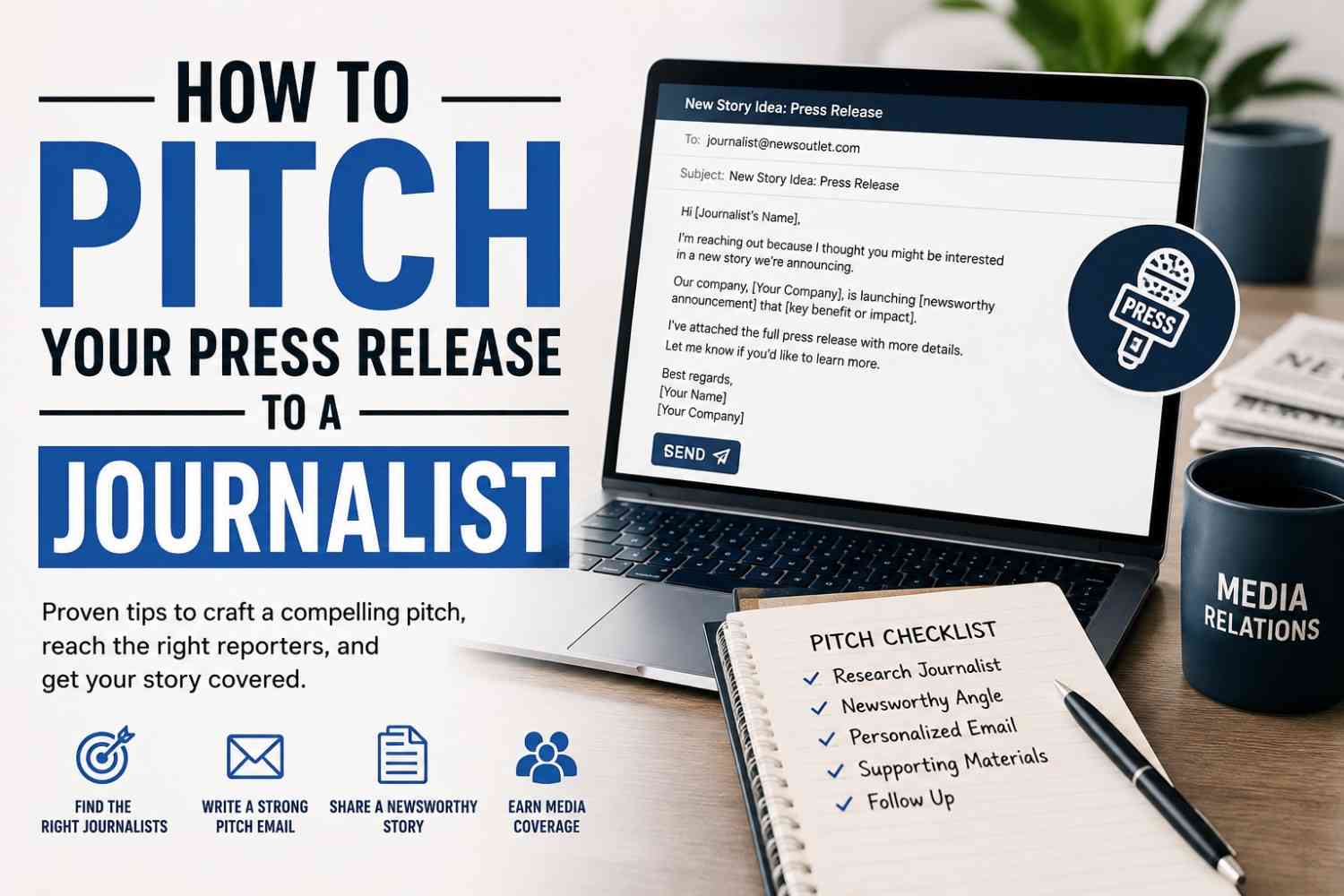
How to Pitch Your Press Release to a Journalist
Quick Answer: Pitching a press release to journalists means sending a personalized media pitch that explains why your story matters to their audience. To improve your chances of coverage, target relevant reporters, highlight a newsworthy angle, keep your email concise, and follow up professionally. A strong pitch can help your press release earn valuable media attention and increase brand visibility.
Last Updated: July 2026 | Reviewed by the King Newswire Editorial Team for accuracy and adherence to current press release standards.
Media coverage does not simply occur by writing a good press release. Journalists get a lot of emails daily, and the vast majority of them are never answered. So, your story must be timely, topical and presented in a way that will instantly draw attention. A well-planned pitch works even better when it is backed by a reliable press release distribution service that gets your story in front of the right outlets.
Media outreach is a challenge to many businesses, startups, and PR professionals. They frequently release press statements to vast numbers of journalists and hope it will work. However, successful pitching is not about sending more emails. It is rather all about getting the right journalists the right story and at the right time.
A powerful media pitch can make your press release gain positive coverage, establish brand credibility, and extend its audience reach. Moreover, it may help to get interviews, mentions, and news articles. This is why the practice of pitching a press release is still a significant element of contemporary PR. If you are new to media outreach, it helps to first understand what a press release is, and why the benefits of a press release go well beyond a single mention.
Key Takeaways
- Research journalists before sending your press release.
- Focus on a clear and newsworthy story angle.
- Make each pitch email personal, rather than mass.
- Follow up professionally without overwhelming reporters.
How Journalists Decide Whether to Open Your Pitch
Journalists decide whether to open a pitch very quickly. Because the majority of reporters have numerous emails daily, they tend to open those messages that seem to be relevant, newsworthy, and useful.
The Subject Line Comes First
The first thing that a journalist reads is the subject line. Hence, a concise and clear subject line can enhance the probability of your email being read. On the contrary, ambiguous or over-advertised headlines are usually overlooked. Reviewing real press release headline examples can help you see what a strong subject line looks like in practice.
Relevance Matters Most
One of the primary reasons why journalists open a pitch is relevancy. Reporters desire a story that fits their beat and is of interest to report. If your story does not fit their coverage area, they will likely skip it.
Personalization Gets More Attention
An individual pitch demonstrates that you have conducted your research. To illustrate, you can reference a recent article or field covered by a journalist to make your email stand out from standard spam emails.
Why Journalists Ignore Pitches
There are various reasons why journalists do not give pitches serious consideration:
- Not newsworthy or fresh
- Sent to wrong reporter
- Too long to read
- Unclear, boring headline
- Sounds like an advertisement
How to Pitch Your Press Release to Journalists
Create a Newsworthy Story
Information that people will consider useful, interesting or relevant is called a newsworthy story. Pitching your press release should be done with consideration that your announcement has some actual value and something that would make the journalists listen. Covering the 5 Ws of a press release makes it easier to spot a genuinely newsworthy angle before you pitch.
Journalists often look for:
- Product launches
- Industry research
- Company milestones
- Partnerships
- Events and trends
Find the Right Journalists
The appropriate journalist is one who consistently reports on your field or subject. Thus, by submitting your press release to pertinent reporters, you are likely to increase your coverage attempts.
Familiarize yourself with their recent articles and areas of coverage before contacting them. This is the easiest way of stopping your pitches from going to the wrong individuals.
Write a Strong Pitch Email
A media pitch is a concise e-mail message as to why your story is important. Be precise, short and to the point instead of being publicity-driven. The same discipline applies to writing a strong press release, since clarity always earns more attention than promotional language.
Include:
- Clear subject line
- Short introduction
- Why the story matters
- A link to the press release
- Contact details
Moreover, customizing your email will make it memorable as opposed to automated communication.
Provide Supporting Materials
Supporting Materials assist journalists in comprehending and reporting your story with ease. Consequently, you can use useful resources to make your pitch more attractive and accessible to judges. Starting from a free press release template keeps these materials organized and consistent.
Consider including:
- Press release
- Images
- Statistics
- Expert quotes
- Company information
Many businesses rely on a trusted press release distribution platform to distribute press releases and provide media-ready resources to journalists, after comparing available press release distribution plans to match their budget and reach goals.
Send Your Pitch at the Right Time
Timing is a factor that can determine whether your pitch is noticed or not. A good story can be ignored even when it comes to a journalist when it is not the appropriate moment.
For better visibility:
- Pitch at the time of business.
- Avoid weekends and holidays.
- Monitor major news events.
Follow Up Professionally
The follow-up is the polite reminder that you have sent following your original pitch. When used properly, it may lead to more exposure and a reaction.
However, keep your follow-up short and professional. Also, avoid sending multiple reminders if you do not receive a response.
Build Long-Term Media Relationships
Media relations are an ongoing part of public relations, built on trust between businesses and journalists. In the long-run, such good relationships will result in media coverage opportunities.
To build trust:
- Share useful information.
- Respect deadlines.
- Respond quickly.
- Stay relevant to their coverage area.
A press release distribution network combined with direct outreach is also used by many brands to enhance long-term media presence and earned media coverage.
The Best Time to Pitch Journalists
Most journalists are most inclined to read and reply to emails at the most opportune time. While timing alone will not guarantee coverage, it can help your pitch get noticed. Pairing good timing with proper press release SEO optimization further increases your odds of visibility.
Best Days to Send a Pitch
According to a lot of PR experts, it is advisable to pitch on Thursday, Wednesday, or Tuesday. Generally, these days are less busy than Mondays and Fridays.
Best Time of Day
Journalists are typically best approached in the morning. Actually, most reporters have been going through emails in the morning during story and assignment planning.
Avoid Poor Timing
Avoid sending pitches:
- Late at night
- On weekends
- During holidays
- During major breaking news events
Your email is not so likely to be attended during such periods.
Timing Still Comes Second to Relevance
Good timing certainly helps. However, a newsworthy and relevant story matters even more. You can reach out to journalists directly, or use a press release distribution platform to widen your reach through a proven press release distribution process, but always aim at giving the correct story to the correct journalist at the correct time.
Media Pitch Email Template
A media pitch template helps you present your story in a clear and professional way. While every pitch should be personalized, this format can help you get started.
Subject: [Newsworthy Headline]
Hi [Journalist Name],
I recently read your article about [topic] in [publication name]. Therefore, I thought you might be interested in a related story about [your topic].
[Briefly explain your news and why it matters.]
Why This Matters:
- Important statistic or fact
- Industry trend or update
- Unique angle or benefit
I would be happy to provide more details, expert comments, or supporting materials if you’re interested.
Best regards,
[Your Name]
[Company Name]
[Contact Information]
Real Pitch Makeover Example
A pitch makeover example shows how a small change in approach can improve your results. You are supposed to focus on the story and the value that it brings to the audience of the journalist rather than on your company.
Weak Pitch
Subject: Exciting News From Our Company
Hi,
We are thrilled to inform you about our new software. Our team has worked hard on this project, and we would love media coverage.
Please let us know if you are interested.
Thank you.
The failure of this pitch.
There are various issues with this pitch:
- The title of the subject is ambiguous.
- Focuses on the company instead of the story.
- It has no news value.
- It gives the journalist no reason to care.
As a result, the email is unlikely to stand out in a crowded inbox.
Improved Pitch
Subject: New Software Helps Small Businesses Cut Accounting Time by 40%
Hi Jack,
I just read your article on financial tools for small businesses. Therefore, I thought this story might be relevant to your readers.
Our company has introduced a new accounting software enabling small businesses to save up to 40 percent of bookkeeping time. Moreover, early adopters were able to save a lot of time in the first month.
I’d be happy to share additional details, product screenshots, and customer data if you’re interested.
Thank you very much.
Best regards,
[Your Name]
Why This Pitch Works
The improved pitch is stronger because it:
- Uses a specific subject line.
- References the journalist’s work.
- Highlights a clear benefit.
- Includes a newsworthy angle.
- Stays short and easy to read.
Such minor adjustments can make your press release stand out and draw the interest of more media.
FAQs
What is a media pitch?
A media pitch is a brief email to a journalist intended to introduce a story and why it might be of interest to their readers.
How do you pitch a press release to journalists?
First, find journalists who cover your topic. Then, follow up with a personalized email with the news value of your story and your press release. It also helps to review suitable press release distribution packages beforehand, so you are ready to distribute as soon as a journalist responds.
How long should a pitch email be?
A pitch letter must be concise and not lengthy. In most cases, a few brief paragraphs are enough to explain the story.
What is to be incorporated in a media pitch?
A media pitch should include:
- A clear subject line
- A short introduction
- The story angle
- Supporting information
- Contact details
Conclusion
It is not merely a mail to write a press release to journalists. You must have a newsworthy story, correct media contacts and a clear pitch of why the story is important.
The number of pitches that journalists receive is overwhelming. Therefore, there will be a need to customize and make it relevant. A specific pitch given at a timely occasion is more likely to attract attention and news coverage.
Be it the promotion of your product, company news or a report on your industry, it is important to focus on providing value to the journalists and the audience. Professional follow-ups, as well as good media relations, should be done as well. Such plans may also help you achieve better success of your press release outreach in the long run. As search engines and AI tools increasingly summarize news, getting your press release cited by AI is becoming just as important as getting it in front of journalists.
Additional Press Release Resources
Explore more guides on writing, distributing, and optimizing press releases across different industries and use cases:
- press release distribution pricing
- whether paid press release distribution is worth it
- choosing the best distribution service
- best anchor text practices for press releases
- the standard press release format
- real press release examples
- press release vs. media advisory
- the AP style press release guide
- how press releases impact SEO
- writing a fintech press release
- writing a SaaS press release
- writing a gaming press release
- the biotech press release guide
- free vs. paid distribution compared
- choosing the right press release keywords
- writing a book launch press release
- writing a press release for musicians
- announcing a new hire in a press release
- writing a healthcare press release
- getting featured on Forbes
- writing an IPO announcement press release
- hiring a press release writer vs. DIY
- professional press release writing services
- measuring press release performance
- a downloadable Word press release template
- AI press release generators