Common Press Release Mistakes and How to Avoid Them

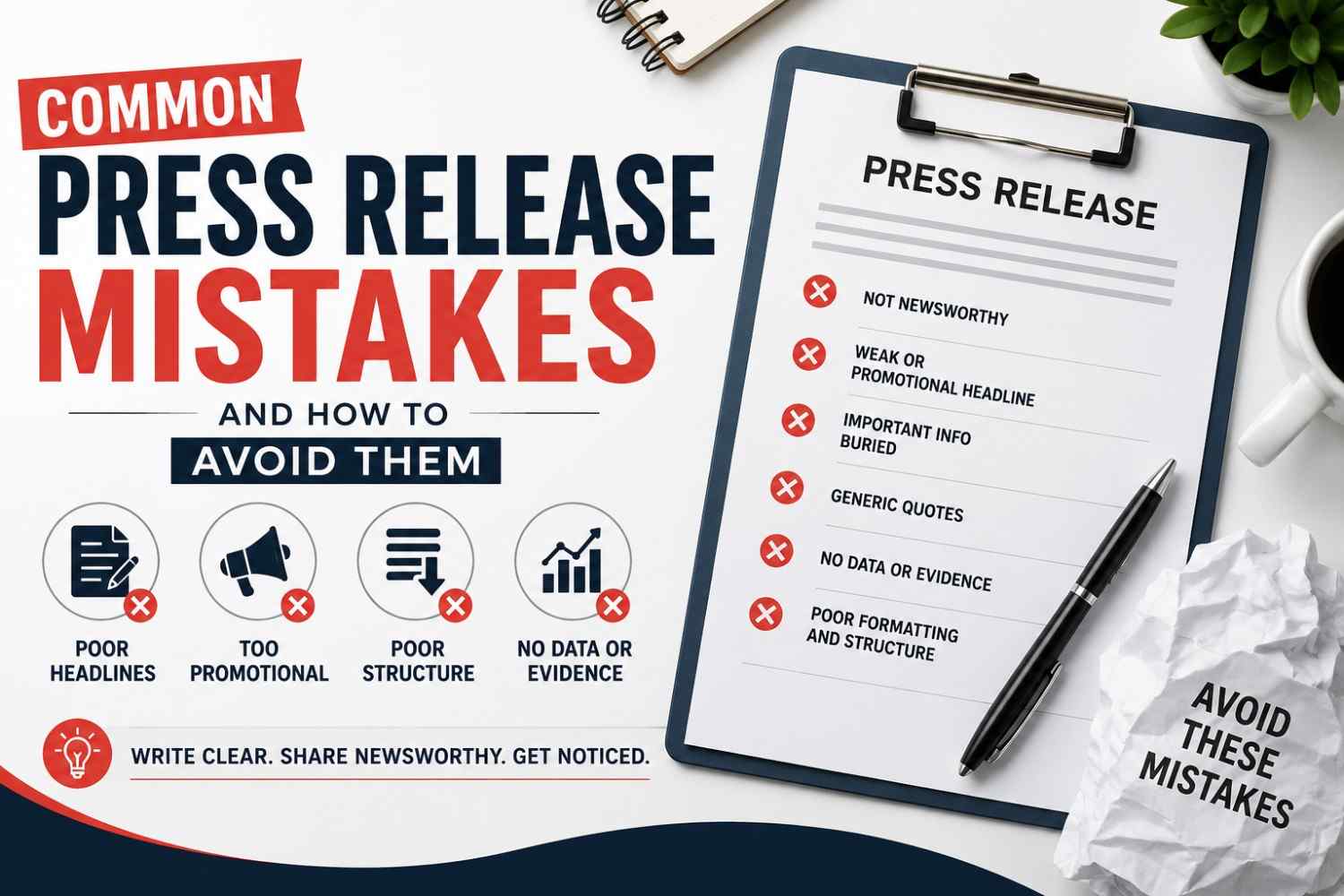
Common Press Release Mistakes and How to Avoid Them
Quick Answer: Press release mistakes can hurt media coverage and diminish credibility. Some of the most common errors are poor headlines, excessive promotion, and poor structure. Avoiding these mistakes helps businesses craft a stronger press release through a reliable press release distribution platform, attract more media attention, and build lasting credibility.
Key Takeaways
- The majority of press release errors cause announcements to sound like advertisements rather than news.
- Journalists like concise, pertinent and factual press releases.
- Powerful headlines, significant quotes, and data endorsement enhance media attention.
- A simple review process can help prevent costly press release errors.
Mistake 1: Writing a Press Release That Is Not Newsworthy
A non-newsworthy press release lacks relevance, real impact, or up-to-date information — the opposite of what a press release is meant to achieve.
Most businesses release press statements concerning routine updates not of interest to reporters or the audience. These updates can be valuable internally, but may not offer sufficient value to warrant media attention.
For example, simply announcing a minor website update is unlikely to attract attention. Nonetheless, a big product release, funding round, research in the industry or strategic alliance may be newsworthy.
How to Fix It
Before writing a press release, ask:
- Is this information new?
- Why does it matter?
- Who will benefit from it?
- Why is it important now?
A clear framework for crafting a newsworthy press release makes it far easier to answer these questions with confidence.
Mistake 2: Using a Weak or Promotional Headline
A weak headline does not convey the story in a concise and clear manner.
It usually begins with the headline when a journalist looks. If it sounds vague, exaggerated, or overly promotional, the release may be ignored.
For example:
Weak: “Amazing Company Revolutionises the Industry”
Better: “XYZ Company Launches AI Platform to Reduce Customer Support Response Times by 40%”
As a result, the second headline explains exactly what happened and why it matters. For more inspiration, these press release headline examples show how strong headlines are structured.
How to Fix It
Write headlines that:
- Focus on facts
- Highlight the announcement
- Include specific details
- Avoid marketing buzzwords
Mistake 3: Burying the Most Important Information
Burying information implies that the main news is buried too deep into the press release.
In fact, most companies use numerous paragraphs to describe the company before they present the actual announcement. Consequently, the journalists might lose interest even before they get to the crucial information.
Reporters want immediate answers to the basic questions:
- Who?
- What?
- When?
- Where?
- Why?
These are the five Ws every press release should answer before any supporting details are added.
How to Fix It
Therefore, use the inverted pyramid structure. Put the most significant information in the first paragraph and proceed with support details.
Mistake 4: Using Generic Quotes
Generic quotes add little value because they simply repeat what the press release already states.
Some quotes used in many press releases are:
“We are excited to announce this important milestone.”
While common, statements like this provide no real insight.
However, journalists like quotes that detail the meaning of the announcement or provide expert opinion.
How to Fix It
Create quotes that:
- Share unique insights
- Explain industry impact
- Provide expert commentary
- Add context to the announcement
Mistake 5: Making Claims Without Data or Evidence
Unfounded assertions lower credibility, and this is what makes journalists doubt the truthfulness of the information.
As a result, statements such as “industry-leading solution” or “best service available” often lack proof. These assertions sound more like advertisements than news without evidence. Journalists nowadays demand facts that reinforce major statements. Backing up major claims also improves the odds of producing press releases that get cited by AI and included in AI Overviews.
How to Fix It
Therefore, strengthen your press release with:
- Statistics
- Research findings
- Survey results
- Customer outcomes
- Industry benchmarks
Mistake 6: Poor Formatting and Structure
The wrong format renders a press release cumbersome to read and comprehend.
In addition, long paragraphs, large text blocks, and overloaded layouts may discourage journalists from reading further.
The majority of reporters preview content and then decide whether to read it or not. Therefore, readability matters.
How to Fix It
Improve structure by using:
- Short paragraphs
- Clear subheadings
- Bullet points where appropriate
- Simple sentence structures
Following a proper press release format makes all of this far easier to apply consistently.
Companies that issue releases via a press release distribution service usually attain greater success when their news can be effortlessly scanned and comprehended.
Mistake 7: Sending Your Press Release to the Wrong Audience
After all, a well-written press release might not work unless it gets to the right individuals.
As an example, a technology announcement will not be of interest to a reporter who focuses on such areas as healthcare or entertainment.
How to Fix It
Therefore, research journalists prior to submitting your release. Distributing a press release to the right journalists starts with researching outlets that actually cover your industry.
Focus on:
- Industry relevance
- Publication focus
- Audience interests
- Previous coverage topics
When there is a specific outreach, it will likely be more effective than a large generic media list where the same release will be sent.
Mistake 8: Ignoring Modern AI and Search Visibility Requirements
The concept of AI visibility describes the ease with which the search engines and AI-powered sites comprehend and bring into the limelight your content.
Press releases are nowadays not only read by journalists. The systems also include Google AI Overviews, ChatGPT, and Perplexity to analyse them.
A large number of companies continue to release publications that are not structured, have no context, and are not based on any factual information. Consequently, their announcements might have a smaller presence in both traditional search and AI-generated results. Understanding how press releases help with SEO and optimizing a press release for search visibility can prevent this from happening.
How to Fix It
Today, produce press releases which:
- Use clear language
- Include relevant entities
- Answer common questions
- Present facts and supporting data
- Follow a logical structure
By posting quality announcements through a trusted press release platform, businesses enhance media presence and discoverability on new search engines.
Eliminating these eight most popular pitfalls in press releases will enable companies to make more effective announcements that will attract the attention of journalists as well as achieve credibility and more opportunities to receive beneficial media attention.
Frequently Asked Questions
Why do journalists reject press releases?
Journalists do not accept press releases as they are not news, have promotional language, have substandard headlines, or lack evidence to support them. Additionally, the chances of coverage can also be decreased with poor formatting and targeting that is irrelevant.
Will AI write a press release?
AI can assist in drafting a press release, but human review is still essential. Businesses have to check facts, add industry knowledge, and make the content sound natural. A press release should deliver genuine information, not the generic tone that unedited AI writing often produces. Many businesses prefer using a professional press release writing service to make sure the final draft sounds authentic and error-free.
How many quotes should a press release include?
Generally, the majority of press releases contain a quote or two. Good quotes will offer professional input, clarify the relevance of the announcement, and help give a context that is not already presented elsewhere in the announcement.
Should small businesses publish press releases?
Yes, press releases can also be utilised by small businesses to announce product launches, partnerships, events, and awards, among other important events. Starting with a free press release template makes the process much easier for teams publishing their first release.
Conclusion
Even the most significant announcement can be less effective due to press release errors. However, most of these mistakes are easy to avoid.
Furthermore, a well-written press release will be understood and reported by journalists. It helps build trust and credibility. Regardless of where you choose to publish your news, quality must always come first.
Author Expertise
Ayesha Malik is a Senior PR and Media Relations Strategist with over 8 years of experience helping startups and enterprises craft press releases that earn journalist coverage. She specializes in press release writing and distribution, helping brands improve visibility, build credibility, and increase media coverage.
Additional Press Release Resources
Explore these related guides to keep improving your press release strategy:
- why press releases remain valuable for brands
- typical press release distribution costs
- whether paid distribution is worth the investment
- picking the right distribution service
- anchor text best practices for press releases
- real press release examples worth studying
- how a media advisory differs from a press release
- writing a press release in AP style
- fintech press release writing tips
- SaaS press release best practices
- press releases for gaming announcements
- a guide to biotech press releases
- free versus paid press release distribution
- choosing the right keywords for your release
- announcing a book launch in a press release
- press release tips for musicians
- announcing a new hire the right way
- writing a healthcare press release
- getting featured on Forbes through a press release
- drafting an IPO announcement press release
- hiring a writer versus doing it yourself
- measuring press release performance
- a downloadable Word press release template
- how AI press release generators stack up
- a pre-publish press release checklist
- pitching your press release to journalists